92% of consumers in the United States had made some form of digital payment during the previous year, according to McKinsey's 2024 Digital Payments Survey. Your customers already reach for the phone at the register. I would put the next offer on that screen, not in another flyer.
Most cafes spend the marketing budget chasing strangers: boosted posts, flyer drops, a discount for anyone who wanders in. A returning customer is far cheaper to serve than a new one. The retention math holds across industries, from retention KPIs for law firms to your morning coffee queue. Judge every idea below by one number: does it produce a second and third visit within 90 days?
Each of the eight promotions is paired with the wallet-pass mechanic that runs it. Stamp thresholds, point tiers, pass notifications, and redemption windows sit next to the offer, so the setup is launchable in Loyal Customer rather than a slogan on the window.
The card lives in Apple Wallet or Google Wallet. Customers join from your QR code or link, confirm a name and phone number, and add the pass with no app download, opened from the lock screen without downloading an app. You get a push when someone joins, earns, or redeems.
Signups are vanity. A second visit is revenue. A promotion that spikes one busy Saturday and dies is a discount with better branding.
Table of Contents
- 1. Digital Stamp Card (Buy 9, Get 1 Free)
- 2. Points-Based Rewards Program
- 3. Birthday Reward Campaign
- 4. Happy Hour and Off-Peak Discount
- 5. Seasonal Limited-Edition Drink Launch
- 6. Referral Bonus Program
- 7. Monthly Coffee Subscription Pass
- 8. Instant-Win Scratch or Roll-Up Promotion
- How the 8 cafe promotions compare at a glance
- Launch One Promotion This Week, Not All Eight
1. Digital Stamp Card (Buy 9, Get 1 Free)
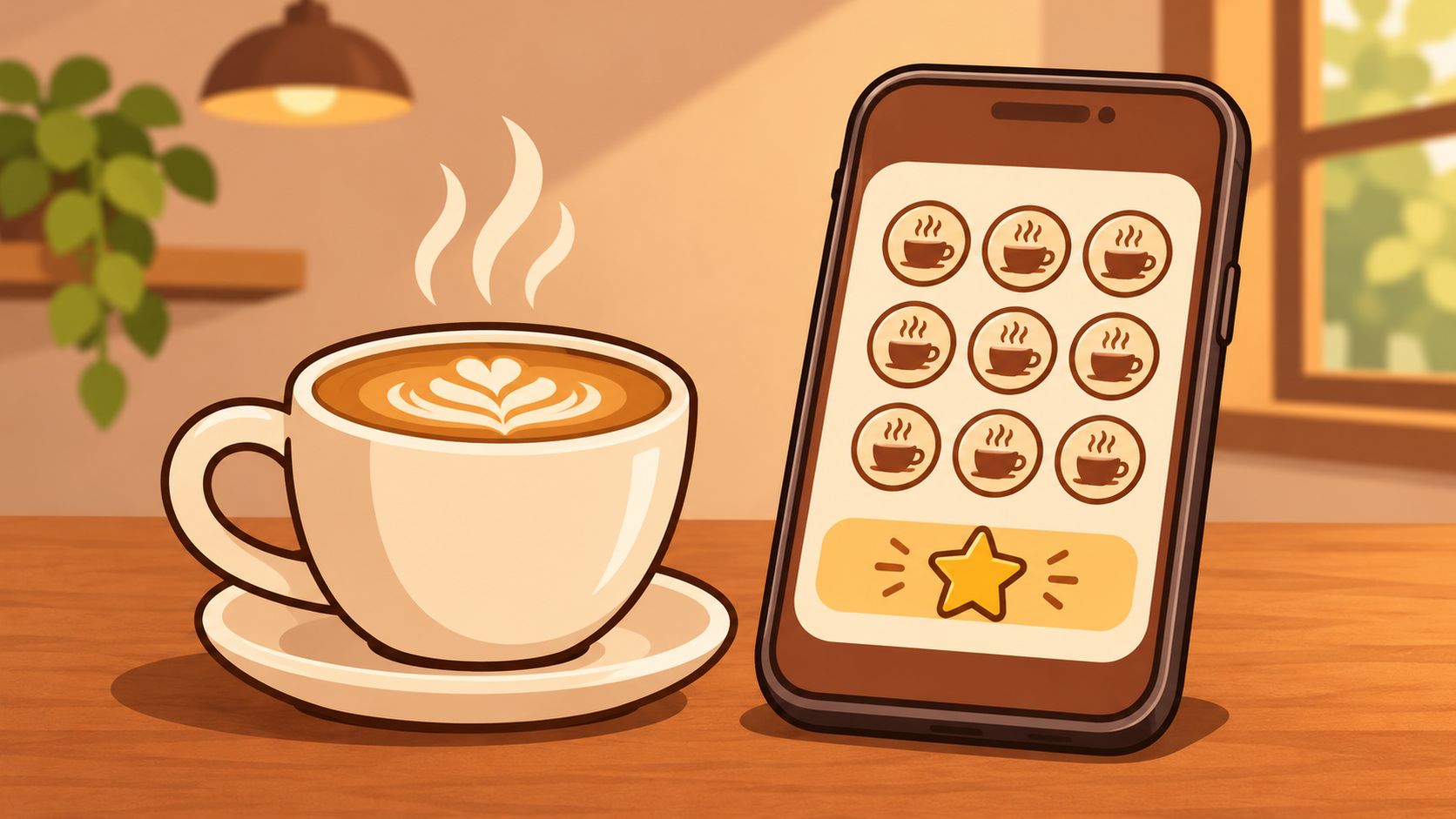
A digital stamp card is the paper punch card your customers already understand, moved onto the phone they're holding at checkout. Each qualifying purchase adds one stamp, and a free drink waits at the end. The offer doesn't change. What changes is that nobody leaves the card in a coat pocket or on the kitchen table.
The format has market depth behind it. A 2024 National Restaurant Association figure cited by Favecard puts 52% of consumers in loyalty programs covering restaurants, coffee shops, snack places or delis. More than half your queue has done this before and knows exactly how it works.
The mechanic that makes it work
In Loyal Customer you set the target anywhere from 3 to 10 stamps, choose the stamp icon (star, coffee, gift, check or heart), and award one stamp per checkout, with the reward firing automatically when the card fills. Customers scan the QR code at the counter, enter their name and phone number, then add the pass to Apple Wallet or Google Wallet. No app download, no paper card to reprint when it gets lost.
- Set the threshold to your traffic. A four-day-a-week regular should finish the card in four to six weeks. If they can't, the target is too high and the reward feels theoretical.
- Put the QR code in three places. Counter sign, receipt footer, table tent. One scan opens your branded page, and the customer joins from there.
- Show the balance on the pass. "7 of 9 stamps" is a nudge. A blank card is not.
- Test before you commit. The free plan includes 15 customer slots with no credit card required, enough to run a pilot with your morning regulars before you set the threshold in stone.
Practical rule: the reward should cost you less than the margin you gained across the stamps required to earn it. Nine lattes at 70% margin covers a tenth one many times over.
For variations on thresholds, icons and reward wording, this collection of digital stamp card ideas covers the formats that hold up in small cafes.
2. Points-Based Rewards Program
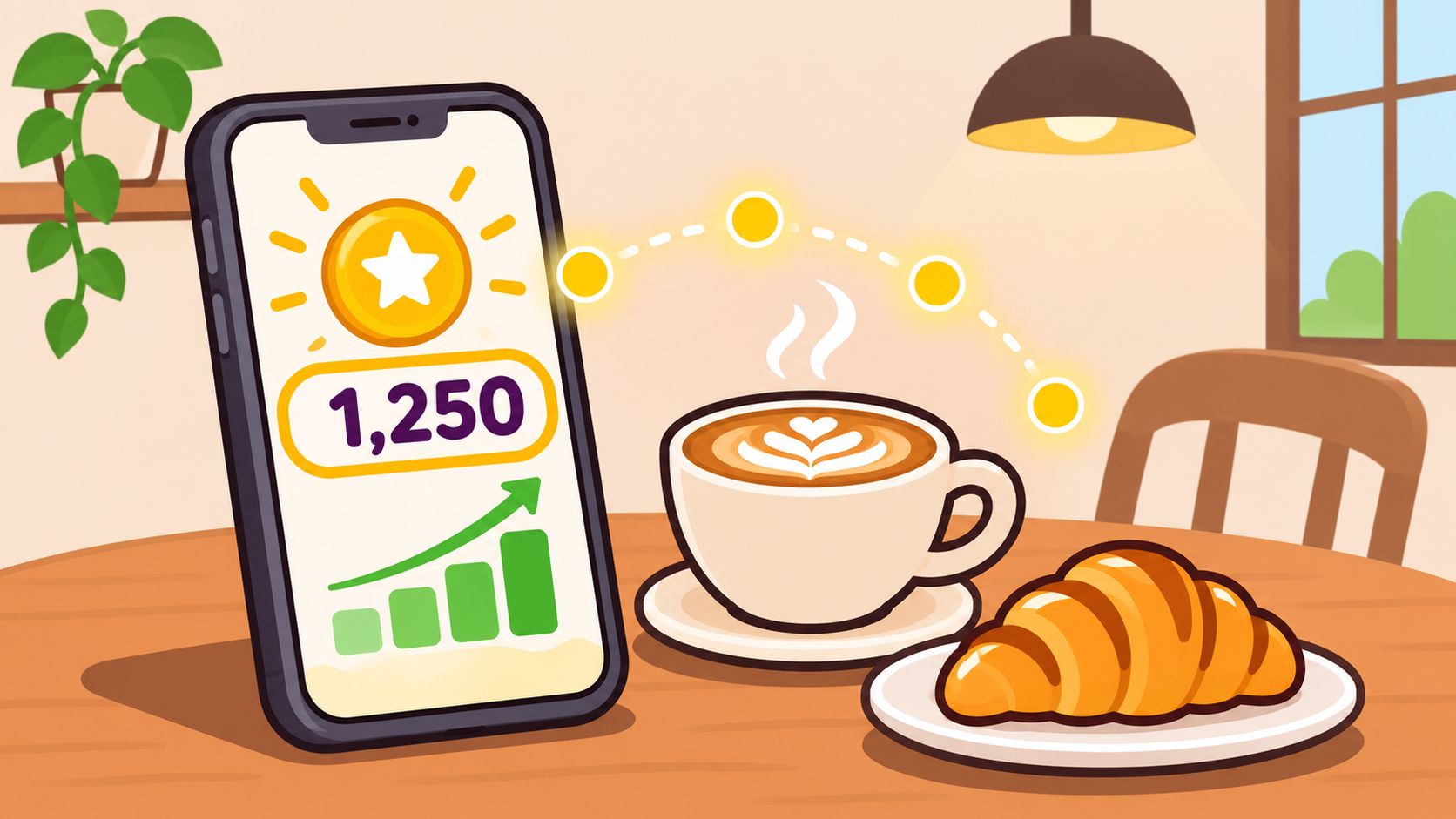
Points are the right tool when your average order has room to grow. A stamp card rewards showing up. A points program rewards spending more per visit, which is why it suits cafes selling pastries, breakfast plates and retail beans alongside espresso.
The economics favor it. One compilation of loyalty statistics reports that repeat customers spend 33% more than new customers (Fedele Business). That figure isn't a promise for your shop, but it explains why points programs keep appearing in food service: they convert a habit into a bigger basket.
Where points beat stamps
- One point per dollar. Customers should be able to estimate their balance in their head. Fractional rates feel like a trick.
- Two tiers, not five. A small reward at 100 points and a bigger one at 300 gives people a near-term target and a stretch goal.
- Bonus points for the add-on. Double points on pastry attachments moves the item you want to sell.
- Balance on the wallet pass. The pass shows the current total and the next reward in plain language, so nobody opens an app to check.
The most common mistake is a reward catalogue so rich that the math stops working. Price each reward against your average order value before launch. If a 100-point reward costs more than the margin those points generated, cut the reward, not the earn rate.
"Earn one point per dollar. Redeem 100 for a drink. That's the whole program." If you can't explain it to a new barista in one sentence, it's too complicated.
Points need a system that can hold balances reliably. Loyal Customer runs points programs from a phone and presents the balance on the customer's wallet pass. For the mechanics of earn rates and redemption, see how loyalty points work.
3. Birthday Reward Campaign
A birthday reward is the cheapest personal touch in the business. It costs one drink, arrives once a year, and lands on a day when the customer is already thinking about treating themselves. The catch is that most cafes collect the data badly or forget to use it.
Automation is the whole point. A reward that requires staff to check a calendar never gets redeemed.
Friction matters more than most operators think. A late-2025 survey reported by MediaPost found that 58% of consumers preferred managing no more than five loyalty accounts, while 30% named ease of use as a reason they'd switch programs. A birthday offer that arrives inside a pass the customer already holds clears that bar. One that requires a new account does not.
Keep the ask small
- Birth month only. Day and year are friction with no promotional value. One field, one tap.
- A 30-day window. Long enough to be useful, short enough to create a reason to come in this week.
- Show the expiry on the pass. The wallet pass carries the reward and the date, so it can't be forgotten in an inbox.
- A reminder three days out. One notification before expiry recovers a meaningful share of otherwise dead rewards.
- Keep the gift modest. A drink or a pastry protects margin and still feels personal.
Run the reward through the loyalty pass rather than a printed coupon. Staff shouldn't have to verify anything beyond tapping the pass at checkout, and the redemption gets recorded against the customer's history automatically.
4. Happy Hour and Off-Peak Discount
Empty seats at 2:30pm are a different problem from the 8am queue. A two- or three-hour weekday window after lunch is the test. Leave 7am to 9am at full price. Those drinks already sell.
In-store timing beats a social post from three days earlier. In an Australian survey of 527 adults who had bought coffee out of home, 30% said they deviated from their usual order after seeing an in-store promotion, and 57% usually chose one place but sometimes tried others, according to Seven Miles. The offer has to be at the counter, at the moment they decide.
Scan the loyalty pass at checkout, the same way you record any visit. A stamp card gives one stamp per checkout toward a target of 3 to 10, and the reward waits until the card is full. Points build toward offers you create in the program: a free coffee at 50 points, $5 off at 100 points, or 15% off at 250 points. The menu price stays on the board. The balance and the redemption sit on the Apple or Google Wallet pass.
A later reward beats a half-price drink. They feel the visit counted. You pay for it only when they redeem.
Track redemptions and average order value in those hours for four weeks, against the same hours last month. If the extra cups do not cover the reward, shorten the window or raise the points required.
With Loyal Customer you can run points or stamp rewards from a phone, so any bonus you offer is recorded on the customer's wallet pass rather than tracked on a chalkboard.
5. Seasonal Limited-Edition Drink Launch
Seasonal drinks do two jobs at once. They give regulars a reason to return this month, and they pull back people who drifted away over summer. The launch only pays off if the people who already like you hear about it first.
Here's how a limited-run drink gets built and sold without a paid media budget.
Wallet behaviour has moved well past payments. Use of mobile wallets for non-payment items, which includes passes and credentials, increased 92% from 2019 to 2024, according to the ACI Worldwide 2025 Mobile Wallet Trend Report. A pass notification is a legitimate launch channel now, not a gimmick.
Announce it to members first
- 24-hour head start. Pass holders get the drink a day before the public launch. It costs nothing and makes membership feel like it's worth something.
- Pair the launch with double points. A launch week that also rewards the visit converts curiosity into a habit.
- Set a hard end date. Publish it on the pass. "Back on the 3rd" creates more urgency than "limited time".
- Decide the return from week-one data. If the drink outsells your standard seasonal average in the first seven days, book it for next year.
For the drink itself, seasonal menus reward a real recipe rather than syrup in a latte. This AQEEK coffee drink method is a useful reference for building a signature drink with a story behind it, which is what customers photograph and share.
6. Referral Bonus Program
A referral is the only acquisition channel where the customer does the persuading. In a neighbourhood, that matters. People trust the friend who says "get the flat white here" more than any advert you can buy.
The reach is already there on both phone platforms. One 2025 estimate puts Apple Pay at roughly 624 million users worldwide and Google Pay at roughly 820 million active users, with about 62% of the Google Pay figure concentrated in India, according to Walnut Invest. Those are payment users, not loyalty-pass users, but they show the two wallet ecosystems your customers already have installed.
Make the reward mutual
- Reward both sides. The referrer gets a stamp or points, the new customer gets a welcome reward. One-sided referrals stall because nobody wants to ask a favour for free.
- One reward per new customer. Cap it, or you'll fund a group of friends passing the same code around.
- Print the QR on receipts. "Give this to a friend" with the code underneath outperforms any in-app referral button.
- Track referral rate monthly. If sign-ups stall, the reward is too small or the ask is too complicated.
The wallet pass is where both rewards live. The referrer's stamps or points sit in the same pass as the new customer's welcome reward, so there is no paper card to lose and nothing to chase at the counter. A QR scan at checkout is enough to verify and redeem. With a tool like Loyal Customer, the new customer joins through your unique link or QR code, verifies their phone, and adds the card straight to Apple Wallet or Google Wallet without downloading an app. You can test the setup on the free plan, which covers 15 customer slots with no credit card required.
Sizing the reward is the harder decision. Too small and nobody bothers asking; too generous and you are buying regular-priced drinks for people who would have walked in anyway. A single stamp or a small points credit per referral, roughly the value of one visit, is the range most counters can sustain.
Referral mechanics borrow heavily from software. This breakdown of referral-led growth for SaaS scale-ups is worth reading for the incentive structures that survive contact with real users. For the cafe version, see how customer referral programs for small businesses handle the same trade-offs.
7. Monthly Coffee Subscription Pass
A subscription turns a variable morning into committed revenue. The customer pays once a month, you know roughly what's coming, and they have a standing reason to choose you over the shop next door.
It suits high-frequency, low-cost drinks. Espresso, batch brew, filter, the standard flat white. It does not suit a menu where every order is a specialty build with three syrups and oat milk.
Price it off your real numbers
- Start from expected visits. Take your monthly price, divide it by the menu price of the standard drink, and you have the break-even number of drinks. Price the pass above the number an average subscriber will claim.
- Exclude the expensive builds. Standard drinks only. Add-ons and seasonal specials stay full price.
- Show remaining drinks on the pass. A wallet pass that reads "6 of 20 left" answers the only question a subscriber has.
- Run a one-month trial. Offer it to 30 regulars before you build a permanent program around it.
Wallet-native delivery is the practical argument here. Wallets accounted for 56% of worldwide e-commerce transaction value in 2025, with the share projected to reach 63% by 2030, according to Statista's mobile payments data. That projection describes payment wallets rather than loyalty passes, but it tells you where customers expect to find their credentials. A pass in Apple Wallet or Google Wallet is one less app to install for a subscription they might otherwise skip.
8. Instant-Win Scratch or Roll-Up Promotion
Games work because the outcome is unknown. A customer who wins a free pastry on a Tuesday tells someone about it. A customer who wins nothing still had a small moment of suspense with their coffee, and that's worth something.
The measurement is where most cafes get this wrong. Don't count game plays. Count the visits that follow. Restaurant loyalty members are reported to visit about 20% more frequently and spend about 20% more per check than non-members, and there's a 95% likelihood of long-term retention when a member reaches a fourth visit within 90 days, according to Restroworks. Those benchmarks describe the industry rather than your shop, but they tell you what to measure: fourth-visit conversion inside 90 days, not tickets printed.
Publish the odds
- State the prize structure. "One in eight wins a free drink" builds more trust than silence, and it keeps you honest about cost.
- Keep prizes small. A free filter coffee or a pastry costs less than the visit that redeems it.
- Check local rules first. Some regions regulate games of chance and promotions with entry conditions, so confirm the rules before you print anything.
- Deliver the win to the pass. The prize lands on the customer's wallet pass with an expiry date, so it can be redeemed without a paper voucher that ends up in a bin.
A game with unpublished odds feels rigged after the third loss. A game with published odds feels fair even when you don't win.
Loyal Customer can attach the prize to the customer's pass as a points credit or a reward, which keeps the win visible in the same place as their stamp or points balance.
How the 8 cafe promotions compare at a glance
| Promotion | Best For | Reward Type | Setup Effort | Metric to Track |
|---|---|---|---|---|
| Digital Stamp Card (Buy 9, Get 1 Free) | Frequent visits for a core item | Free drink or item | Low; quick to launch | Stamps earned and rewards redeemed |
| Points-Based Rewards Program | Rewarding higher spend and varied orders | Points redeemable for drinks, food, or discounts | Moderate; set earn rates and reward tiers | Points earned and redeemed; average order value |
| Birthday Reward Campaign | Personal retention and birthday-month visits | Free drink, dessert, or discount | Moderate; collect birth month and set up reminders | Birthday reward redemption rate |
| Happy Hour and Off-Peak Discount | Increasing traffic during quiet hours | Time-limited discount or bonus points or stamps | Low to moderate; define hours and offer rules | Off-peak visits and offer redemptions |
| Seasonal Limited-Edition Drink Launch | Generating trial and excitement around new menu items | Limited-time item, optionally with bonus points or stamps | High; plan sourcing, staff training, and launch | First-week sales and repeat purchases |
| Referral Bonus Program | Acquiring customers through word of mouth | Rewards for both referrer and new customer | Moderate; set referral rules and tracking | Referral rate and new-customer sign-ups |
| Monthly Coffee Subscription Pass | Frequent coffee drinkers and predictable revenue | Set number of drinks or unlimited drinks with fair-use limits | Moderate; price and define eligible drinks and usage rules | Subscription renewals and drink usage |
| Instant-Win Scratch or Roll-Up Promotion | Driving engagement and repeat visits | Chance to win a drink, discount, or bonus item | Moderate; define prizes, odds, and rules | Participation, repeat visits, and prize redemptions |
Launch One Promotion This Week, Not All Eight
Eight ideas is a menu, not a plan. Pick the one that matches your biggest gap. If nobody new walks in, start with the referral bonus or the seasonal launch. If your afternoons are dead, run the off-peak window. If regulars drift away after a month, the stamp card or points program is the fix.
Then set one number to review after 30 days. For a stamp card, that's fourth-visit conversion. For an off-peak window, it's redemptions by daypart against the same hours last month. For a referral, it's referral rate per hundred customers. One number, one decision: keep it, change the threshold, or kill it.
The signup has to be as fast as the coffee. Customers join through your unique link or a QR code on the counter, verify their phone number, and add the card straight to Apple Wallet or Google Wallet. No app download, no password, no paper card to reprint when you change the reward. Loyal Customer sends a push notification when a customer joins, earns or redeems, so you see the program working without opening a dashboard.
Set your reward menu before launch, in plain numbers. A free coffee at 50 points, $5 off an order at 100 points, and 15% off everything at 250 points gives customers a near-term win and two reasons to keep earning. Stamp cards run on the same logic with a simpler rule: set the target between 3 and 10 stamps, award one per checkout, and hand over the reward when the card fills.
One practical detail that catches people out: new business accounts are reviewed before launch, usually within 1 to 2 hours, with an email and in-app notification once you're approved. Register in the morning and your first campaign can be live the same afternoon.
Start with the promotion that fixes your weakest visit, not the one that sounds most exciting.
Loyal Customer gives cafes a points program or a digital stamp card they can run from a phone, with a branded sign-up page and wallet-ready passes for Apple Wallet and Google Wallet, so customers join in seconds at the counter without downloading anything. You can set your stamp threshold or point tiers, build the reward menu, and change the offer whenever your margins or your menu change. If you want a loyalty promotion running before the end of the week, visit Loyal Customer and start a free account.