
You've got a customer who loves the latte, the haircut, or the wax, and still, no one new shows up because of them. They smile at checkout, say they'll “tell a friend,” and then life gets busy. That gap between good intentions and actual referrals is where most customer referral programs stall, especially for cafes, salons, and other small businesses that don't have time for complicated software or a clunky POS project.
The good news is that referrals aren't a mystery. They're a habit you can design. When you make the ask at the right moment, make sharing effortless, and reward fast, you turn casual goodwill into repeatable word-of-mouth that can support both loyalty and new customer acquisition.
Table of Contents
- Introduction Why Referrals Feel Hard Even When Customers Love You
- How Customer Referral Programs Actually Work
- Referral Program Types That Fit Small Local Businesses
- Choosing Incentives That Motivate Without Eroding Margin
- Simple Ways to Track Referrals Without Complex Tech
- Real World Examples for Cafes Salons and Micro Merchants
- Putting Your Referral Program Into Action
Introduction Why Referrals Feel Hard Even When Customers Love You
A cafe owner sees it all the time. A regular comes in every Friday, chats with the barista, posts the cappuccino on Instagram, and says, “I should bring my sister sometime.” The sister never comes, not because the regular doesn't care, but because the moment passed and nothing made the next step easy.
That's why customer referral programs matter for repeat-purchase businesses. Word-of-mouth already has outsized influence, Nielsen-reported figures commonly cited in industry research say 92% of consumers trust referrals from people they know, 77% are more likely to buy a new product when they hear about it from friends or family, and referred shoppers are about 4 times more likely to buy than non-referred shoppers, according to the industry summary collected by Annex Cloud. Those numbers matter for a small business because they show referrals don't just feel warm, they can turn social trust into real acquisition efficiency.
There's another reason this channel keeps showing up in small business playbooks. A 2016 analysis of B2B referral programs found the average enrolled program had 5,850 customers, and 2,106 of those customers made referrals, which shows how structured referral systems had already moved beyond casual sharing by the mid-2010s GrowthSurf's referral statistics summary. In other words, referrals became useful once businesses stopped treating them like luck and started treating them like a process.
Practical rule: if customers already say nice things about you, the job isn't to invent enthusiasm. The job is to capture it at the moment it appears.
That mindset helps a lot more than chasing a perfect reward. A good referral program is really a small operating system for advocacy, and the easiest ones to run are the ones that fit the rhythm of your shop, your staff, and your customers.
How Customer Referral Programs Actually Work
A referral program is just word-of-mouth with a structure around it. The customer tells a friend, the friend takes action, and the business recognizes both sides of that exchange in a predictable way. Instead of hoping a regular mentions you sometime later, you give the moment a path.
The simple loop behind the idea
A trusted introduction versus a cold ad. A friend's recommendation arrives with context, credibility, and a little social proof already attached, which is why referred shoppers tend to convert better than people who have never heard your name from someone they trust Annex Cloud. The program just makes that natural behavior easier to repeat and easier to measure.
The three roles are straightforward.
- Referrer. The regular customer who shares your business.
- New Customer. The friend who gets introduced and decides to try you.
- Business. The shop that tracks the referral and issues the reward.
A clean program turns those three roles into one loop, share, redeem, reward. A customer tells a friend, the friend uses a link, code, or pass, and the business gives the promised incentive when the qualifying action happens. That's the formal version of “tell a friend,” and it's useful because the process becomes visible instead of staying buried in memory.
A referral is not the same as a review. A review sits on a page. A referral moves through a relationship.
That distinction helps owners avoid confusion. Reviews help strangers evaluate you, while referrals come from someone the buyer already knows. For a local business, that trusted introduction can feel more personal than an ad and less risky than a random discovery.

The point isn't to turn customers into salespeople. It's to make the helpful thing they already do easier to repeat, easier to remember, and easier for your team to track.
Referral Program Types That Fit Small Local Businesses
The right referral structure depends on how people buy from you. A coffee shop sees customers often, in small purchases, and with quick decisions. A salon sees fewer visits, but the appointment value is higher and the booking window is longer. Those rhythms matter more than hype.
Match the program to the buying pattern
Single-sided rewards work when you want the referrer to feel recognized, even if the new customer's first visit is already easy to close. Double-sided rewards work when both people need a nudge and you want the introduction to feel like a shared win. Research summaries also note that cash-or-commission programs are about 2.2 times as likely as coupon-only programs to reach meaningful referral revenue, which suggests reward form does matter, even if the right fit still depends on your margins and audience multi-study summary.
For small businesses, the bigger question is usually how the reward fits the behavior.
| Program Type | How It Rewards | Best For | Watch Out For |
|---|---|---|---|
| Single-sided reward | Only the referrer gets the incentive | Simple loyalty loops, low-friction asks | The friend may need an extra reason to convert |
| Double-sided reward | Both people get a reward | Cafes, salons, and local services where trust matters | Can feel expensive if the reward is too generous |
| Points or stamp bonus | Adds value to an existing loyalty balance | Repeat-purchase businesses with frequent visits | Needs clear tracking so staff don't guess |
| Direct discount | Gives an immediate price break | Fast-moving offers and first-visit conversion | Can train customers to wait for deals |
A tiered or milestone offer can also help when you want referrals to build over time. One academic analysis found referral-upgrade programs are generally more profitable than referral-reward programs, with the advantage holding up under several realistic extensions Allen Wu's 2026 paper. That doesn't mean every corner shop needs a complex ladder, but it does support the idea that bigger recognition at the right threshold can make more sense than a flat payout forever.
For merchants comparing loyalty and referral logic together, the same kind of thinking used in loyalty program ideas applies here too. A reward should feel connected to the way your customers already behave, not forced onto it.

Small businesses usually don't need every type at once. Pick the one that matches your checkout rhythm, then keep the rules short enough that staff can explain them without stopping the line.
Choosing Incentives That Motivate Without Eroding Margin
The best referral reward is rarely the biggest one. It's the one that feels worth mentioning, arrives fast, and doesn't wreck the economics of a small basket. That's why so many local businesses do better with a modest, tangible offer than with a vague promise later.
Small, concrete rewards usually travel better
Survey data found 75% of people who recently referred someone did so for a reward, 79% said $10 or less would motivate them to refer, and 82% expected the reward within a week Tremendous referral rewards data. Another set of research summaries says a $10 to $20 reward range is often the most effective for consumer referral incentives, gift cards are frequently preferred, and tiered incentives can generate more referrals than flat one-level offers Shno incentivized referral statistics. Those findings point in the same direction, modest and quick usually beats flashy and delayed.
That doesn't mean cash is always the answer. Store credit can pull the customer back in, free products can feel more memorable, and a direct discount can be very simple to explain. What matters is whether the reward fits the habit you want to create.
- Store Credit. Good when you want another visit and a built-in reason to return.
- Small Free Product. Good when the item is easy to fulfill and feels concrete.
- Cash Discount. Good when simplicity matters more than brand-specific value.
A recent academic analysis found referral-upgrade programs can outperform referral-reward programs in profitability under several conditions Allen Wu's paper. That's useful for small merchants because it suggests some rewards should feel like access or status, not just a one-time rebate. In practice, that might mean an upgrade, a free add-on, or a perk that fits your service rather than a broad cash-like discount.
Margin check: if the reward would hurt you on a normal visit, it'll hurt more when referrals start working.
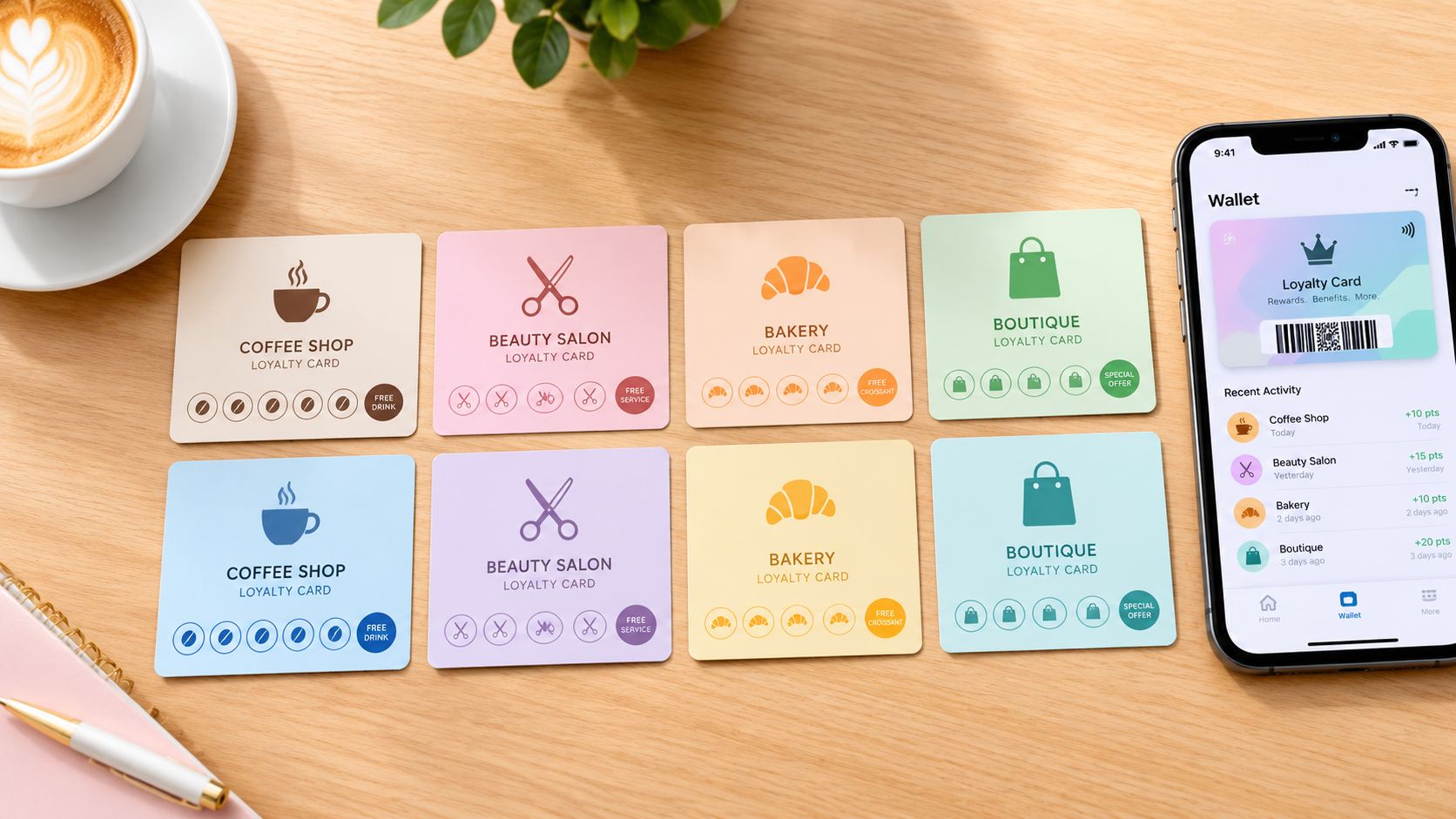
That's where speed matters too. If you can issue the reward instantly through points, a digital stamp card, or a wallet pass balance, the customer sees the payoff while the referral is still fresh. Loyal Customer, for example, supports points programs, digital stamp cards, and Apple Wallet or Google Wallet loyalty cards from a phone, which is the kind of setup that can keep a referral reward visible without asking anyone to install another app.
If fraud is a concern, keep the first version simple. Reward only verified conversions, monitor the quality of referred customers, and avoid offers that are so easy to game they attract the wrong traffic. A program that grows slowly but cleanly is usually better than one that looks exciting and leaks value.
Simple Ways to Track Referrals Without Complex Tech
Tracking is where many small businesses get stuck, because they assume they need a big system before they can start. They don't. You can begin with a paper code, move to a shareable link, and later use wallet-native passes that keep the referral identity on the customer's phone.
Start with the lightest workflow your team can handle
A low-tech setup can be as simple as a unique code on a referral card, a short note at the register, or a DM that repeats the same message every time. Those approaches work best when the number of referrals is still small and the owner wants to test whether customers share. The point is not sophistication, it's visibility.
When you're ready for more consistency, link-based sharing is easier to track because the click path preserves who referred whom. That's the model many platforms use because it reduces manual sorting and keeps rewards tied to clear actions. For a micro-merchant, that can mean fewer questions at the counter and fewer awkward “Did this friend count?” conversations.
Practical rule: if staff need to remember the rules from memory, the system is too complicated.
Wallet-native passes help because they stay on the customer's device instead of disappearing in a drawer. Apple Wallet and Google Wallet passes are useful for referral-adjacent loyalty because they make the identity persistent, so the customer doesn't have to hunt for a paper card or remember a separate app login. That's especially useful for phone-first businesses that want a simple admin flow without scanners or POS integrations for basic stamp and points workflows.
The main things to measure are simple.
- Shares. How many customers sent the offer.
- Redemptions. How many friends completed the required action.
- Referred customer value. Whether the new customers are worth keeping.
That last point matters because the wrong referrals can look active and still be low quality. The broader literature also flags referral fraud and context-specific design as real campaign risks, so watching cohort quality is more useful than celebrating raw volume alone multi-study summary.
For merchants comparing software options, the main question isn't which system looks flashy. It's whether you can run it from a phone, issue rewards quickly, and keep the customer's referral identity visible without extra friction. The basics often beat the complex setup, especially early on. If you want to compare broader loyalty tooling, rewards program software is a useful frame for thinking about what a small team can realistically manage.

Once the workflow is visible, the admin side becomes less scary. You're not building an enterprise system, you're just making sure the right referral gets the right credit.
Real World Examples for Cafes Salons and Micro Merchants
A coffee shop, a salon, and an Instagram seller can all use the same referral logic, but the trigger moment changes. The best ask is the one that fits the customer's mood right after a good experience, not the one that interrupts the visit.
A cafe that asks right after the second latte
A regular orders their usual drink, adds a pastry, and chats with the barista. Right after the payment goes through, the staff member says, “If you bring a friend next time, both of you get a free drink credit.” That's enough because the customer is already in a positive frame, and the reward matches a repeat-visit business.
The share flow stays easy if the cafe uses a short code, a QR on the receipt, or a wallet pass that holds the offer on the customer's phone. The friend doesn't need a new app or a long explanation, just a simple way to claim the same welcome offer. That's the kind of setup that mirrors what LoyalCustomer.app-style points or digital stamps do well, because the reward sits where the customer already looks.
A salon that ties the ask to a satisfied finish
A stylist finishes a cut, the mirror comes down, and the client loves the result. That's the right moment to ask for a referral because the client can picture who else might want the same service. A service credit for the referrer and a small welcome credit for the new client keeps the exchange balanced without turning it into a hard sell.
In salons, the trick is not to ask every time in the same way. Ask after a visible transformation, after a rebook, or when the client says someone at work asked about their hair. A soft, specific ask works better than a one-time blast at checkout. For more service-business examples, the ideas in loyalty app for salons and spas translate well to referral behavior too.
An Instagram or WhatsApp seller that runs on links
A small seller posting on Instagram or chatting in WhatsApp can use a wallet pass code or a direct message link to keep things moving. The referral ask can happen after a happy customer posts a photo, tags the seller, or replies with praise in DM. The seller sends a simple share link, the friend taps it, and the reward is recorded without a paper trail.
That kind of setup helps prevent the common failure mode of “I'll send it later.” The customer can share immediately, and the seller doesn't have to guess which message belongs to which buyer. A clean digital flow is often enough for a micro-merchant to get real traction without building a full app ecosystem.
The lesson across all three cases is the same. Ask at the moment of satisfaction, make the share action one tap or one message, and let the reward feel visible instead of abstract.
Putting Your Referral Program Into Action
Pick one program type, one incentive, and one tracking method. That's enough to launch a small but real referral system this week, and it's usually better than trying to design the perfect version on paper. A simple double-sided reward, a modest store credit, and a phone-based tracking flow can already turn regulars into advocates.
Use this short checklist.
- Choose the moment. Ask after a happy visit, not in a random newsletter.
- Keep sharing easy. Use a code, QR, link, or wallet pass.
- Reward fast. Don't make people wait and forget.
- Watch the quality. Check whether referred customers return.
- Adjust one thing at a time. Change the reward, the ask, or the channel, not all three.
The big shift is treating referrals as a habit design problem. When you reduce friction, people do the thing they already meant to do. That's how a loyalty loop starts to feed itself, because today's referred customer can become tomorrow's referrer.
If you're running a cafe, salon, or small retail business, start with the simplest version you can explain in one sentence. Then test it on a phone, put the pass in a wallet, and see how many customers share when the process is effortless. The goal isn't a fancy launch, it's a repeatable one.
Loyal Customer helps merchants run points programs, digital stamp cards, and wallet-ready loyalty cards from a phone, which makes referral-friendly rewards easier to manage without paper cards or a heavy setup. If you want a simple way to connect repeat visits with sharing behavior, visit Loyal Customer and try a setup that fits the way your shop already works.