The lunch queue has cleared, but the afternoon looks quiet. You've got a stack of takeaway bags to prep, food costs to watch, and a loyalty offer that sounds promising until someone asks how many free meals you can afford. The useful question isn't how many guests will join. It's whether the reward will bring them back when they wouldn't otherwise have visited, with enough margin left to make that return worthwhile.
Table of Contents
- Why the Fourth Visit Matters More Than Signups
- Stamps Points and Wallet Passes Compared
- Rewards That Stay Generous on a Thin Margin
- How to Launch the Program Between Services
- Promotion Ideas for Quiet Dayparts
- What Fits a Cafe a Takeaway and a Dining Room
- Try a Stamp Card Before You Train the Shift
Why the Fourth Visit Matters More Than Signups
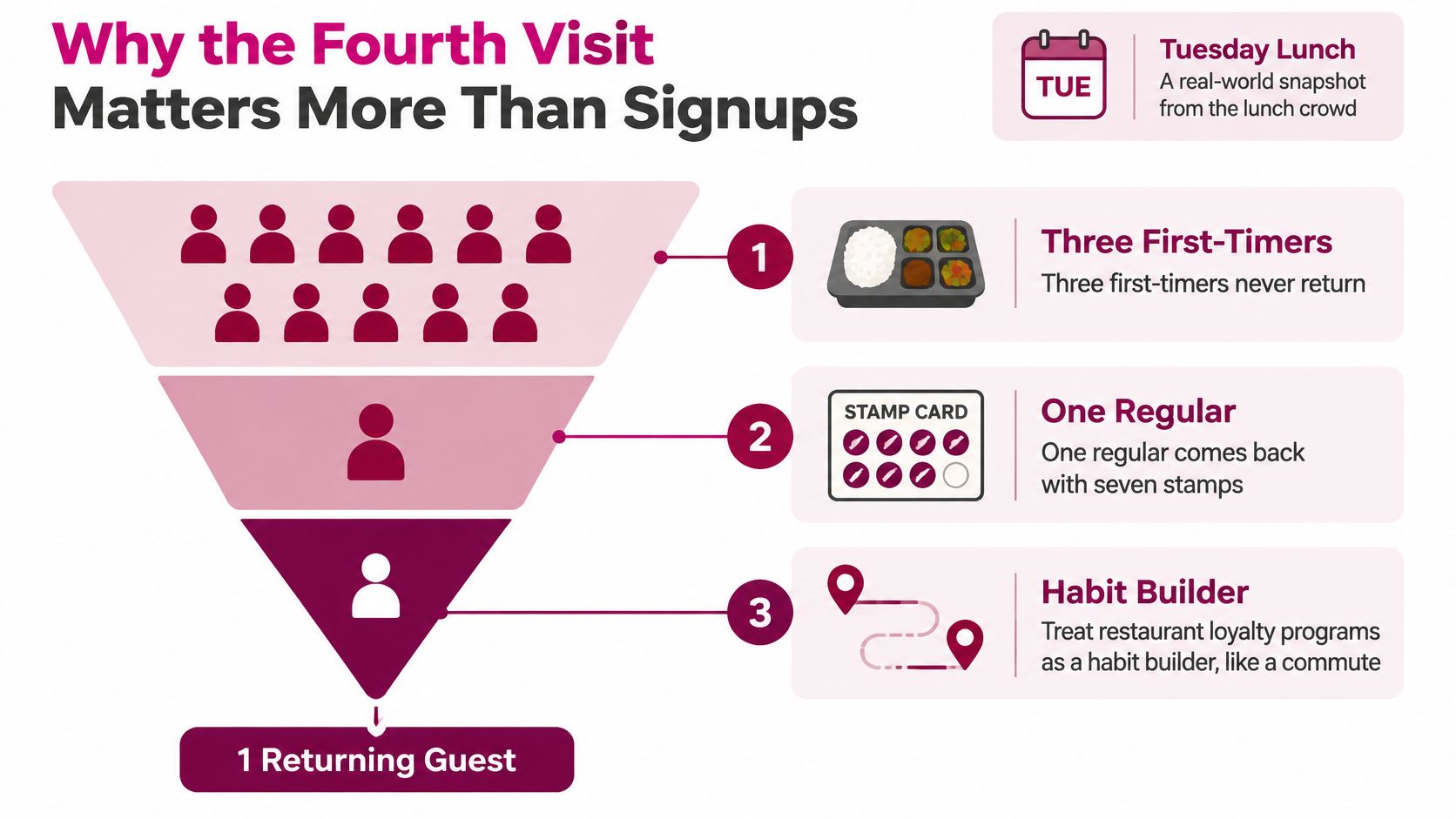
Say it's Tuesday lunch. Three first-timers buy a meal and never return. A regular walks in with seven stamps, orders the usual, and would probably have come back without a reminder. All four guests might appear on a membership list, but that list doesn't tell you whose behavior you changed.
Restaurant loyalty programs should build a habit, rather than collect names. Think of a familiar commute: after a few easy trips, choosing the route takes less thought. Your job is to make another visit feel convenient and worthwhile, then check whether that visit happened.
The distinction is easier to see as a funnel.
Treat the retention benchmark as a test
Paytronix reports that guests who reach a fourth visit within the first 90 days after signup have a 95% likelihood of long-term retention. That's an industry-platform benchmark, not proof that giving rewards causes retention. Use it as a hypothesis to test against your own receipts.
Group guests by signup date, then record:
- Days to the second visit: Does the first reward make returning feel close?
- Days to the fourth visit: Are guests establishing a repeat pattern?
- Reward cost and outstanding rewards: What have you spent, and what might you still owe?
- Margin after rewards: Did the additional business leave money behind?
Try a small, quickly reachable first reward, followed by a time-bounded nudge aimed specifically at the next visits. Don't keep paying a welcome incentive to someone who already comes every Tuesday.
Counter check: A downloaded pass is permission to start building a relationship. It isn't evidence that you've earned another visit.
At your proposed day-30 review, count how many new signups have already reached visit four. Keep watching the rest of that cohort through the full test window, rather than declaring success from downloads.
Stamps Points and Wallet Passes Compared
Which loyalty model fits the ticket
| Model | Fits best | How a reward is earned | Main risk | Guest effort |
|---|---|---|---|---|
| Digital stamp card | Cafes, bakeries, similar-ticket takeaways | A stamp per qualifying visit; a free item at the stated stamp count | Large and small orders earn the same stamp | Show a wallet pass; no math |
| Points program | Wide menus and uneven baskets | Points per dollar or spend tier; free item, fixed discount, or percent off at a threshold | Thresholds get too easy or too hard when prices change | Balance must stay visible |
| Wallet pass | Either model, especially independents | Holds stamps or points and updates after each visit | Useless if the earning rule is unclear | Add to Apple Wallet or Google Wallet; no extra app |
| Paper punch card | Very short trials only | One punch per visit; free item at a set count | Lost cards, over-stamping, no visit data | Guest must remember the card |
Separate the rule from the container
Owners often compare stamps, points, and wallet passes as though they're competing reward systems. They're not. Stamps and points determine how guests earn; the reward determines what they receive; the wallet pass determines where they keep their card.
Stamps work well when purchases look alike. Say a coffee counter proposes a free regular drink after ten qualifying purchases. The guest can understand progress at a glance, but someone buying drinks for the whole office receives the same visit credit as someone buying a single espresso unless you define another rule.
Points give you more room to recognize spending. A family meal and a solo lunch can earn different amounts, while both contribute toward the same visible reward. The trade-off is explanation: guests shouldn't have to calculate a conversion rate while the cashier waits.
A wallet pass holds either balance in Apple Wallet or Google Wallet. It doesn't replace the earning rule, and it doesn't make a confusing threshold clearer by itself. Treat the pass as the card's home, not another currency.
Choose clarity over extra features
Deloitte's 2025 restaurant-loyalty survey found that 47% of members use their memberships several times per month, 32% several times per week, and 86% of customers consider transactional benefits such as free menu items or discounts important. That supports giving guests a straightforward purchase-and-reward proposition before adding tiers or challenges.
Paper cards can help you rehearse the cashier explanation, but they're poor measurement tools. A returned card doesn't reliably reveal the signup date, gaps between purchases, or which promotion prompted the return. Replacing a lost card also forces staff to decide how much progress to restore.
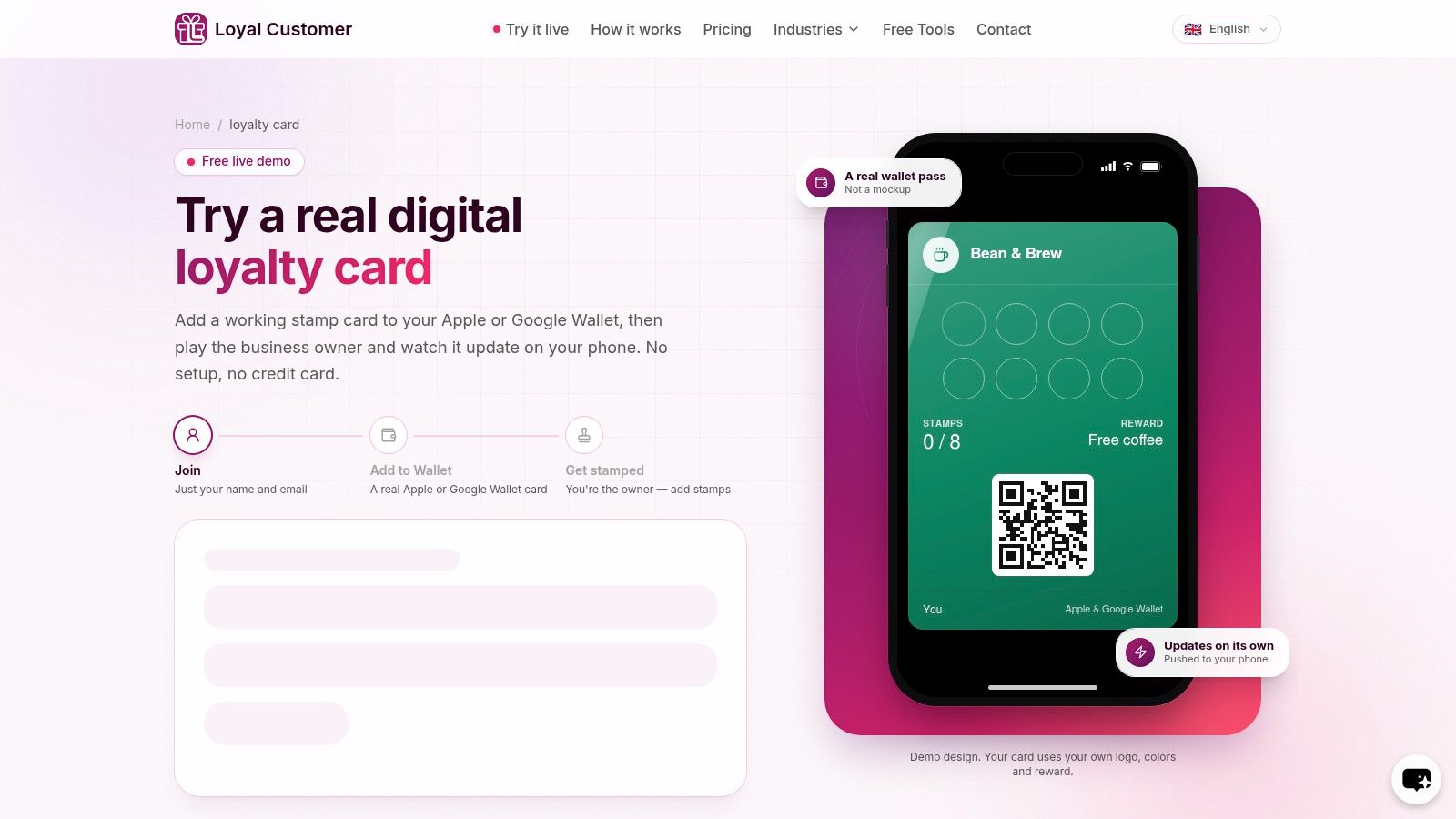
Use the free digital stamp-card demo to inspect the guest-facing experience before writing your counter sign. Check whether someone can identify the reward and their progress without asking you.
Start with stamps for habitual, similar-size orders; start with points for uneven baskets. Give either model a wallet-ready home, and keep the earning rule readable.
Rewards That Stay Generous on a Thin Margin
Would this guest have paid full price anyway? If the answer is yes, the reward may be a hospitality expense rather than additional demand. That isn't automatically wrong, but don't record it as growth.
Square's restaurant-trends research found that 71% of restaurant leaders planned to increase loyalty investment in 2025; 83% said their programs drive larger orders, 82% said they drive repeat visits, and 78% reported return on investment. These are operators' reported outcomes, not a guarantee that your next offer will pay for itself.
Unused rewards need similar caution. They can reduce immediate fulfillment costs, but an abandoned balance might mean the guest stopped caring. A baker wouldn't call unsold loaves a successful sales strategy; don't assume unredeemed stamps represent a healthy relationship.
Price the reward before publishing it
Reward types and what they cost
| Reward | Typical use | Margin effect | Skip it when |
|---|---|---|---|
| Free item after N stamps | Coffee, bakery, set lunch | Food cost of the item, not its menu price, is the starting cost | The average ticket is already low and, in a proposed trial, N is under six |
| Points per dollar | Variable baskets | Scales with spend if welcome bonuses are capped | Staff can't explain the threshold in a sentence |
| Percent-off discount | A named slow daypart only | Can train guests to wait for a deal | It applies to every visit or to Friday regulars |
| Fixed-amount discount | Mid-ticket meals | Face-value discount liability is predictable | The amount exceeds contribution margin on that visit |
| Upgrade or add-on | Sides and size-ups at a takeaway | Can cost less to fulfill than a free main | The upgrade has almost no perceived value |
For a free item, start with ingredients, then include incremental packaging and other fulfillment costs. If the guest would otherwise have bought that item, account for the lost paid sale too. Menu value and merchant cost aren't interchangeable.
Set a target your actual customers can reasonably finish. For example, a weekly bakery guest could complete a four-visit introductory target in about a month; that's a proposed design, not a universal benchmark. Cap the welcome bonus so the introductory offer doesn't become a permanent subsidy.
Measure the money that remains
Use the loyalty program ROI calculator to examine reward-cost assumptions before launch. When menu prices change, reassess points earning and thresholds without taking away progress guests have already earned.
For a cleaner test, randomly withhold a promotional bonus from a comparable group of eligible members. Compare changes in visits and contribution margin, meaning sales less the variable costs of serving those orders, including rewards. A matched comparison group is useful when random assignment isn't practical, but it's less reliable because guests may differ in ways you can't observe.
Choose the reward the kitchen can still afford during a difficult week, not the offer that looks biggest on a poster.
How to Launch the Program Between Services
A small takeaway needs a checkout routine, not a complicated marketing project. Build it while the counter is quiet, rehearse earning and redemption, then invite guests. Treat the first 90 days as a test of whether members reach a fourth visit, not as a race to collect signups. A long member list tells you almost nothing; the guest who returns four times is the result worth designing for.
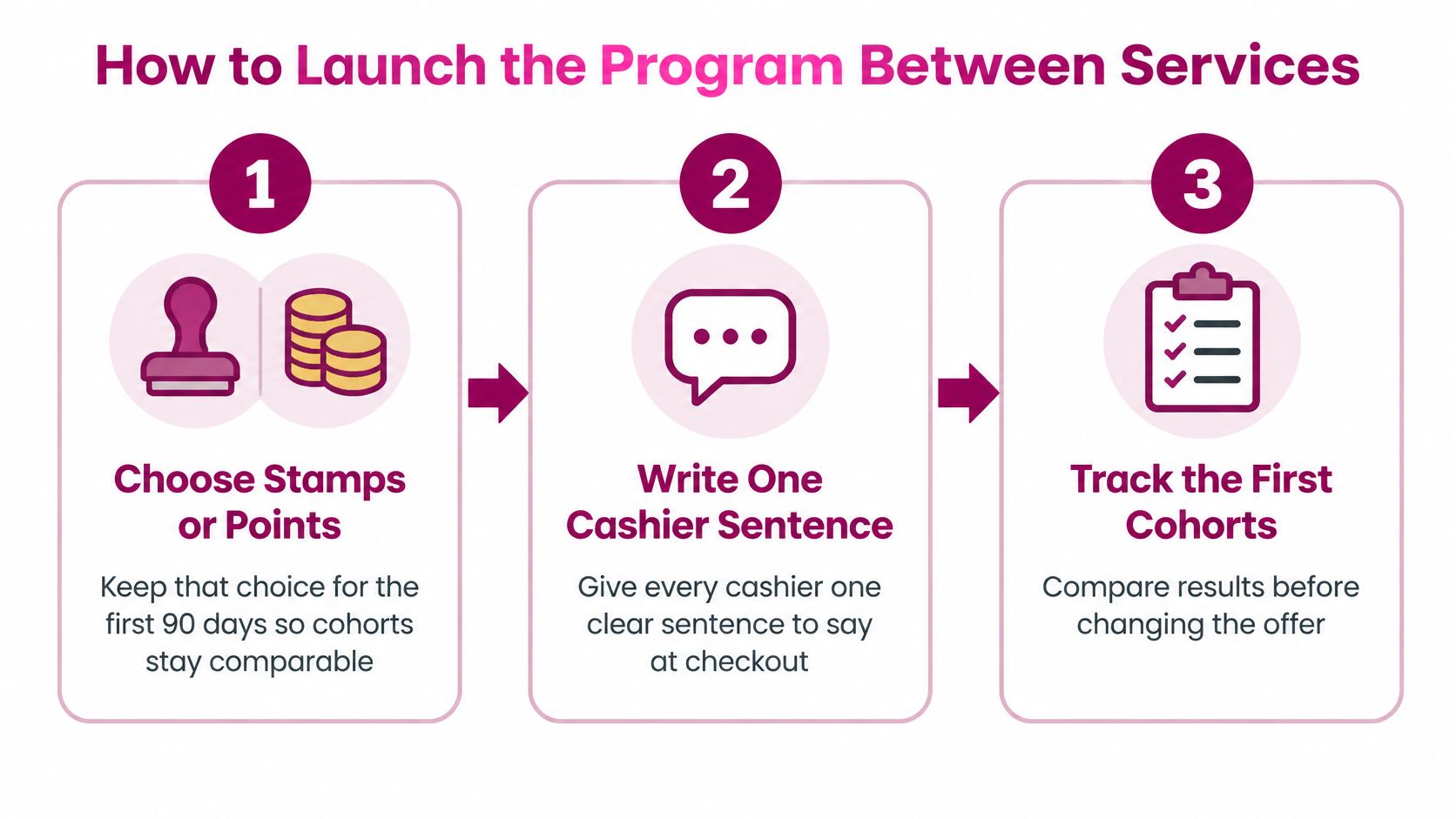
Keep the launch sequence visible to both people working the shift.
Build the checkout routine
Choose the earning model. Plan to keep stamps or points consistent throughout your proposed 90-day measurement window. With this setup, each business runs a single program, and its type cannot be changed after launch, so make that decision before publishing.
Write the cashier sentence. State what qualifies and what does not. For example: full-price counter purchases earn progress; already-discounted delivery orders do not. Match every qualifying visit to a till receipt, and reverse credit attached to a refunded or voided sale.
Publish the complete rule. Name the threshold, reward, exclusions, and any expiry on the pass. Treat delivery-app purchases as excluded unless you have separately budgeted a reward for that channel.
Build the card on a phone. Choose colors, a stamp icon where relevant, and a recognizable reward name. Rehearse the setup in the free digital stamp-card demo before changing anything during service.
Prepare the joining route. Use the business's public joining link and a matching counter QR code. Put the same route on packaging so guests never see conflicting signup pages.
Let guests join on their phones. Show a visible opt-in explanation before collecting a phone number. Guests open the business link, verify their number with a one-time code, and add the pass to Apple Wallet or Google Wallet without installing a customer app.
Practice the next checkout. Scan the pass with the merchant phone, check the receipt, then add the earned progress or redeem the reward. Have staff rehearse both actions, including what happens when the purchase does not qualify.
Inspect the customer record. After a proposed trial week, review the customer list in the merchant app, which shows each guest's points balance or stamp progress, full transaction history, and last visit. Keep a manual weekly record of signup dates and repeat visits, and check whether members are reaching a fourth visit at a cost the margin can carry.
Test understanding before speed
Oracle Food and Beverage's global consumer survey found that 73% considered relevant rewards important, 68% prioritized easy redemption, and 55% wanted programs that were simple to use and understand; 47% had left because rewards expired too quickly, while 44% had left because rewards were too difficult to earn. A rule the guest cannot repeat back to you will fail at the till, no matter how generous the reward.
Use this walkthrough as a rehearsal prompt, then try the checkout flow yourselves.
If you change a threshold later, document a new pass version and honor the progress guests have already earned. Confirm how you will administer that transition before announcing it, because a reward that disappears mid-journey costs more trust than a slow program ever saves.
Finish a brief staff practice with the question guests ask most: whether they need to download an app. The answer is direct. Customers save their card in their phone's wallet, and staff run everything from the merchant side.
Promotion Ideas for Quiet Dayparts
An empty afternoon table and a fully booked evening don't need the same offer. Aim the incentive at an occasion you want to add, then check that guests aren't just moving an existing purchase into a discounted slot.
Personalization can be as plain as noticing when someone visits. Purchase category, daypart, channel, visit frequency, and previous offer response give you more useful targeting information than a large undifferentiated mailing list.
Give each invitation a job
After the lunch rush, invite without delaying payment. Mention the pass after the order is paid, then point to the joining QR. The cashier shouldn't turn a completed sale into a signup queue.
Use lunch packaging to introduce an afternoon return. Run a short packaging trial with the same QR on bags and receipts. Name the quiet occasion clearly, such as a weekday coffee stop, rather than advertising an unspecified discount.
Invite lunch-only guests to a weekday afternoon. Offer a bounded bonus stamp or points promotion to guests whose records show lunch purchases but no afternoon visits. Someone who already buys coffee every afternoon doesn't need the same incentive.
Make the welcome bonus a step, not the whole journey. A new breakfast guest could receive visible starter progress toward a later reward. Avoid giving away the main meal immediately, before you've learned whether they'll return.
Reconnect with near-reward guests who've stopped visiting. As a proposed campaign, contact guests absent for a month who are close to a reward. Remind them of existing progress and invite a quiet-period visit without inventing an expiry or threatening to remove their balance.
Keep the offer bounded
For more starting points, use these loyalty program promotion ideas, then narrow the choice to a specific service period. A useful offer names who qualifies, when they can use it, and when it ends.
Service guardrail: Keep a single promotional offer live, and give cashiers a clear answer about whether it stacks with anything else.
Don't award double credit on an already-discounted delivery purchase. Review whether redemptions cluster on the busiest service, where the incentive may reduce margin without filling spare capacity.
Try the same offer across comparable low-traffic dayparts in a short, predefined test. Track whether each period gains visits without reducing contribution per cover, and check whether another service loses those visits. Write the offer's end date on the pass so a temporary invitation doesn't become the everyday price.
What Fits a Cafe a Takeaway and a Dining Room
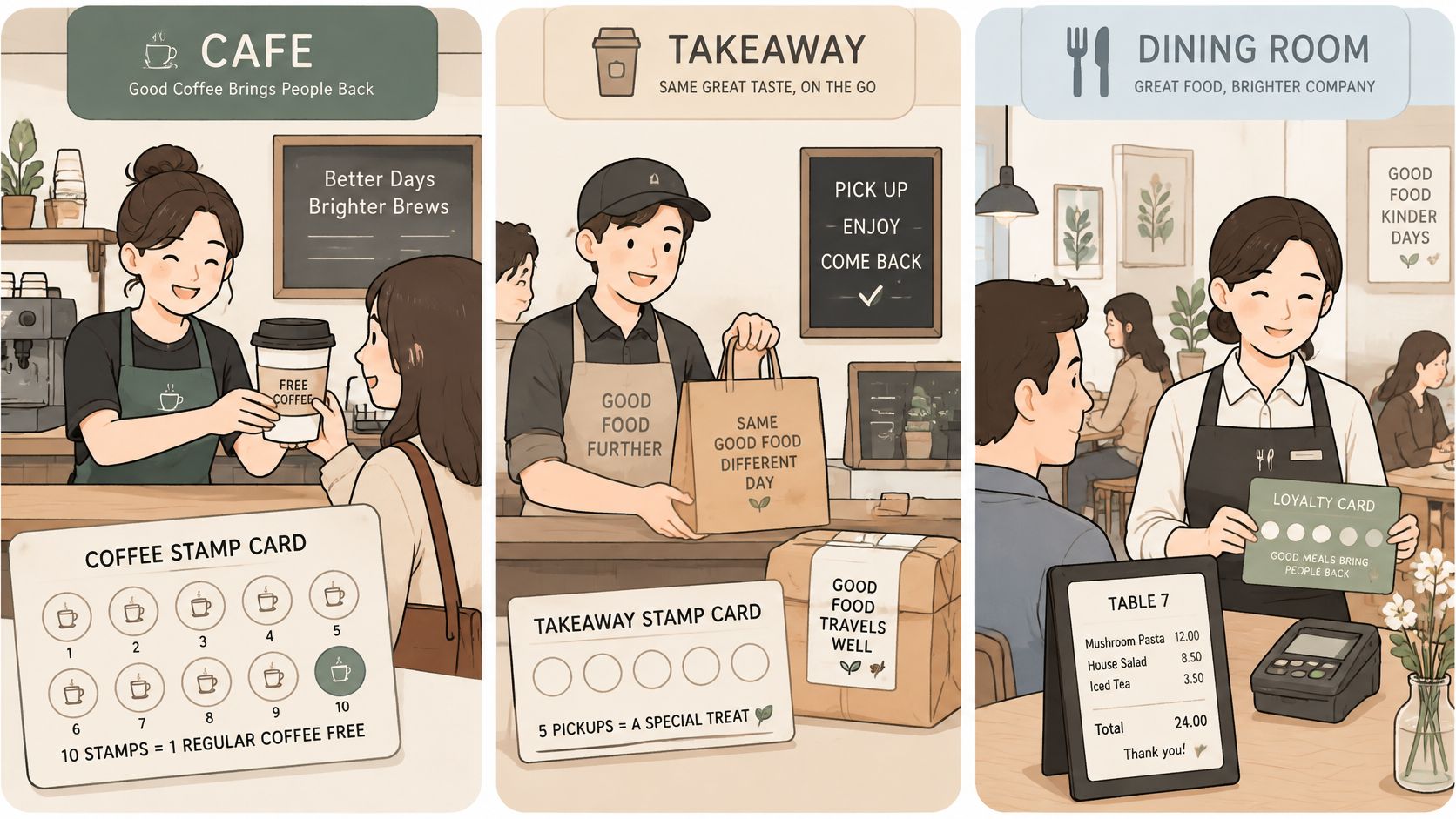
A stamp card that works at a coffee counter can stall in a dining room, and the reason is simple: the visit rhythm is different. A cafe guest might return twice in a week, a takeaway customer once a month, a dinner guest once a season. So match the earning rule to the ticket shape, then judge each version by the same test: did new guests reach a fourth visit, and did the reward cost stay inside the margin on the visits that got them there. Signup totals alone answer neither question.
Each kitchen needs a rule staff can carry through a busy checkout.
A cafe with a familiar drinks order
Say the cafe awards a stamp for each qualifying full-price drink purchase, with a free regular coffee on the tenth stamp. Discounted drinks earn no progress, and the cashier checks eligibility before crediting the pass. The rule survives a morning rush because it has two parts: what counts, and what the guest gets.
The measurement question is whether new guests return for a paid drink sooner. Regulars collecting a free coffee they were already on pace to earn tells you nothing about retention. At the proposed day-30 review, read new passes, second visits, and redemptions side by side. If the free tenth coffee goes mostly to people who already came every day, the program is paying for visits it did not create. Use the free stamp-card demo to rehearse this cafe pattern before printing counter materials.
A takeaway with family and solo orders
A takeaway selling family trays and individual wraps could award points by spend, with a free side at a clearly stated threshold. Cap promotional bonus points, and keep delivery-app orders outside the standard earning rule unless their economics have been separately approved.
Points by spend fit a mixed menu because a family tray and a solo wrap earn proportionally rather than equally. The trap is that a larger member basket looks like a win even when the same family would have ordered at full price anyway. Check whether guests who joined on a quiet night order again within the month, and subtract the side's fulfillment cost from whatever the program added. Contribution per order matters more here than basket size.
A neighborhood dining room
A dining room could restrict qualifying stamps to weekday lunches and reward progress with a dessert or upgrade. Weekend dinners stay outside the promotion rather than receiving a blanket percentage discount.
This works like a targeted price on spare capacity: lunch seats sit empty on Tuesday, so the program pays to fill those and leaves Saturday untouched. Track whether new lunch guests move toward a fourth visit during the early-retention window, and read redemption counts against weekday covers. Reward activity climbing while covers stay flat means the perk is feeding existing regulars instead of building new ones.
Remove the download obstacle
Plenty of diners hesitate to install a dedicated restaurant app, and the reluctance runs deepest at independent venues where the guest has no reason to expect one. A joining link and a wallet pass lower that barrier. The guest taps a link, verifies their phone, and saves the card to the wallet already on their device, with nothing to install.
That suits all three examples without requiring a chain-sized app project. Match your own ticket shape and service problem to the closest case, then test the behavior you want to change.
Try a Stamp Card Before You Train the Shift
At the counter, ask a practical question: is the next guest likely to buy a similar ticket again, or a different basket each time? Make that choice before asking the team to explain the program, because a clear commitment is easier to operate than a changing experiment.
Our phone-based setup supports a digital stamp card or points program without extra hardware. The merchant mobile app's built-in QR scanner adds or redeems points instantly at checkout on a smartphone, without a POS integration; customers use their wallet pass rather than installing an app.
Rehearse before printing
Use the free digital stamp-card guide to prepare your counter explanation, then inspect the card experience.
Make these commitments before inviting the shift to join:
- Keep the program consistent: Use the planned 90-day window to evaluate behavior, not constantly revised rules.
- Give staff a sentence: Explain the qualifying purchase and reward without a second explanation.
- Schedule the cohort check: At day 30, count progress toward visits two and four, with reward costs beside it.
Try the free digital stamp-card demo before printing your QR sign or briefing the full team.
Visit Loyal Customer to run a digital stamp card or points program from your phone, with cards guests keep in Apple Wallet or Google Wallet. Start with the free demo, rehearse earning and redemption, and launch with a reward you can afford and a repeat-visit result you can measure.