The biggest restaurant brand doesn't automatically have the best rewards model. The best restaurant rewards programs are the ones that match the behavior you want to drive, whether that's faster visits, larger tickets, or easier repeat ordering. Operators should compare earning clarity, redemption friction, visit frequency, digital adoption, and operational fit before they copy a famous chain. That's why this roundup looks at seven different patterns, from tiered status and app-led ecosystems to transparent point catalogs and wallet-native points or stamps. It works for diners comparing value and for restaurant operators studying what holds up in daily use.
Table of Contents
- 1. Loyal Customer
- 2. Starbucks Rewards
- 3. Chick-fil-A One
- 4. Chipotle Rewards
- 5. MyMcDonald's Rewards
- 6. Taco Bell Rewards
- 7. Dunkin' Rewards
- Top 7 Restaurant Rewards Programs Comparison
- Choose the Reward Behavior Your Restaurant Can Sustain
1. Loyal Customer
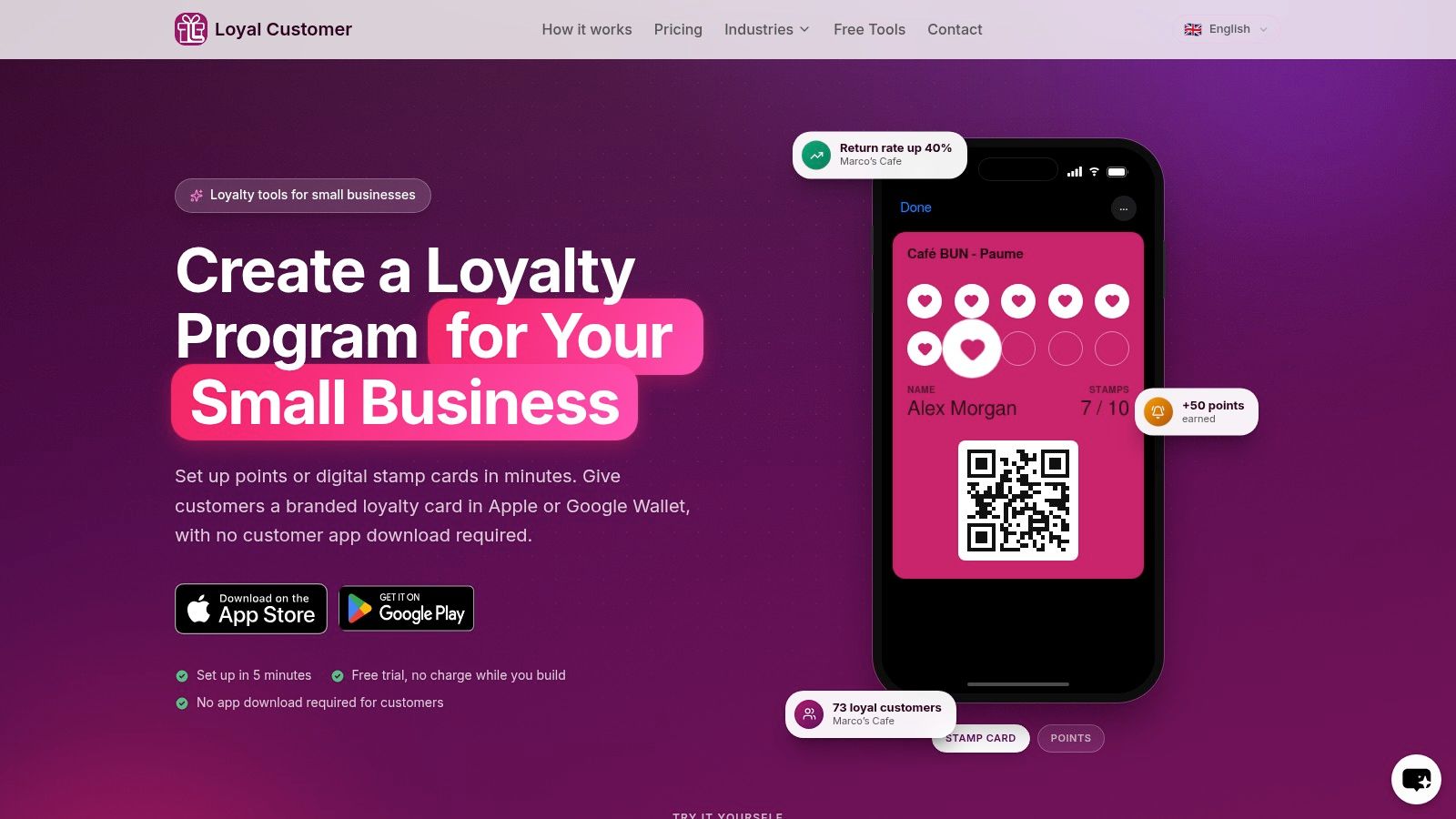
Loyal Customer is the cleanest example of a lightweight, wallet-native rewards system for small operators that do not want a separate app. It puts loyalty passes directly into Apple Wallet or Google Wallet, so the customer adds a pass with one tap instead of downloading another branded app. For cafés, bakeries, takeaways, and other small food businesses, that matters because the signup flow is short, the pass lives where customers already look, and the administration happens from a phone.
The platform supports two core mechanics, points and digital stamp cards. That gives an operator a choice between spend-based rewards, which fit higher-frequency purchases, and visit-based rewards, which fit a simple “buy nine, get one” style program. The practical upside is that one tool covers two common loyalty habits without forcing a heavy POS project.
Practical rule: if your guests don't need an app to join, they're more likely to use the program again.
The setup also fits small teams. Loyal Customer says merchants can build branded wallet-ready cards from a phone in about five minutes, then share them through a custom URL or QR code. That makes it useful for counter service, Instagram-led sellers, and businesses where staff can explain the program in seconds instead of training guests on a new app flow. You can see the feature set on the Loyal Customer features page, and the platform overview is at Loyal Customer.
The trade-off is scale. The base plan is capped at 100 customer slots, so a growing business may outgrow it quickly. It's strongest when you want simple rewards, fast launch, and low friction, not when you need deep segmentation, enterprise automation, or broad analytics.
Best for
- Cafés and bakeries that want a stamp card feel without paper.
- Small restaurants and takeaways that need points or visits tracked from a phone.
- Operators who want wallet-native access instead of app downloads.
Main limitation
- Not built for heavy complexity, so larger multi-location brands may need more advanced tooling.
2. Starbucks Rewards
Starbucks Rewards is the benchmark for tiered coffee loyalty because it makes status visible and repeat behavior easy to understand. Members move through Green, Gold, and Reserve levels, which gives the program a sense of progression that many copycats miss. The reward structure is also clear enough that frequent coffee buyers can see the next payoff without doing mental math.
The redemption design is especially strong for customers who like predictable value. Starbucks uses dollar-capped reward tiers, including a $6 reward at 100 Stars and a $10 reward at 200 Stars, so the catalog feels concrete rather than abstract. Bonus earning also matters here, because digital reloads and periodic app activity keep the account moving even when the customer is not making a large purchase.
Why operators study it
Starbucks Rewards works because it turns routine behavior into habit. The app, the web experience, and the in-store flow all reinforce the same account, so customers do not have to relearn the program in different channels. That kind of consistency is why it remains one of the most copied patterns in restaurant loyalty.
The drawback is that the rules are strict enough to feel unforgiving. Green-tier Stars expire after six months if monthly activity is not maintained, and some locations offer limited redemption tiers. For a café owner, that's a useful lesson, a loyalty program can be powerful, but the rules have to stay visible or customers tune out.
A strong coffee loyalty program should make the next reward obvious, not merely possible.
For diners, Starbucks works best if they already visit often and like watching status climb. For operators, it's a model of how to build a premium-feeling loyalty ecosystem without making the customer guess how the program works.
3. Chick-fil-A One
Chick-fil-A One is a straightforward example of points-per-dollar loyalty done in a family-friendly way. Members earn at a visible rate, then access better earning as they move through Member, Silver, Red, and Signature tiers. That structure is less flashy than some apps, but it gives customers a simple sense of progress and makes reward math easy to follow.
The program also handles gifting, which is one of the more practical features in mainstream restaurant loyalty. Some rewards can be shared from Silver tier and above, which suits families and group orders. In practice, that matters because the person buying food is not always the person who gets the reward, and loyalty works better when the value can move across a household.
What makes it effective
Chick-fil-A's strength is consistency. Guests can earn in app or in store, and the tier thresholds are clearly visible, which keeps the program from feeling vague. That same clarity is what many smaller restaurants should copy, even if they cannot match the brand's scale or app polish.
The downside is flexibility. Pilot rewards, anniversary perks, and market-specific offers can vary, so the customer experience isn't perfectly uniform everywhere. That's normal for a large chain, but it's also a reminder that highly customized programs can become inconsistent when they spread across many locations.
For operators studying the program, the lesson is simple. Visible earn rates, clear tier thresholds, and family-friendly redemption can do a lot of work without needing a complicated feature stack. Chick-fil-A One is not trying to impress customers with novelty, it's trying to make participation feel easy and repeatable.
4. Chipotle Rewards
Chipotle Rewards is one of the better examples of a transparent catalog-based program. Customers earn 10 points per $1, then redeem through a visible Rewards Exchange menu that shows exactly what different items cost in points. That level of clarity is valuable because it reduces the biggest loyalty problem, customers not knowing whether the program is worth paying attention to.
The program also adds monthly free reward drops, birthday rewards, and gamified Extras challenges. Those mechanics keep the app from feeling static, and they give Chipotle more chances to pull a customer back before the next normal visit would happen. In practice, that mix of base earning and periodic nudges is what makes a points system feel alive.
Why this model works
The best part of Chipotle Rewards is the math. Customers can see the relationship between spend and reward, and they can compare options without guessing. That makes it a strong fit for digital-first guests who care about predictability more than novelty.
The trade-off is stacking. Rewards and coupons generally can't be layered together, and a customer usually gets one reward per order. That keeps redemption clean for the brand, but it can make the program feel less flexible than customers expect once they've earned something.
Operator insight: transparent point costs are often more persuasive than clever branding.
For restaurants, the Chipotle pattern is useful when you want clear spend-based loyalty with a published catalog. It's not just about giving away food, it's about making the value visible enough that guests keep coming back to hit the next threshold.
5. MyMcDonald's Rewards
MyMcDonald's Rewards shows how an app can turn a huge footprint into an everyday habit. The program awards 100 points per $1 on eligible purchases, then lets customers redeem across familiar items like fries, Big Macs, and McNuggets. Because the earning rate is easy to understand and the brand is everywhere, the program feels immediate to many guests.
The app-centric design is the central story here. Customers can scan, enter a code, or order digitally, and the experience stays tied to the same account. That makes the program feel operationally smooth, which is one reason it remains a strong example for restaurants that want a heavy app presence.
The Loyal Customer loyalty program guide is relevant here because it shows the opposite end of the spectrum, a small-business loyalty system can still reward repeat visits without asking customers to manage another full app. That contrast matters. McDonald's rewards model works because the brand has scale, while smaller restaurants usually need simpler participation.
What works and what doesn't
The upside is obvious. Fast earning keeps the value proposition visible, and the app creates a direct channel for offers. Customers who already use McDonald's often can treat the program as a built-in part of ordering rather than a separate task.
The downside is that app-driven ecosystems can feel rigid if the customer experience changes too often. Terms, point thresholds, and reward availability can shift, and not every channel qualifies the same way. That makes the model powerful, but it also makes it less forgiving for guests who want the rules to stay simple.
For operators, the McDonald's pattern is useful if you want an app-first, high-frequency loyalty engine. For small businesses, it's a reminder that the more complex the platform, the more important it becomes to explain the reward path clearly.
6. Taco Bell Rewards
Taco Bell Rewards is built around milestone loyalty. The visible cadence, a free reward every 250 points, gives customers a target they can track. That is one reason it works well for guests who like seeing progress, especially when the program also includes birthday gifts, bonus-point challenges, and exclusive offers.
The Fire Tier is the strategic layer. Once a customer reaches 2,000 points per calendar year, they gain a higher earn rate of 11 points per $1. That is a strong example of how a brand can reward heavy users without changing the basic structure for everyone else.
Why the cadence matters
The reward rhythm is the point. Instead of making customers wonder when the next payoff arrives, Taco Bell makes the next milestone visible. That keeps the program from drifting into background noise.
There is a cost to that clarity, though. Points expire six months after the month they were earned if they are not converted to rewards, and Fire Tier requires enough annual spend to matter only for frequent guests. That means the program is best for people who visit regularly, not for occasional fans who want a casual perk.
For operators, the lesson is simple. Milestone-based programs work when the next reward is obvious and attainable. Taco Bell uses that structure well, and it shows why a good loyalty program does not need to be complicated to be motivating.
7. Dunkin' Rewards
Dunkin' Rewards is a strong example of a high-frequency coffee program built for repeat visitors. It awards 10 points per $1 and adds Boosted Status once a customer hits 12 or more qualifying visits in a month, which gives very frequent guests a reason to stay engaged. The catalog format also helps, because customers can choose from food and beverage redemptions instead of being locked into one type of reward.
The in-app experience is central to the program. A scannable ID supports in-store accrual, and order-ahead integration keeps the account tied to the everyday purchase flow. That makes it a practical model for brands with regular traffic and loyal morning routines.
The real trade-off
The upside is clear earning and flexible redemption. Dunkin' gives frequent customers a fast way to accumulate value, and Boosted Status makes the most active guests feel recognized. That is a good design pattern if your business depends on repeat visits.
The downside is that reward value can shift. The program transition drew criticism because some premium drink redemptions became more expensive, and the terms allow catalog and point-price changes. That means the customer's sense of value can weaken if the reward path keeps moving.
For operators, Dunkin' is useful as a lesson in frequency design. If your business sees the same guests multiple times a month, a boosted tier can reinforce habit. If visits are less predictable, a simpler structure may be easier to sustain.
Top 7 Restaurant Rewards Programs Comparison
| Item | 🔄 Implementation Complexity | ⚡ Resource Requirements | ⭐ Expected Outcomes | 📊 Ideal Use Cases | 💡 Key Advantages |
|---|---|---|---|---|---|
| Loyal Customer | Low, mobile-first, guided setup; no dev work | Low, $12/mo (base), phone-based admin, QR distribution | ⭐ Moderate, reported +40% return rates for small merchants | Single-location small consumer businesses (cafes, salons, bakeries) | Wallet-native passes, fast launch, points or stamp flexibility |
| Starbucks Rewards | High, enterprise app + nationwide operations | High, significant tech, marketing, and CRM investment | ⭐ High, strong engagement, tier-driven loyalty | Large national coffee chain targeting frequent buyers | Multi-tier status, frequent accelerators, broad reach |
| Chick-fil-A One | Medium, app-centric with tier logic and order-ahead | Medium, app features, local pilot support | ⭐ Moderate-High, clear progression increases spend | Family-focused QSRs with order-ahead and local promos | Simple tier multipliers, reward gifting, in-app ordering |
| Chipotle Rewards | Low–Medium, straightforward points + catalog system | Medium, catalog upkeep and recurring promotions | ⭐ Moderate, transparent earn/burn fosters predictable redemptions | Digital-first fast-casual brands and value-seeking customers | Points-to-item catalog, monthly drops, gamified challenges |
| MyMcDonald's Rewards | Medium–High, large-scale app integration and offers | High, national infrastructure, frequent campaign ops | ⭐ High, very fast accrual and many redemption touchpoints | Mass-market QSRs with high visit frequency and scale | High earn rate, ubiquitous locations, frequent national offers |
| Taco Bell Rewards | Medium, points cadence plus premium tier management | Medium, campaign management for challenges & tiers | ⭐ Moderate, milestone cadence boosts repeat visits | Guests who like milestone rewards and gamified engagement | Clear milestone rewards, Fire Tier incentives, regular challenges |
| Dunkin' Rewards | Medium, points model with Boosted Status mechanics | Medium, requires order-ahead, scannable IDs, catalog updates | ⭐ Moderate, faster earn rate encourages frequent visits | Frequent daily visitors seeking fast accrual and flexible redemptions | Faster earn rate, Boosted Status for heavy users, flexible catalog |
Choose the Reward Behavior Your Restaurant Can Sustain
The smartest way to choose among the best restaurant rewards programs is to start with behavior, not brand names. Decide whether you need visit-based stamps or spend-based points, then test how much customer friction you can tolerate, how clear the redemption process is, and how often guests are likely to return. A program that looks impressive on a landing page can still fail if staff can't explain it quickly or if customers need too many steps to join.
Operational capacity matters just as much as the customer side. A small café usually needs something that can be launched fast, managed from a phone, and kept simple enough that it doesn't slow the line. A multi-location restaurant may need more structure, but even then the best programs usually start with one earning rule, one attainable reward, and one clear redemption process before they add tiers, challenges, or segmentation.
That is where Loyal Customer fits naturally. It's a strong option for small businesses that want phone-based administration, Apple Wallet and Google Wallet passes, points or digital stamps, QR sharing, and a free trial without asking customers to install a separate app. If your goal is to reward repeat visits without adding app friction, that design is hard to ignore.
If you want a loyalty setup that keeps things simple for guests and manageable for staff, take a close look at Loyal Customer. It gives small restaurants a practical way to run points or stamp cards from a phone and deliver wallet-native passes customers keep. For cafés, takeaways, and independent operators, that's a strong starting point for a rewards program that people will use.