About 90% of consumers belong to at least one loyalty program, and the average consumer holds roughly 21.2 brand memberships and about 11.4 active accounts, according to Capital One Shopping's 2026 loyalty statistics summary. Another basic points balance won't automatically earn attention in that crowded environment. Effective loyalty programs reward a specific behavior, make progress visible, and fit naturally into the customer's buying routine.
That distinction matters for a coffee shop, salon, bakery, gym, or independent retailer choosing between points and stamps. The strongest customer loyalty examples span transactional, emotional, referral, personalized, and community-led models, but each one solves a different repeat-purchase problem. A useful evaluation framework is simple: identify the customer action, test the reward design, choose the delivery channel, estimate operational effort, and ask whether a smaller business can replicate the experience.
The models below apply that framework to ten recognizable approaches. They also show where a phone-managed program, digital stamp card, or Apple Wallet and Google Wallet pass can remove friction. Merchants comparing those options can consider Loyal Customer's points-based loyalty program as one practical route for testing a mobile-first setup.
Table of Contents
- 1. Points-Based Loyalty Programs
- 2. Digital Stamp Cards
- 3. Wallet-Native Pass Technology
- 4. Tiered Loyalty Programs
- 5. Referral and Advocate Rewards Programs
- 6. Experiential and Exclusive Event Rewards
- 7. Birthday and Anniversary Rewards Programs
- 8. Gamification and Progress-Based Loyalty
- 9. Personalized and Dynamic Rewards Programs
- 10. Sustainability, Impact and Community Loyalty Programs
- 10-Point Comparison of Customer Loyalty Program Examples
- Turn These Loyalty Lessons Into a Practical Program
1. Points-Based Loyalty Programs
Points programs fit merchants whose basket values vary and whose customers want choice at redemption. Starbucks Rewards converts purchases into Stars, Sephora Beauty Insider places points within a tiered structure, and McDonald's links purchases to rewards in its digital experience. Amazon Prime shows how points and broader membership benefits can support retention, but a small merchant should copy the underlying logic, not its scale.
The model follows a clear cycle: a customer buys, earns points, watches a balance grow, and chooses when to redeem. That flexibility suits restaurants with different order values, independent retailers selling varied products, and salons combining appointments with retail add-ons. It is less suitable for businesses built around one simple, frequent purchase, where a digital stamp card may be easier to explain.
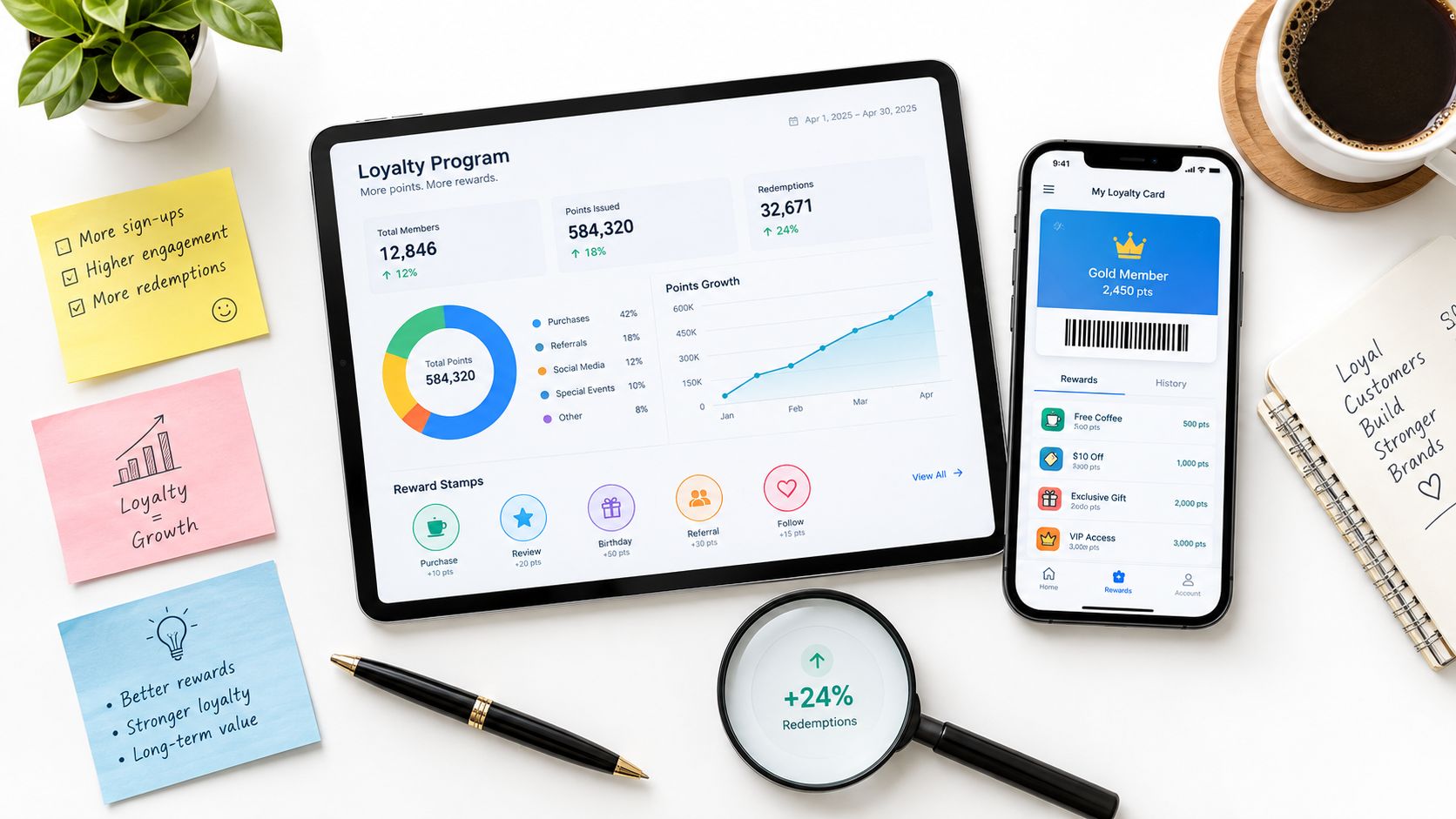
A phone-based system can display the balance through a digital wallet pass, removing paper records and giving staff a consistent way to explain earning and redemption at checkout. Loyal Customer's guide to points-based loyalty programs outlines this approach for merchants managing accrual and redemption from a phone.
Make the economics visible
Points programs lose traction when customers cannot understand their value or when redemptions reduce margin. Set an earning rule that customers can remember, then offer more than one path, such as a smaller reward they can reach sooner and a larger reward for continued visits.
Smaller businesses can apply the model with a few operating choices:
- Use bonus periods carefully: Award extra points during slow periods instead of reducing every transaction's price.
- Show milestones clearly: Use a wallet notification or receipt message to mark progress.
- Review redemption behavior: If customers rarely reach a reward, lower the threshold or add an intermediate option.
- Connect rewards to business goals: Award points for higher-margin add-ons, off-peak visits, or selected seasonal products.
The trade-off is operational effort. Points provide flexibility across products and services, but they require more tracking, explanation, and margin control than a visit-based card. Set the rules before launch, and test whether the added choice produces enough repeat purchasing to justify that complexity.
2. Digital Stamp Cards
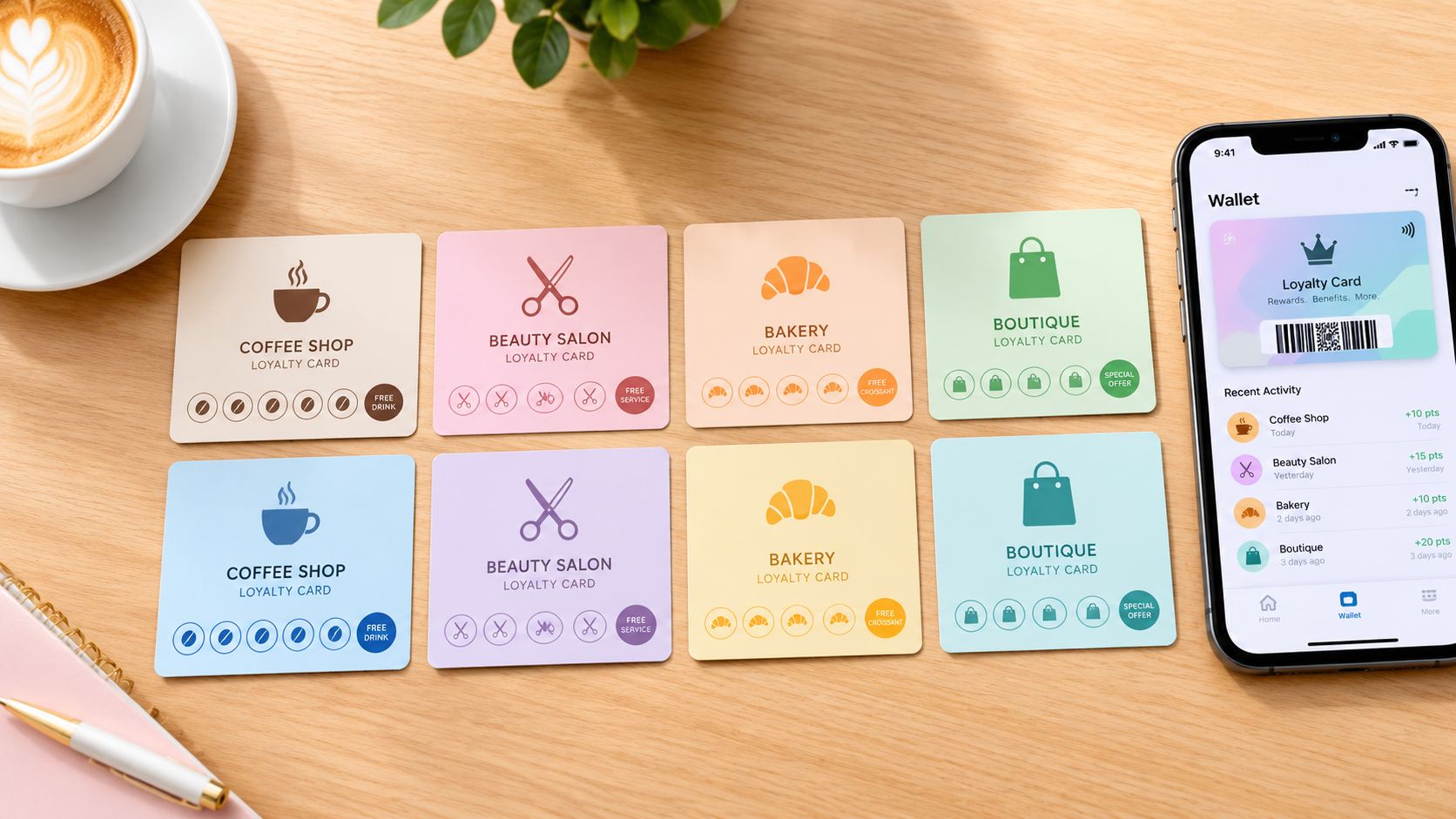
Digital stamp cards fit merchants with frequent, similar purchases. Cafes can reward regular coffee visits, bakeries can recognize repeat pastry purchases, and salons can connect completed appointments with a complimentary product or service. The customer sees the exchange immediately because the format builds on a familiar paper punch card.
The main improvement is reliable record-keeping. A digital pass stays on the customer's phone, so it is less likely to be lost or left at home. Staff add a stamp after each qualifying purchase, while customers can check their progress without asking anyone to rebuild a paper record. Digital punch cards from Loyal Customer describes this phone-managed workflow.
The model works best when the customer's next visit is easy to predict. A cafe with regular morning traffic can use stamps to support habit formation. A retailer with irregular, high-value purchases may need points or spend-based rewards instead.
Set the reward around one repeat action, such as a visit, class, coffee, treatment, or qualifying purchase. Keep the finish line close enough to feel attainable, and make the reward useful. A free item, upgrade, or relevant add-on will usually motivate more strongly than a token discount.
Small merchants can refine the program with a few operating choices:
- Use occasional multipliers: Offer double stamps during quieter trading periods rather than discounting every transaction.
- Show progress clearly: Display the current balance and redemption rule where customers will see them.
- Remind customers near completion: A timely notification can bring an almost-forgotten card back into use.
- Set a clear qualification rule: State whether a stamp applies per visit, item, appointment, or minimum purchase.
The trade-off is limited value control. A customer buying a basic item and one making a much larger purchase may receive the same credit. That suits cafes and bakeries with consistent baskets, but can weaken margins in broader retail. Use stamp cards for predictable repeat behavior, and choose a value-based model when order sizes vary widely.
3. Wallet-Native Pass Technology
Wallet-native passes reduce the adoption work behind loyalty programs. Customers can add a branded card to Apple Wallet or Google Wallet rather than download an app, create another login, or carry a printed card. That makes this approach a strong fit for independent merchants with frequent visits and limited development capacity.
The pass is a membership credential, not the entire program. Starbucks, Panera Bread, and Target place digital membership inside broader mobile experiences, but smaller businesses can apply the same principle with a simpler setup. The pass should be quick to add, easy to present, and clear about the customer's current benefit.
Loyal Customer's Apple Wallet pass guidance explains this wallet-native approach. A pass can show points or stamps, include a QR code for check-in, and display useful details such as opening hours and contact information.
Make the pass useful at the moment of purchase
Put a wallet-add button or QR code on the website, digital receipt, social profile, and printed receipt. Use the merchant's colors and logo so staff and customers can identify the pass quickly among other cards.
Set up the operating details before launch:
- Keep scanning reliable: Test the barcode in normal store lighting and on older phones.
- Send timely notifications: Use balance updates, reward alerts, birthday offers, or event reminders when they give customers a clear reason to return.
- Refresh the pass occasionally: Seasonal artwork can keep the pass visible without changing the reward rules.
- State the redemption step: Customers and staff should know whether to scan, show, or tap the pass.
- Support both major mobile ecosystems: Device choice should not exclude part of the customer base.
This model suits cafes, salons, studios, and other businesses where customers can present a phone at each visit. Its trade-off is limited strategic value on its own. A wallet pass improves access and visibility, while the reward structure still determines whether customers return. Small merchants should connect the pass to a specific repeat-purchase goal, such as visits, appointments, or qualifying orders.
4. Tiered Loyalty Programs
Tiered loyalty programs turn repeat purchases into a visible status journey. Sephora Beauty Insider uses Insider, VIB, and Rouge tiers. Marriott Bonvoy and airline programs also offer increasing benefits to recognize frequent or higher-value customers. The appeal goes beyond discounts: recognition, access, and progress can give customers a reason to return.
This model suits merchants with meaningful differences in customer value or visit frequency. A salon could offer priority booking to regular clients, a restaurant could give upper-tier members early access to events, and a specialty retailer could reserve new products for advanced members. It fits poorly when every customer makes the same low-value purchase and the team cannot deliver different experiences.
The strongest programs give each tier a clear job. An entry level should provide useful recognition quickly. Higher levels can add benefits customers notice without reducing margin on every order. Early product access, consultations, private events, or priority service may be more sustainable than larger discounts.
Use a simple operating plan:
- Set reachable progress points: Customers need a realistic path to the first upgrade.
- Show the next milestone: Display current status and remaining progress on receipts, accounts, or a loyalty pass.
- Define benefits precisely: State when priority booking, reserved stock, or event access applies.
- Check delivery capacity: A perk fails if staff cannot honor it during busy periods.
- Choose a review rule: Explain whether status lasts indefinitely, resets, or is reviewed after a set period.
Start with two levels if three would confuse customers or staff. The main trade-off is administrative effort. Employees must recognize eligibility, and the merchant should check whether upper-tier rewards produce profitable repeat behavior rather than just subsidizing existing regulars. A small retailer may gain more from one well-delivered priority benefit than from a complex discount ladder.
5. Referral and Advocate Rewards Programs
Referral rewards work best when customers already have a reason to recommend the business. Uber has used two-sided ride credits, Dropbox built referrals around additional storage, and Airbnb has used travel credits. A local salon can reward both the customer who refers a friend and the friend who books. A cafe can limit the offer to a specific bring-a-friend period.
Give both people a clear benefit. Rewarding only the advocate can make the newcomer feel like an acquisition target. A mutual offer is easier to explain and gives the existing customer a prompt to share after a positive visit.
Reward completed referrals, not clicks
Count a referral after the new customer completes an action that matters to the business. For a salon, that could be a completed appointment. For a gym, it might be a first class. For a retailer, use a qualifying purchase. This protects the budget while connecting the reward to genuine acquisition.
A practical setup includes:
- Make sharing easy: Offer SMS, email, QR code, or copy-link options.
- State the exchange clearly: Explain what each person receives and when it arrives.
- Set a qualification rule: Exclude self-referrals, cancelled appointments, and incomplete bookings.
- Show progress: A visible referral milestone can prompt another recommendation.
- Connect the programs: Give the advocate points or a stamp, while the new customer receives an introductory reward.
The merchant type should shape the offer. Appointment businesses can trigger rewards after a completed booking. Gyms can use the first attended class. Retailers need a qualifying order rule. These conditions add operational work, but they prevent staff from issuing rewards for leads that never become customers.
Cost control remains the main trade-off. An incentive that is too small may not motivate sharing, while an open-ended offer can subsidize customers who would have arrived anyway. Test it with a narrow audience, then compare referred customers' repeat behavior with other new customers before expanding the program.
6. Experiential and Exclusive Event Rewards
Access can create stronger loyalty than another discount. A luxury brand might invite members to a preview, a restaurant could host a chef-led tasting, or a fitness studio might offer an early class or trainer consultation. Each reward gives customers a role in the business, not just a reason to buy.
This model fits merchants with expertise, limited capacity, or a community around the product. A coffee roaster can invite regulars to a tasting. A salon can host a private consultation evening. A fitness studio can reserve an early session for members. The experience need not be expensive. Priority booking or a dedicated service window may matter more when it removes a real customer inconvenience.
Start with one privilege your team can deliver reliably. Add larger events only after demand and staffing make the format practical.
Design the experience around the merchant
The strongest events also produce useful feedback. Invite members to preview a product, ask focused questions, and record what they value. A seasonal schedule keeps the offer fresh without committing the business to frequent, costly events.
Build the program around these decisions:
- Use existing expertise: Let the owner, chef, stylist, trainer, or maker lead an activity the business already knows how to deliver.
- Set a clear access rule: Explain whether customers qualify through membership, purchase history, or another visible milestone.
- Choose the right capacity: Small groups create exclusivity, while remote access can include customers who live elsewhere.
- Give attendees a reason to return: Connect the event to a preview, booking opportunity, service benefit, or next visit.
- Review post-event behavior: Compare return visits, referrals, and responses to the next offer with activity from similar customers.
The trade-off is operational complexity. Events require planning, staff time, and capacity controls, so they work best above a simple core loyalty program. Smaller consumer-facing businesses should begin with a repeatable access benefit, measure whether it changes return behavior, and expand only when the result justifies the effort.
7. Birthday and Anniversary Rewards Programs
A birthday reward gives customers a personal reason to visit within a defined period. Starbucks has used a birthday drink offer, restaurants commonly provide birthday items, and beauty brands often pair a birthday gift with a purchase. A local cafe could offer a pastry, while a gym might recognize the anniversary of a member's joining date.
This model fits merchants with an identifiable customer relationship and a product that can be gifted or upgraded. The message also feels more relevant than a generic discount. “Your birthday reward is ready” gives customers a clear reason to act.
Build the offer around trust and repeat behavior
Ask for a birth date only when the value exchange is clear. Explain what customers receive, collect only the information the program needs, and let members control email or SMS preferences.
Set the operating rules before launch. A defined redemption window creates a planning prompt, while a useful reward might be a free item, upgrade, or service benefit. Send a reminder sequence before the date and during the valid period, rather than relying on one message.
A membership milestone can recognize a joining anniversary when the relationship matters, especially for gyms, salons, subscriptions, and other service businesses. A wallet notification can support email or SMS by placing the offer where members already access their loyalty details.
The trade-off is predictability. Birthday campaigns can create goodwill and a calendar-based visit, but they rarely change everyday purchase frequency on their own. Smaller consumer-facing businesses should use them as an emotional layer over stamps, points, or service recognition, then compare redemption and subsequent visits with normal customer behavior.
8. Gamification and Progress-Based Loyalty
Gamification works best when it strengthens a habit customers already have. Duolingo uses streaks and badges, Foursquare and Swarm have used location-based achievements, and fitness platforms turn recurring activity into challenges. A coffee shop can adapt the model to repeat visits, while a retailer can reward product discovery or seasonal-category purchases.
The customer action must remain simple. A progress bar, badge, or time-limited challenge can make an existing behavior more engaging, but it cannot compensate for unclear earning rules or a weak reward. For smaller merchants, the practical goal is to encourage another visit, purchase, or product trial without adding heavy technology or staff workload.
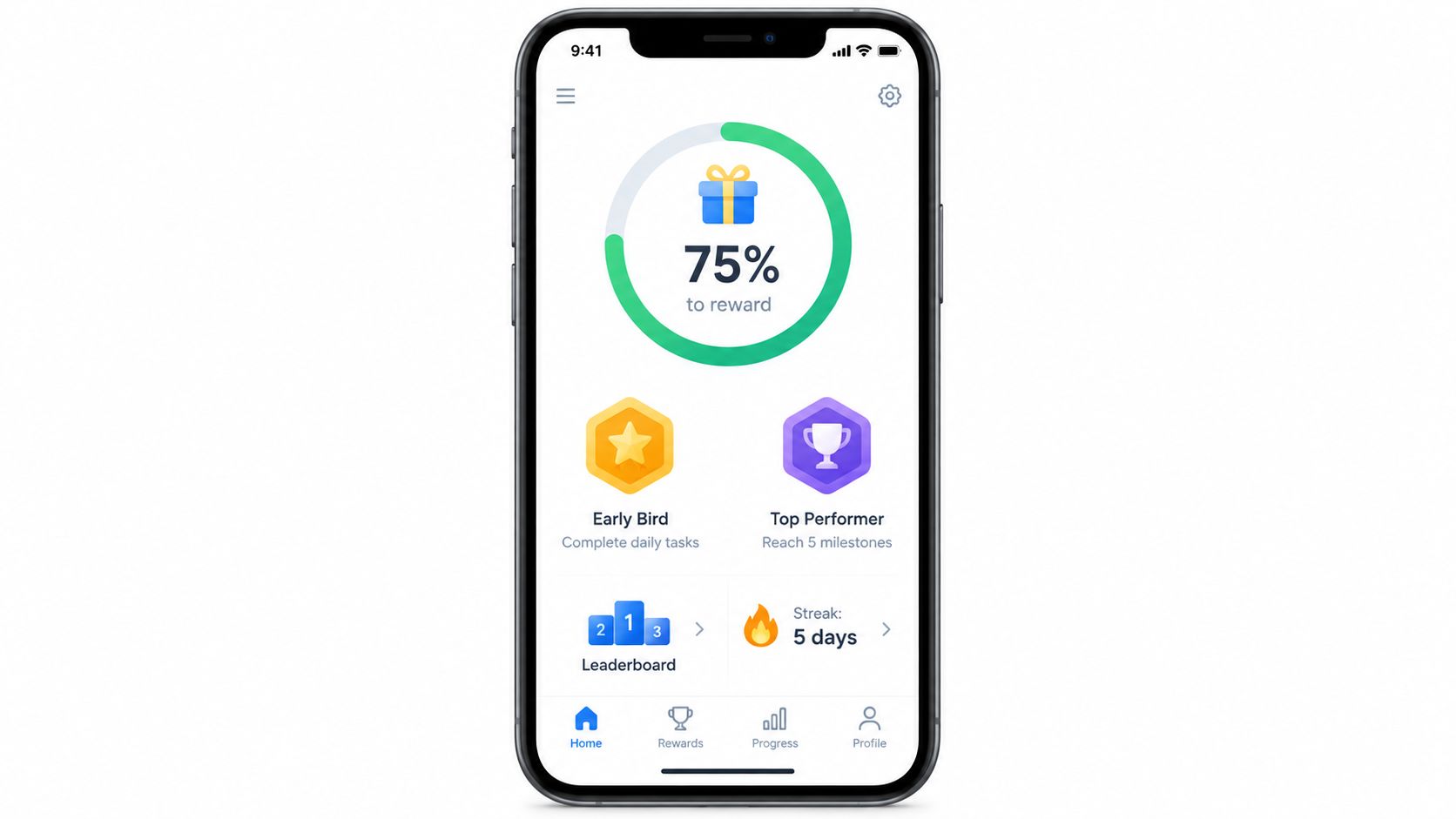
Start with one mechanic. A bakery could show progress toward a free item after a defined set of visits. A gym or studio might run a shared attendance challenge. A retailer could mark progress across complementary categories. Each option supports a different repeat-purchase goal, so choose the behavior before selecting the technology.
Useful design choices include:
- A short challenge: Tie completion to the current trading objective.
- A visible finish line: State exactly what customers receive.
- A quick payoff: Frequent reinforcement can outperform a distant prize.
- A shareable achievement: Allow celebration without requiring public sharing.
- A cooperative goal: Use community progress where participation itself builds belonging.
Complexity creates the main operational risk. Challenges that never change become background noise, while multiple rules make the program feel like work. Review participation, completion, and repeat purchases, then keep only the mechanics customers understand and staff can maintain.
An explainer can help staff and customers see how progress-based rewards fit the wider program.
9. Personalized and Dynamic Rewards Programs
Personalization works best when it changes the next offer, not when it adds complexity. Amazon uses shopping behavior for recommendations, Sephora connects loyalty with beauty discovery, Netflix tailors viewing suggestions, and Spotify creates individualized playlists. Smaller merchants can apply the same principle with clear customer segments and simple rules.
Start with purchase categories, visit frequency, and stated preferences. A cafe might offer a preferred drink add-on to a regular customer. A salon could remind clients about a service they book seasonally. A retailer might recommend a complementary product after a purchase. Each example supports a different repeat-purchase goal, so define the desired behavior before choosing software.
Make the reason for each offer clear
Customers should understand why they received a reward and have control over future messages. Consent may be required, and preference settings should be easy to find. The business needs only the information that improves relevance.
Use these operating rules:
- Begin with known behavior: Start with a purchase category, visit pattern, or declared preference.
- Explain the reason: “Because you've purchased this category” makes the offer easier to accept.
- Limit the data: Store only information that supports the customer experience.
- Test before scaling: Compare responses and whether redemptions lead to useful repeat purchases.
- Give customers control: Let them adjust interests or opt out of tracking.
- Protect trust: Do not use personalization to pressure unnecessary purchases.
Dynamic rewards trade convenience for operational effort. Clean records, consistent tagging, and privacy practices determine whether the program remains manageable. A micro-merchant may gain more from one reliable segment than from a system with many rules. Review performance regularly, remove offers customers ignore, and keep the segments staff can explain and maintain.
10. Sustainability, Impact and Community Loyalty Programs
Sustainability and community rewards work best when they give customers a concrete reason to act. A cafe can reward reusable-cup visits, a gym can tie attendance to a donation, and an independent retailer can invite members to support a local cause. Brands such as Patagonia, Starbucks, and Sephora show that loyalty can include participation, not just repeat buying.
The trade-off is credibility. Customers spot vague sustainability claims quickly, so a small business needs one clear promise it can support. That might be less disposable packaging, a named local charity, or funding for one specific community project. The smaller the merchant, the more important it is to keep the message narrow enough for staff to explain without hesitation.
A practical model is to make the action visible at the counter and easy to verify. Staff can log a reusable-cup visit, a donation-linked visit, or a community contribution through the same points or stamp workflow already used for purchases. The pass or receipt should show both the reward and the reason it was granted.
Keep the operating rules simple:
- Choose one meaningful action. Do not spread attention across weak causes.
- Explain the mechanism. Say what the business contributes and when.
- Use credible partners. A recognized charity or local organization improves accountability.
- Offer choice where possible. Let customers pick among relevant causes.
- Report progress plainly. Share updates without overstating outcomes.
- Set community expectations. Events, forums, and ambassadors need clear rules.
Evidence is the hard part. If the merchant cannot track or substantiate the claimed impact, trust weakens fast. Community loyalty also builds more slowly than a stamp card, so it works best as a complement to reliable service and a clear earning model.
10-Point Comparison of Customer Loyalty Program Examples
| Approach | Implementation Complexity 🔄 | Resource Requirements ⚡ | Expected Outcomes 📊 | Key Advantages ⭐ | Ideal Use Cases 💡 |
|---|---|---|---|---|---|
| Points-Based Loyalty Programs | 🔄 Medium, requires transaction tracking, redemption rules, wallet integration | ⚡ Moderate, backend, analytics, wallet pass integration | 📊 Drives repeat purchases; provides behavioral data for personalization | ⭐ Flexible rewards; data-rich insights; familiar to customers | 💡 Retail, coffee shops, restaurants, gyms |
| Digital Stamp Cards (Punch Cards) | 🔄 Low, simple visit-based logic and visual progress | ⚡ Low, minimal backend; wallet pass distribution | 📊 Increases visit frequency; lower data granularity | ⭐ Easy to understand; strong visual motivation; low friction | 💡 Small cafes, salons, bakeries, independent retailers |
| Wallet-Native Pass Technology (Apple/Google Wallet) | 🔄 Low–Medium, pass creation and platform provisioning | ⚡ Low, no app development; requires pass updating | 📊 Higher add/adoption rates and visibility at checkout | ⭐ Zero-app friction; always-accessible; native notifications | 💡 Any mobile-first business; multi-location chains |
| Tiered Loyalty Programs | 🔄 High, multi-level rules, maintenance, communications | ⚡ High, CRM, reporting, personalized benefits | 📊 Drives aspirational spend and higher lifetime value | ⭐ Segments high-value customers; encourages upsell | 💡 Hotels, large retailers, premium service chains |
| Referral and Advocate Rewards Programs | 🔄 Medium, referral tracking, verification, anti-fraud measures | ⚡ Moderate, unique links/codes, monitoring tools | 📊 Low-cost customer acquisition with higher LTV referrals | ⭐ Cost-effective growth; network effects; mutual incentives | 💡 Startups, service businesses, community-driven brands |
| Experiential & Exclusive Event Rewards | 🔄 High, event planning, curation, execution logistics | ⚡ Medium–High, staff, venues, coordination | 📊 Deep emotional loyalty and strong word-of-mouth | ⭐ High perceived value; hard-to-replicate experiences | 💡 Luxury brands, high-margin services, niche communities |
| Birthday & Anniversary Rewards Programs | 🔄 Low, date-based triggers and timed offers | ⚡ Low, simple automation and notification systems | 📊 Predictable traffic spikes and high redemption rates | ⭐ Personal, time-sensitive recognition; easy to implement | 💡 Any business with regular customers (cafes, salons, retail) |
| Gamification & Progress-Based Loyalty | 🔄 High, game mechanics, UX design, ongoing content | ⚡ High, platform features, maintenance, creative resources | 📊 Strong engagement, habit formation, increased visit frequency | ⭐ Highly engaging and shareable; motivates repeat behavior | 💡 Digital-native brands, gyms, coffee shops targeting younger users |
| Personalized & Dynamic Rewards Programs | 🔄 Very High, data pipelines, ML models, privacy controls | ⚡ Very High, analytics, engineering, compliance resources | 📊 Higher redemption/conversion and improved ROI on offers | ⭐ Highly relevant offers; superior targeting and retention | 💡 Data-capable retailers, e‑commerce, large loyalty programs |
| Sustainability, Impact & Community Loyalty Programs | 🔄 Medium–High, impact tracking, reporting, community management | ⚡ Moderate, partnerships, transparency tools, content | 📊 Strong advocacy and retention among values-driven customers | ⭐ Differentiates brand; builds community and authentic storytelling | 💡 Sustainable brands, cafes encouraging reuse, lifestyle communities |
Turn These Loyalty Lessons Into a Practical Program
The right model depends less on what a famous brand uses and more on the behavior your business needs to increase. A cafe with frequent, similar visits will usually get the clearest result from digital stamps. A retailer with different product prices and multiple redemption choices may need points. A merchant whose biggest problem is customer adoption should prioritize a wallet-native pass before adding tiers, challenges, or personalization.
The market context makes that discipline important. Loyalty programs are now a large, persistent customer channel, with American consumers holding 1.56 billion active loyalty memberships in 2025, according to Capital One Shopping's loyalty program statistics. Customers already have many competing balances and cards. A smaller business therefore needs a program that is easy to understand and useful at the moment of purchase, not a feature list assembled for its own sake.
Use this implementation sequence:
- Define the behavior: Choose repeat visits, higher-value baskets, referrals, off-peak demand, or another specific goal.
- Select one mechanic: Start with stamps for consistency or points for variable values.
- Set a sustainable threshold: Price the reward against your margin and the behavior you want to encourage.
- Make progress visible: Show stamps, points, status, or the next milestone clearly.
- Launch through a phone-friendly pass: Reduce the need for paper cards, extra apps, or complicated onboarding.
- Review actual behavior: Examine redemption and repeat-visit patterns before adding tiers, gamification, events, or personalized offers.
Operational ROI should guide the next decision. One 2026 loyalty report summary from Antavo says 83% of loyalty program owners are satisfied, 9 out of 10 of those measuring performance report positive ROI, and the average positive ROI is 5.3x, while 60% of brands identify technology integrations as a top challenge. Those figures don't mean every program will be profitable. They show why merchants should evaluate economics and implementation effort together.
The distinction between simplicity and measurability is especially important for cafes, salons, bakeries, gyms, and micro-merchants. A basic stamp card may be easier for staff and customers, while points can provide better control when spending varies. A wallet pass can support either model, but it still needs a reward customers want and a process employees can follow.
Loyal Customer gives consumer-facing businesses a way to test points or digital stamps, manage the program from a phone, and issue Apple Wallet or Google Wallet cards through a mobile-first workflow. A free trial is available for businesses that want to evaluate setup and test a basic program before adding more complexity.
Loyal Customer provides phone-managed points programs, digital stamp cards, and wallet-ready loyalty cards for Apple Wallet and Google Wallet. It can help cafes, salons, restaurants, retailers, gyms, bakeries, and other consumer-facing businesses turn these customer loyalty examples into a simple pilot. Visit Loyal Customer to evaluate the free trial and start testing the model that fits your repeat-purchase goal.