Which loyalty program fits the way your customers buy, rather than the feature list a vendor wants you to admire? Start with three practical questions: do customers usually buy similar items, or does spending vary widely; does your business already depend on a POS platform; and will customers accept a separate app?
This list compares 10 loyalty points software options for small business by the operating model they support. The comparison covers points, digital stamps, wallet support, mobile administration, POS and ecommerce integrations, marketing depth, cost considerations, and setup effort. Some tools can be launched quickly with a QR code or phone. Others make more sense when automatic accrual, unified customer records, and omnichannel campaigns justify a more involved setup.
As you scan the list, match each product against four questions: How does a customer join? How does staff credit a purchase? Where does the customer see the balance? What happens when the business outgrows the starter plan? A simple stamp card may be the right answer for a bakery. A POS-connected points program may be better for a restaurant with variable order values. A marketing suite can earn its keep when the owner has enough customer data and time to use it.
The need is real, but adoption isn't automatic. A 2025 survey of 617 U.S. micro and small-business owners found that 73.2% operated without a formal loyalty program. That leaves room for simple tools, but only if they fit daily operations instead of creating another system for staff to manage.
Table of Contents
- 1. Loyal Customer
- 2. Square Loyalty
- 3. Toast Loyalty
- 4. Clover Rewards
- 5. Fivestars
- 6. Stamp Me
- 7. Loyverse POS
- 8. TapMango
- 9. Kangaroo Rewards
- 10. Marsello
- Top 10 Loyalty Software Comparison
- Match the Program to the Business
1. Loyal Customer
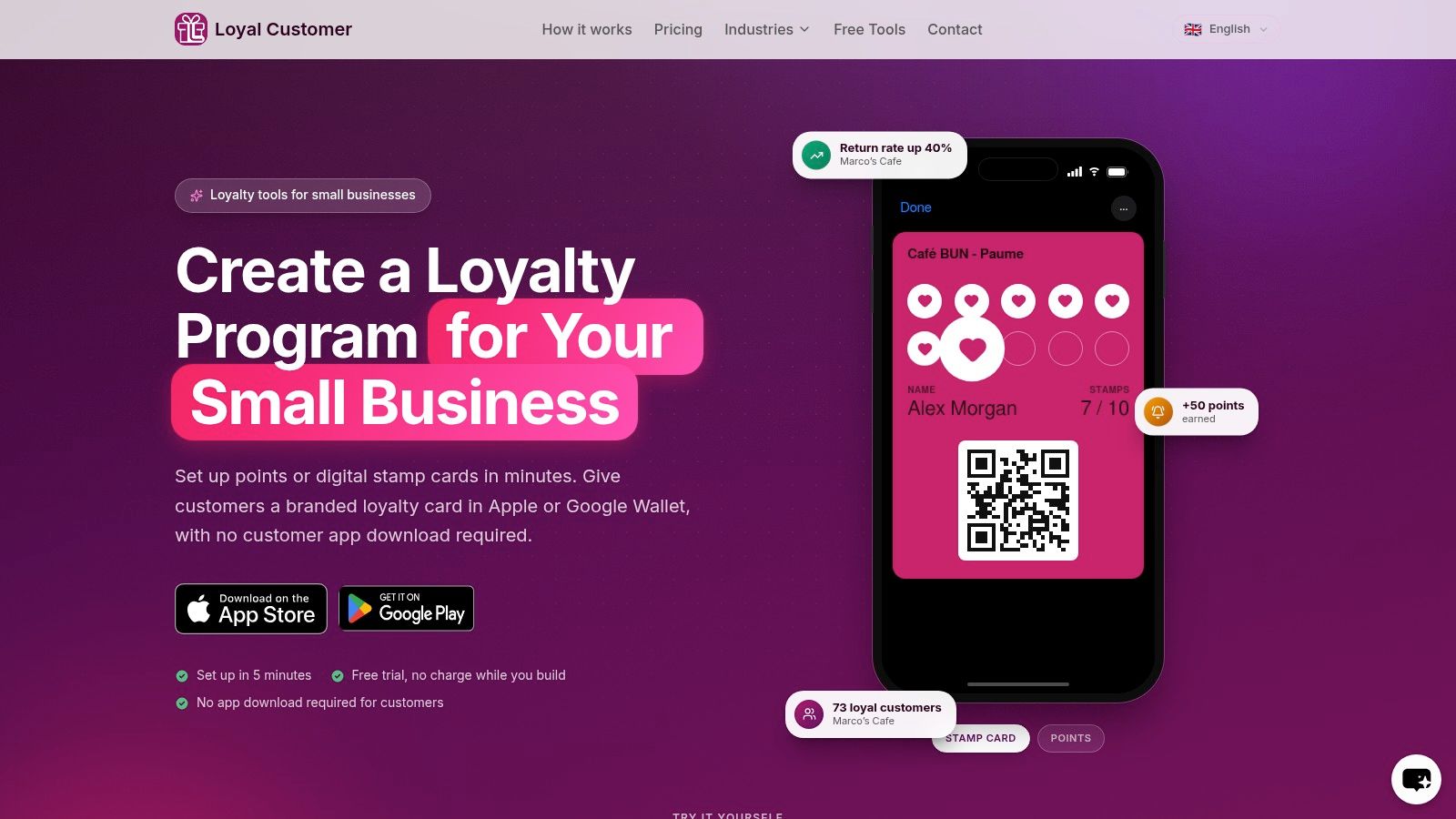
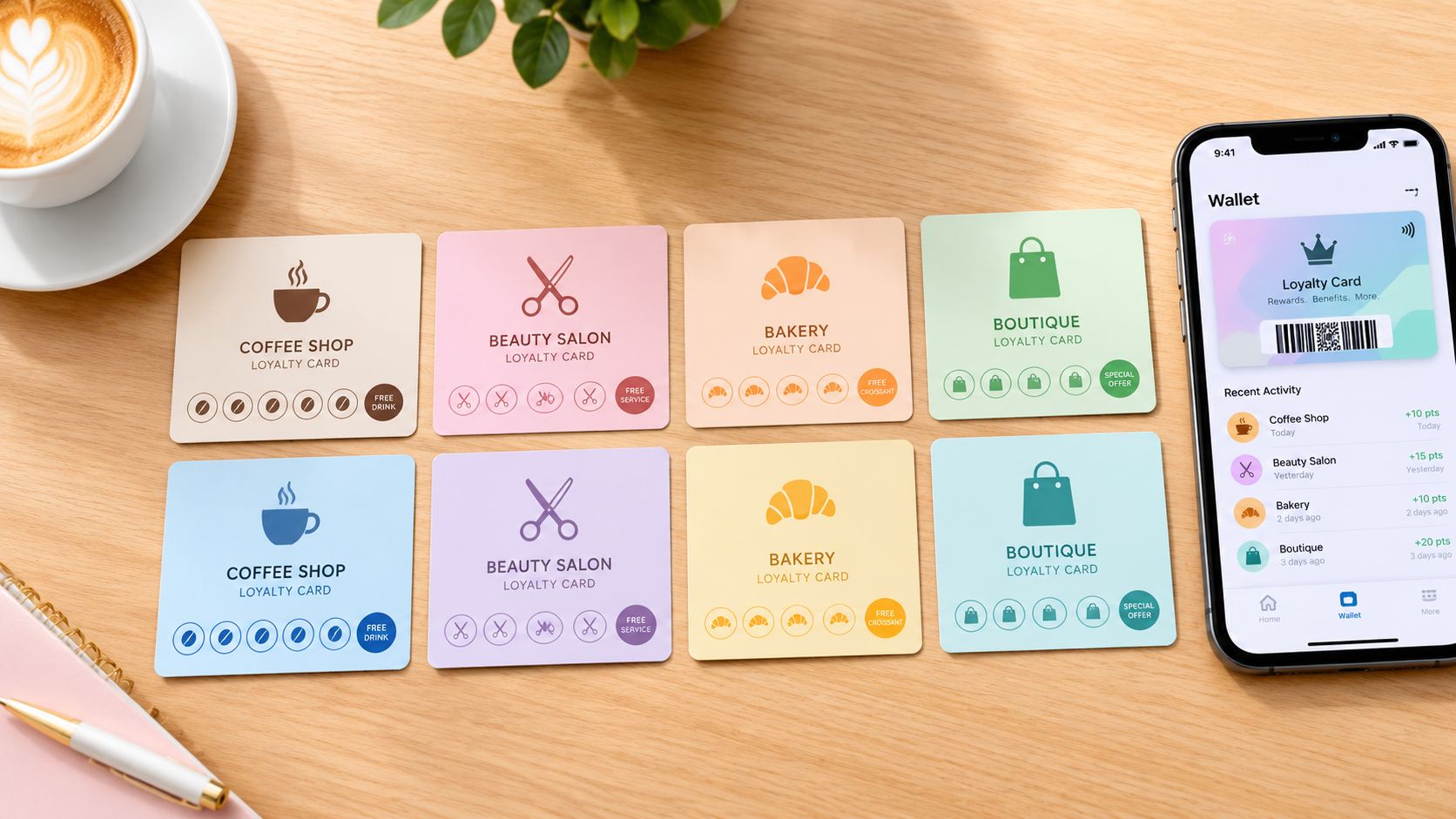
Do customers need another loyalty app to return to your business? Loyal Customer takes a different operating approach. A café, salon, gym, bakery, grocery shop, restaurant, or independent retailer can run a points program or digital stamp card from a phone, while customers keep their loyalty pass in a familiar wallet.
The setup follows a short sequence. The merchant registers the business, creates a branded card, publishes a customer page, and shares a QR code or link. Customers verify their details with an OTP, then add the pass to Apple Wallet or Google Wallet. Staff can search for a customer, scan a QR code, and add or redeem points or stamps through phone-based administration.
That model removes two common sources of friction: paper cards that customers forget and standalone apps that customers may not install. ACI Worldwide's 2025 Mobile Wallet Trend Report reports that wallet use for non-payment items increased 92% from 2019 through 2024. A wallet pass still needs support at the counter. Staff must mention the program, show customers how to join, and credit each eligible visit consistently.
What works and what doesn't
Loyal Customer's main strength is low-friction customer access and mobile merchant control. Points work when order values vary, such as at a restaurant or grocery shop. Stamps work for predictable repeat purchases, including coffees, bakery items, treatments, or regular visits. Having both models in one tool lets an owner test the right reward structure without moving to another platform.
The standard plan is listed at $12 per month or $120 per year and includes up to 100 customer slots, Apple Wallet and Google Wallet integration, a branded onboarding page, QR code scanning at checkout, and email support, according to the Loyal Customer pricing page. A free trial lets a small team test enrollment, crediting, and redemption before adopting the program.
Practical rule: A wallet pass provides access to the program, not the retention strategy. Decide who will mention it, where the QR code will appear, and how staff will correct a missed credit before launch.
The trade-off is limited system depth. Loyal Customer is not designed for merchants that require deep POS integrations, complex multi-location controls, or enterprise-level segmentation. The 100-customer limit on the standard plan also matters as the customer list grows. Larger programs require a custom plan, so confirm capacity, pricing, and migration options before approaching the limit.
Best fit: A café, salon, gym, bakery, takeaway, or micro-merchant that needs points or stamps, phone-based administration, and Apple Wallet and Google Wallet passes without a separate customer app.
Implementation caution: Test a complete checkout on both iPhone and Android. Document the staff steps for enrollment, crediting, corrections, and redemption. The program will underperform if employees forget to ask for the pass or cannot find a customer quickly.
2. Square Loyalty
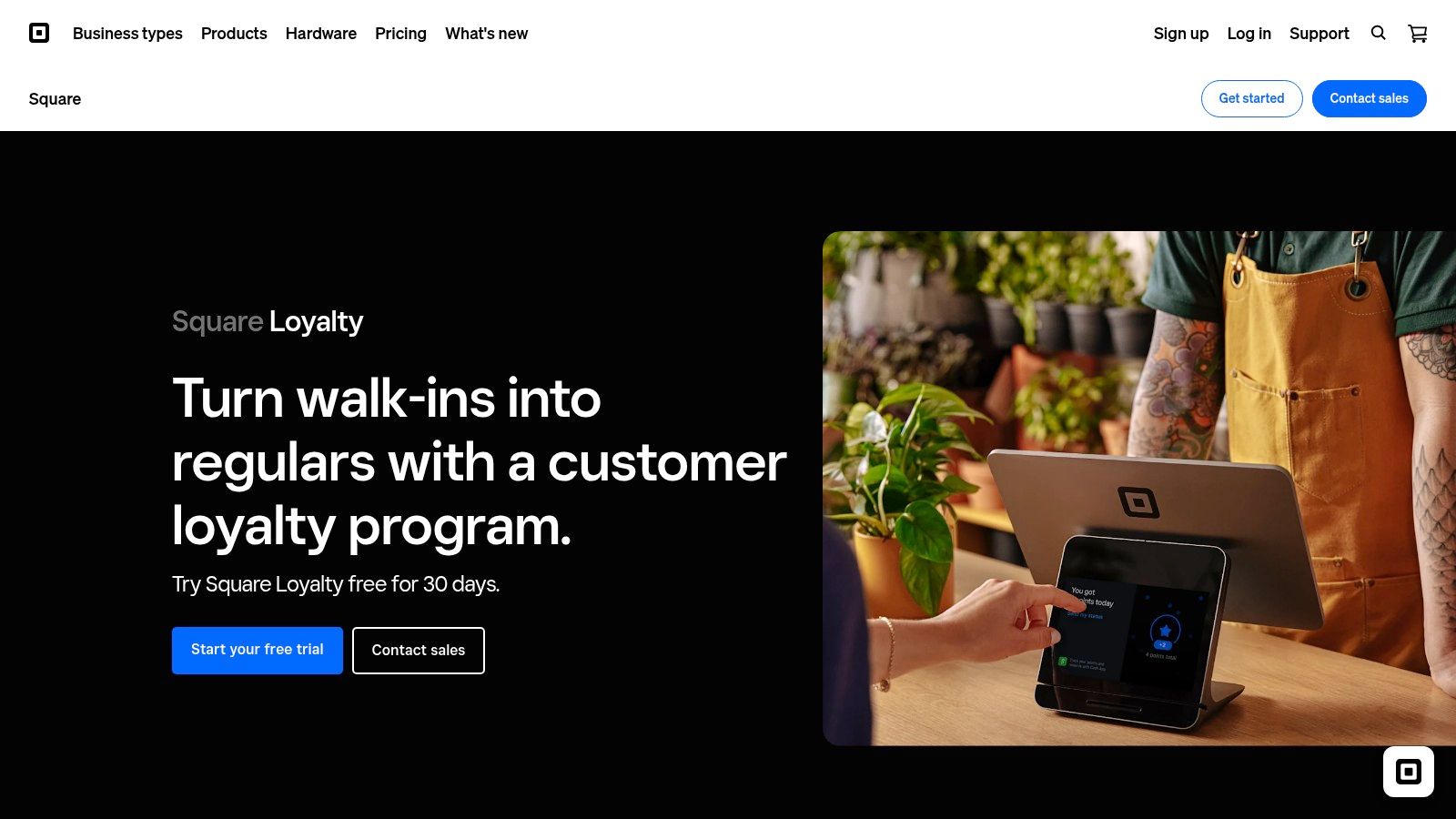
Square Loyalty is the practical choice when Square already runs the sale. Customers can enroll by phone, email, or linked payment card, earn based on visits or spending, and redeem at checkout. The system supports exclusions at item or basket level, which helps a café reward eligible drinks without accidentally rewarding every transaction or a retailer exclude low-margin products.
The important distinction is automatic handling. Points can accrue across in-person sales, Square Online orders, and invoices, while Square Marketing and Customer Directory can use the resulting customer data for campaigns. A busy counter doesn't need a second tablet just to record a visit, and the owner gets a more unified view than they would from a disconnected QR tool.
For businesses still choosing a platform, the decision deserves more scrutiny. Square Loyalty has limited value if the merchant doesn't use Square POS, and the program is tied to the broader Square ecosystem. Pricing and packaging changed in 2026, so confirm the current cost and included benefits against the exact Square plan before presenting the program to customers. The Square Loyalty product page is the appropriate starting point.
Businesses comparing this approach with independent tools should also consider customer loyalty software for small business as a broader category, especially when a POS connection isn't essential.
Best fit: A café, quick-service restaurant, boutique, or local retailer already using Square POS and wanting automatic in-store and online earning.
Implementation caution: Check how rewards behave across Square POS, Square Online, invoices, and excluded items. A program that works at the counter but confuses online customers creates avoidable support work.
3. Toast Loyalty
Toast Loyalty is designed for restaurant operations where the same guest may order at a counter, kiosk, mobile device, or online. It connects loyalty to Toast POS, allowing restaurants to configure points per dollar, including fractional accrual, and offer fixed-cash or free-item rewards. Item-based rewards and tiered structures give operators more control than a basic “buy ten, get one” card.
Enrollment can happen at the POS, on guest-facing displays, through kiosks, online, or with a sign-up link. That flexibility suits quick-service restaurants that need speed at the counter and full-service restaurants where the server or guest-facing device handles enrollment. A single program can also be shared across multiple locations, which is useful when guests regularly visit more than one branch.
The limitation is platform dependence. Toast Loyalty only makes sense if Toast is already central to the business, and some reward types aren't available across every Toast channel. A free-item reward that works at the POS may require a different configuration for online or kiosk ordering. Operators should test the whole customer journey, not just the most convenient redemption path.
Restaurant owners comparing systems should think beyond points and consider the broader dining rewards app workflow. The right choice depends on whether the business needs a simple phone-led program or wants loyalty embedded into every Toast ordering surface.
The Toast Loyalty product information explains the POS-connected model in more detail.
Best fit: A quick-service or full-service restaurant already using Toast and needing server-, kiosk-, POS-, and online-friendly loyalty.
Implementation caution: Test each reward type in every active ordering channel. Don't promise a free item or item-specific reward until staff have confirmed how it behaves at the counter, kiosk, and online checkout.
4. Clover Rewards
Clover Rewards, available through Clover's customer engagement offering, puts loyalty inside the same hardware and software environment used for payment. A salon can connect rewards to client purchases, a quick-service restaurant can credit visits at the register, and a small retailer can keep customer profiles close to its transaction history.
The basic model supports custom loyalty programs and varied reward offers. Merchants that need more campaign automation and reward customization can move to the Customer Engagement Plus plan, listed at $99 per month on the Clover Customer Engagement Plus page. That creates a clear progression from simple rewards to targeted promotions, but it also means the useful features may sit behind a separate monthly commitment.
Customers participate through Clover apps and customer profiles, while the merchant benefits from native hardware support. There's less integration work than with an independent loyalty platform, and staff don't need to reconcile a separate customer database after each sale.
The main drawback is portability. A Clover-based program is convenient while Clover remains the operational core. If the business later changes POS providers, the owner needs to understand what customer records, balances, and campaign data can be exported. That question matters before a program becomes a meaningful part of the customer relationship.
Best fit: A salon, café, quick-service restaurant, or retailer already committed to Clover hardware and POS.
Implementation caution: Price the basic and Plus versions against the actual campaign plan. Don't pay for automation until someone owns the work of creating, monitoring, and retiring promotions.
5. Fivestars
Fivestars combines a points program with automated customer marketing. Customers can join with a phone number, use an app check-in, or respond to a text-to-join workflow. That makes it suitable for cafés, quick-service restaurants, salons, and local retailers that want to grow a customer list while tracking loyalty activity.
The daily advantage is the automated follow-up. Fivestars supports birthday messages, win-back campaigns, and targeted promotions through its AutoPilot tools. A salon could reach customers who haven't booked recently. A café could send a relevant offer to people who have joined but aren't returning. The platform also connects with in-store tablets and POS connectors, helping staff avoid a fully manual process.
Unlike a simple stamp card, Fivestars is trying to turn loyalty data into ongoing communication. That can be valuable, but it adds responsibility. The owner needs to define an acceptable contact frequency, write offers that protect margin, and monitor whether messages bring people back or only train them to wait for discounts.
Pricing isn't publicly listed and is generally handled through a quote. The platform may also be bundled with payments, so compare the loyalty cost with the complete commercial arrangement rather than evaluating the feature in isolation. Branding is less flexible than a white-label platform, which may matter to businesses that want every customer touchpoint to look entirely their own.
The Fivestars business platform gives merchants a route to review the current offering.
Best fit: A local service or retail business that wants phone-based enrollment plus automated SMS and email campaigns.
Implementation caution: Get the full quote in writing, including payment conditions, message allowances, customer data access, and what happens if you stop using the payment component.
6. Stamp Me
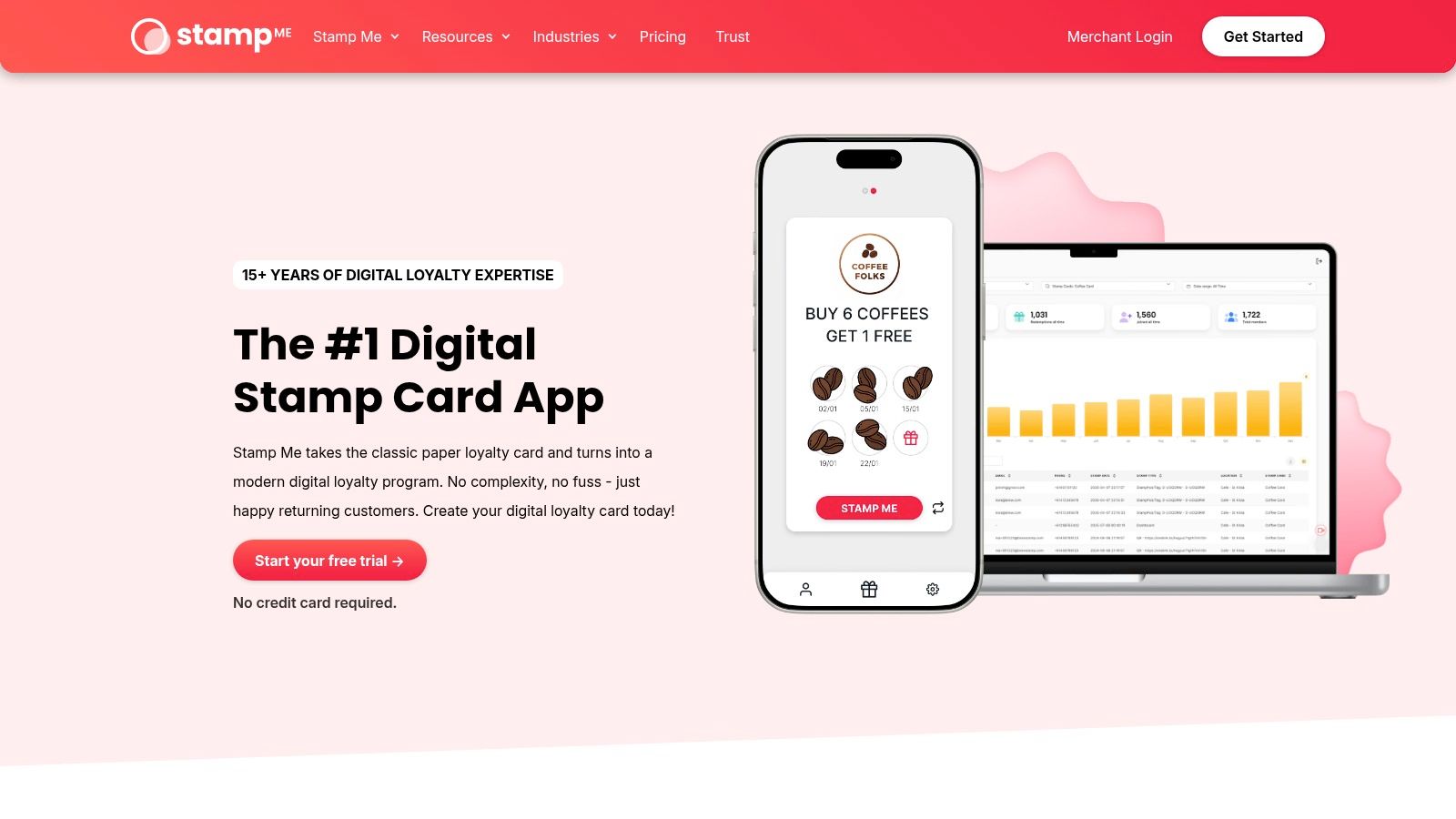
Stamp Me focuses on the fastest loyalty model to explain: buy a qualifying item or complete a visit, receive a stamp, and earn a reward. Coffee shops, bakeries, food counters, beauty businesses, and independent retailers can replace paper cards with QR codes, NFC through StampTag, or POS stamping through StampPod.
That narrow focus is a strength when the offer is naturally repetitive. Staff can understand a stamp workflow quickly, and customers don't need to calculate a variable balance. The platform also includes vouchers, push notifications, Birthday Club, lapsed-customer campaigns, and Scratch & Win, so the program can do more than record punches.
The admin portal supports integrations through Zapier, but Stamp Me isn't intended to replicate the detailed rules of a tightly integrated POS loyalty engine. A business that needs different earning rates by product, complex exclusions, or automatic basket-level calculations may outgrow the stamp model.
There's no per-member fee listed in the supplied product details, which can make the model attractive for a high-traffic shop. Optional StampTag or StampPod hardware adds cost, however, and the owner should decide whether QR stamping is reliable enough before buying extra devices. The Stamp Me platform outlines the available methods.
A digital stamp card succeeds when the customer understands the reward before making the next purchase.
Best fit: A coffee shop, bakery, takeaway, salon, or independent retailer needing fast, easy-to-train stamp-card software.
Implementation caution: Choose one stamping method for launch. Offering QR, NFC, and POS options at once can create more staff confusion than convenience.
7. Loyverse POS
Could a small shop test a points program without adding another loyalty subscription? Loyverse POS gives it a practical starting point. Its free POS includes a basic points program, customer profiles, simple redemption, and basic analytics. Merchants can set an earn rate, run the system from a phone or tablet, and add paid modules if the business later needs more from its POS.
The daily advantage is POS-connected automation. Staff record the sale and loyalty activity in the same system, rather than maintaining a separate integration. A new shop can create customer records, set a points rule, and observe participation before investing in a broader customer-marketing platform.
That convenience comes with limited loyalty depth. Loyverse does not match paid suites that offer advanced automation, segmentation, referrals, or detailed campaign controls. Its loyalty tools also depend on Loyverse POS. A merchant using another checkout system, or planning to change systems, may lose much of the operational benefit.
Set the reward economics before launch. If points accumulate too slowly, customers may stop paying attention. If rewards are too generous, they can reduce margin. Our guide to points-based loyalty programs explains the difference between spend-based rewards and visit-based stamps, while the final rule should reflect the shop's average transaction and repeat-purchase pattern.
Run the complete workflow with staff before inviting customers. The Loyverse POS loyalty offering is easier to assess through an actual sale, points earn, and redemption than through the setup screen alone.
Best fit: A new shop, market stall, or micro-merchant seeking free entry and basic points inside a POS.
Implementation caution: Confirm which customer and points data can be exported before the program grows. Free entry helps at launch, but a difficult migration can create substantial work later.
8. TapMango
TapMango is for the business that wants loyalty to do more than award points. It combines points, punch cards, tiered rewards, referrals, review prompts, paid memberships, and online ordering with a branded consumer app and broader customer marketing tools.
That breadth suits cafés, quick-service restaurants, salons, spas, and specialty retailers that have a clear reason to build a richer customer relationship. A salon might combine visits, referrals, and membership benefits. A café could use points, prepaid offers, and review prompts. POS integrations, including Toast connections, can automate earning and redemption instead of forcing staff to manage every transaction manually.
The cost of that flexibility is setup. A branded app, multiple reward types, membership rules, and marketing campaigns require decisions about customer journeys, offer exclusions, and staff responsibilities. A single-location business with one simple reward may spend more time configuring TapMango than the program can justify.
Pricing is quote-based and typically higher than entry-level tools. That isn't automatically a problem, but the owner should identify the feature that pays for the extra complexity. If the business won't use memberships, referrals, or customer segmentation, a smaller platform may be easier to operate and easier for customers to understand.
The TapMango loyalty and engagement platform is worth considering when the program is part of a wider retention plan rather than an isolated punch card.
Best fit: A growing café, salon, QSR, or specialty retailer needing loyalty, memberships, referrals, and marketing in one system.
Implementation caution: Launch one core reward before adding gamification or memberships. Complex programs fail when customers can't explain how to earn or redeem.
9. Kangaroo Rewards
Kangaroo Rewards takes an omnichannel approach. It supports points, coupons, referrals, VIP tiers, automation, and in-store and online activity, with integrations for Shopify POS, ecommerce, and other connectors. A retailer can use one program across physical and digital shopping, while a food and beverage business can build more structured customer segments than a basic stamp tool allows.
The platform also offers a white-label mobile app option on higher tiers. That can make sense for a business with enough repeat engagement to justify a branded destination, but it shouldn't be treated as an automatic improvement over a link or wallet pass. Every additional app creates a customer adoption question and a content-maintenance responsibility.
Kangaroo has clear small-business pricing plans in the supplied product information, and it can scale across multiple locations. The useful feature set includes automated campaigns and referrals, but the owner needs clean customer data and a well-designed reward catalogue to get value from those tools. Automation based on incomplete profiles or unclear purchase events can send the wrong message to the wrong customer.
The platform's strength is range. Its weakness is that advanced options such as white-label apps and API access require higher tiers. Review the plan boundaries before designing a program around a feature that isn't included in the starter package.
The Kangaroo Rewards platform is a good candidate for merchants that have moved beyond a single reward but aren't ready for enterprise software.
Best fit: A multi-location retailer or quick-service business wanting omnichannel rewards, referrals, VIP tiers, and marketing automation.
Implementation caution: Map customer identity across POS, ecommerce, and online accounts first. Automation can't unify records that the business hasn't matched correctly.
10. Marsello
Marsello is aimed at retailers and food businesses that want loyalty and marketing connected across Shopify, Shopify POS, and Lightspeed. It supports configurable rewards, VIP tiers, expiry rules, customer portals, analytics, and marketing automation. Customers who don't want a standalone app can use Apple Wallet and Google Wallet passes on current loyalty plans.
The differentiator is the connection between transactions and segmentation. RFM segmentation lets a merchant organize customers by recency, frequency, and monetary behavior, then use that information in campaigns. A boutique could separate recent high-value customers from lapsed shoppers. A food business could design different messages for frequent visitors and occasional buyers.
This is more capable than a basic points ledger, but it also demands more operational discipline. The merchant needs to decide which segments deserve attention, what reward each segment should receive, and how expiry rules affect customer trust. More automation isn't better if nobody reviews campaign performance or removes offers that attract unprofitable purchases.
Pricing scales by site and order volume, and plan limits apply. Some advanced features require the higher-tier Accelerate plan. The Marsello loyalty and marketing platform should be evaluated alongside the merchant's Shopify or Lightspeed costs, not as a standalone line item.
Best fit: An omnichannel retailer or food business using Shopify, Shopify POS, or Lightspeed and needing unified loyalty, segmentation, and campaigns.
Implementation caution: Model the cost at the next stage of order volume and site growth. A plan that fits today may become expensive when customer records, orders, or locations increase.
Top 10 Loyalty Software Comparison
| Solution | Core programs & unique features ✨ | UX / Admin & Quality ★ | Pricing & Value 💰 | Best for 👥 |
|---|---|---|---|---|
| 🏆 Loyal Customer | Points + digital stamp cards; Apple & Google Wallet passes ✨ | Mobile-first setup/admin; QR & OTP onboarding; simple to run ★★★★ | 💰 $12/mo or $120/yr (100 customers); custom plans | 👥 Cafés, salons, small retail, micro‑merchants |
| Square Loyalty | Points/visit with card‑linked earning; auto‑accrual across Square ✨ | Native Square POS/online integration; frictionless accrual & redemption ★★★★ | 💰 Varies by Square plan (add‑on) | 👥 Merchants on Square (QSR, retail) |
| Toast Loyalty | Points, tiered rewards, item‑level options; restaurant workflows ✨ | Deep Toast POS/kiosk/online integration; server‑friendly flows ★★★★ | 💰 Included/varies within Toast pricing | 👥 Quick‑service & full‑service restaurants |
| Clover Rewards (Customer Engagement) | Custom programs + campaign automation (Plus) ✨ | Native to Clover hardware/apps; scales with Plus plan ★★★ | 💰 Basic included; $99/mo for Customer Engagement Plus | 👥 Salons, QSR, retail on Clover |
| Fivestars | Points + phone‑number/app check‑in; automated SMS/email campaigns ✨ | Strong automated promotions (AutoPilot); SMB workflows ★★★★ | 💰 Quote-based; often bundled (pay/marketing) | 👥 Cafés, quick‑serve, salons, local retail |
| Stamp Me | Digital stamp cards via QR, NFC, POS stamp; vouchers & campaigns ✨ | Extremely fast to launch; simple staff/customer flow ★★★★ | 💰 No per‑member fees; optional hardware costs | 👥 Coffee shops, bakeries, beauty, indie retail |
| Loyverse POS (with loyalty) | Basic points program built into free POS ✨ | Mobile/tablet POS with simple loyalty & profiles ★★★ | 💰 Free POS (paid add‑ons optional) | 👥 Micro‑merchants, new shops testing loyalty |
| TapMango | Points, punch, tiers, referrals, branded apps & memberships ✨ | Full marketing/CRM suite; highly customizable ★★★★ | 💰 Quote‑based; generally higher cost | 👥 Cafés, salons, specialty retail wanting branded programs |
| Kangaroo Rewards | Points, referrals, VIP tiers, automations; Shopify/POS connectors ✨ | Omnichannel toolkit; scalable across locations ★★★★ | 💰 Clear SMB plans; scales by location/features | 👥 Retail & F&B seeking omnichannel loyalty |
| Marsello | Omnichannel loyalty + wallet pass support; RFM & automations ✨ | Strong Shopify/Lightspeed integrations; analytics & campaigns ★★★★ | 💰 Scales by site/order volume; higher tiers add features | 👥 SMB retail & food on Shopify / Lightspeed |
Match the Program to the Business
The right loyalty points software for small business starts with the purchase pattern, not the vendor's longest feature list. Choose stamps when customers buy similar items or return for a consistent service. A coffee shop, bakery, or simple beauty offer can explain “complete the card, receive the reward” without asking customers to understand a points balance.
Choose points when spending varies. Points let a retailer, restaurant, gym, or salon reward a larger basket differently from a smaller one. They also give the merchant more room to introduce tiers, spending thresholds, or selected offers later. The rules still need to stay visible. Customers should know what earns progress, what the reward is, and whether points expire.
Choose POS-native software when automatic accrual and redemption matter most. Square Loyalty, Toast Loyalty, Clover Rewards, Loyverse, and Marsello make the most sense when the business already relies on the relevant POS or commerce platform. The operational benefit is fewer manual steps, but the cost is platform dependence. If the merchant changes POS, the loyalty program may require a data export, a new integration, or a full customer communication plan.
Wallet support deserves separate attention. A customer may not want a separate loyalty app, and a wallet pass can reduce the number of steps between enrollment and presentation. But wallet-native isn't automatically frictionless. The merchant still needs to explain the program, display a QR code or sign-up path, train staff to recognize and credit the pass, and support customers who use neither Apple Wallet nor Google Wallet. PwC's 2025 U.S. customer experience survey found that 93% of consumers said mishandling personal data would cause them to lose trust, so collect only the information the program needs and explain why it's being requested.
Before committing, check these points:
- Enrollment friction: Can customers join at the counter, through a link, by QR code, or through a wallet pass without downloading an app?
- Staff workflow: Can an employee add progress, correct a mistake, and redeem a reward without leaving the checkout process?
- Reward flexibility: Does the tool support the earning model your customers understand, whether that's stamps, points, visits, items, or spend?
- Integration depth: Does the program connect to your POS, ecommerce store, booking system, or payment workflow?
- Pricing structure: Is the cost flat, quote-based, tied to locations, linked to orders, or dependent on a broader POS contract?
- Customer limits: What happens when the business exceeds the included customer slots or transaction allowance?
- Reporting: Can you distinguish enrollment from first redemption, repeat redemption, dormant balances, and actual return visits?
- Migration risk: Can you export customer records, balances, consent details, and campaign history if you change platforms?
Keep the launch smaller than the software demo. Set one reward rule, create one simple launch offer, and write staff instructions that fit beside the register. Put a visible QR code or sign-up link on the counter, receipt, booking confirmation, Instagram profile, or WhatsApp conversation. Then review participation, redemptions, customer questions, and staff compliance after the first trial period. Don't change five rules at once, because you'll lose the ability to tell which change helped.
Loyal Customer is the practical option to evaluate when a small business wants phone-based administration, points or stamps, and Apple Wallet and Google Wallet passes without requiring a separate customer app. Square, Toast, Clover, and Loyverse are stronger when the existing POS should automate the program. Stamp Me is a better fit when the business wants the quickest possible punch-card rollout. TapMango, Kangaroo, and Marsello make more sense when marketing automation, segmentation, referrals, or omnichannel operations justify additional configuration.
The history of loyalty supports a simple conclusion. American Airlines launched AAdvantage on May 1, 1981, and the program later connected customer balances with repeat activity and partner rewards, as described in the American Airlines AAdvantage history. A small merchant doesn't need airline-scale infrastructure. It needs a clear earning rule, a sustainable reward, a visible balance, and a staff process that works during a busy day.
Loyal Customer gives small businesses a phone-managed choice between points and digital stamps, with wallet-ready passes for Apple Wallet and Google Wallet and a free trial for testing the workflow. Visit Loyal Customer to evaluate a simpler loyalty points software option without requiring customers to download a separate app.