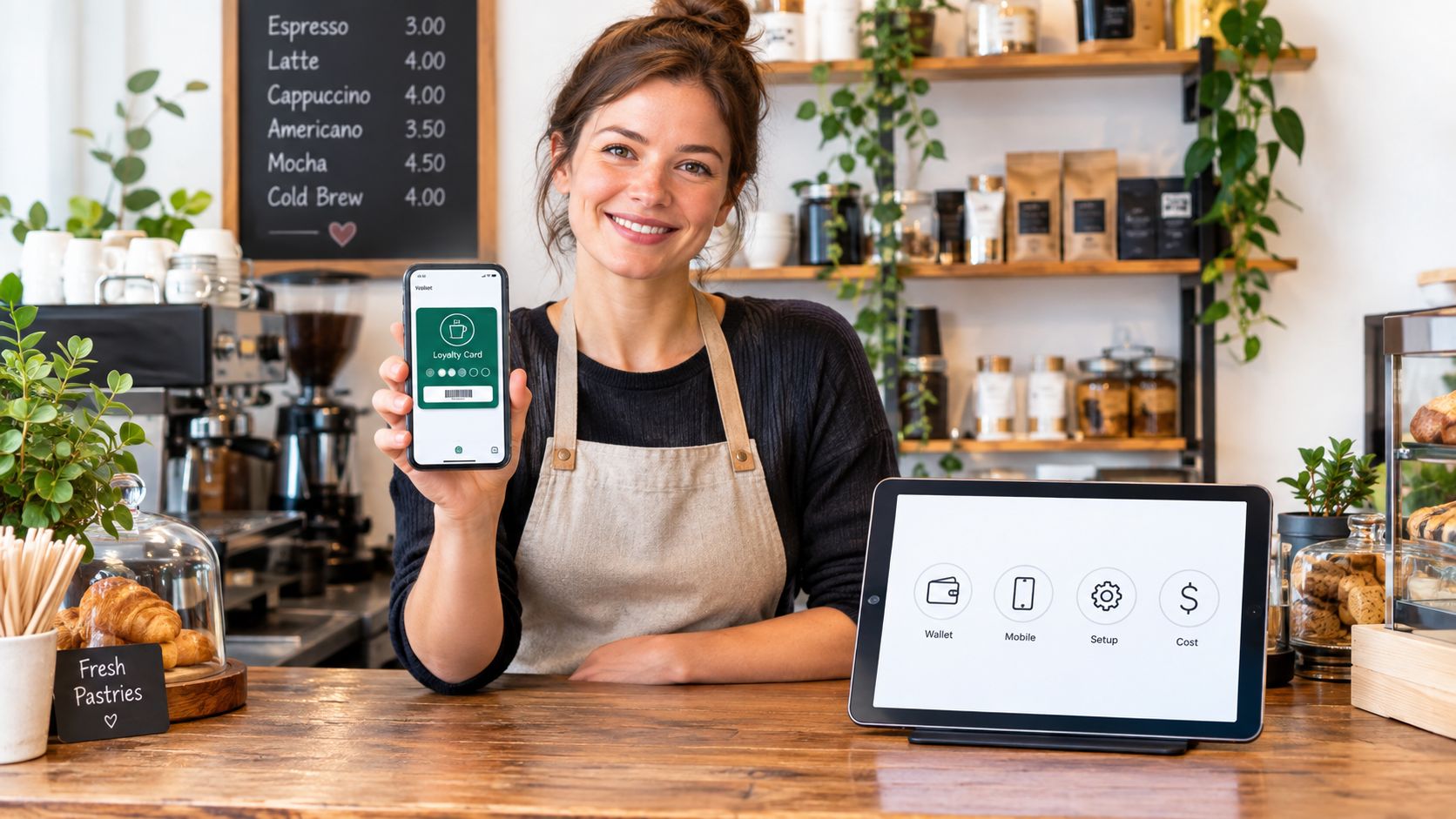
73.2% of small business owners still run without a formal loyalty program, even though 69.1% of the ones who do invest in retention report a major or moderate sales lift. That's the clearest answer to whether customer loyalty software for small business is worth it, and it's a competitive lever, not a nice extra.
The mistake is treating loyalty as a branding exercise. It's an operations problem, a checkout problem, and a staff behavior problem. If your team can't run the program fast at the counter, the software won't save you.
| Decision point | What to choose | Why it matters |
|---|---|---|
| Frequent visits, low ticket size | Stamps | Easier to explain, easier to redeem, better for habit-driven businesses |
| Variable basket size | Points | Better when spend matters more than visit count |
| You want near-zero enrollment friction | Wallet passes | No extra app download, much easier to activate |
| Your staff is small and busy | Phone-first tools | Less training, fewer workflow breaks |
| You only need the basics | Lightweight SMB software | Avoids overengineering and wasted admin time |
Table of Contents
- Why Small Businesses Are Leaving Revenue on the Table
- Points Versus Stamps Decided by Purchase Volume
- The Digital Wallet Channel Versus App Download Friction
- SMB-Focused Tools Versus Enterprise Omnichannel Systems
- Implementing a Zero-Friction Loyalty Workflow
- Final Recommendations for Your Business Type
Why Small Businesses Are Leaving Revenue on the Table
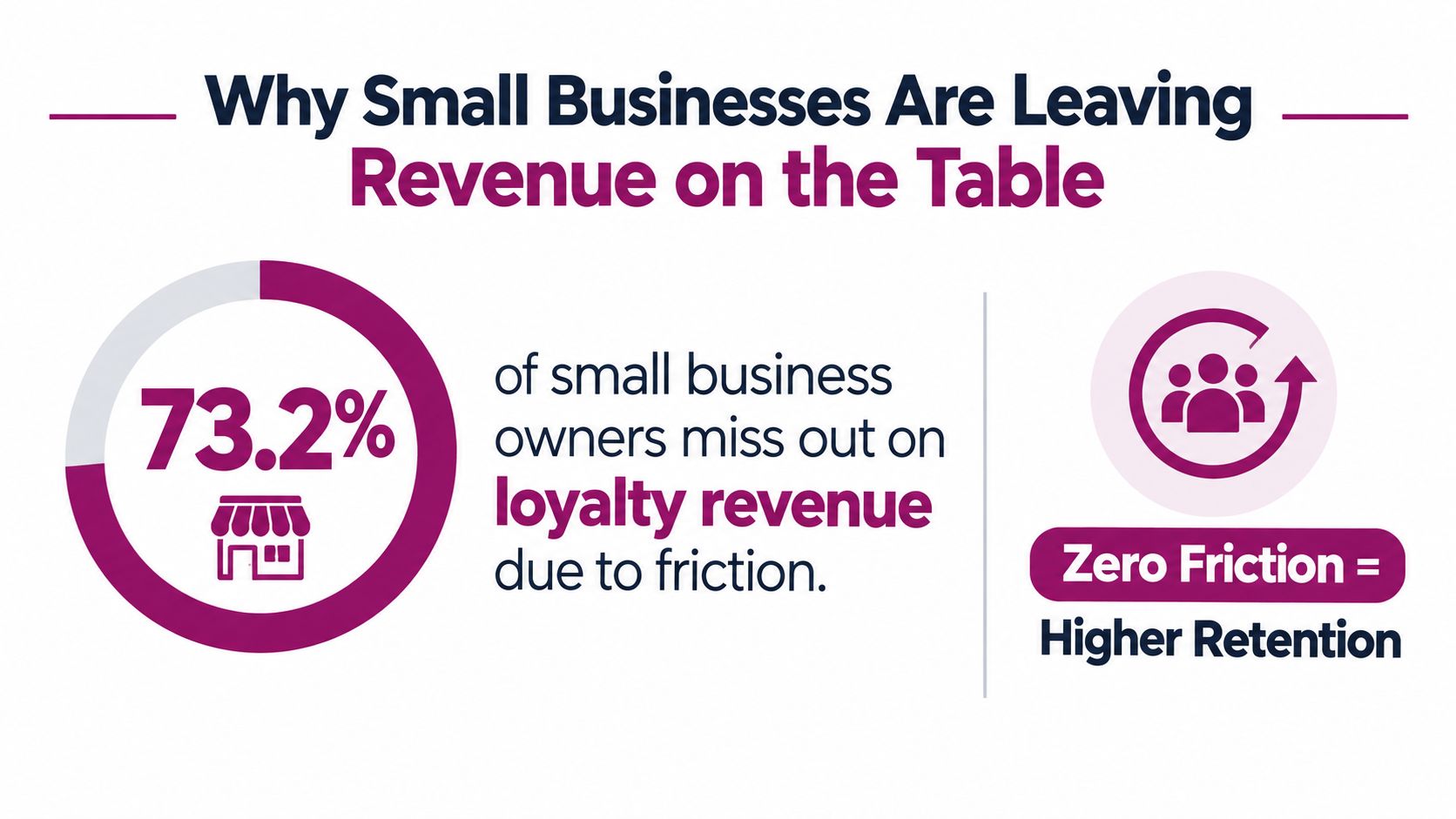
73.2% of small business owners still operate without a formal loyalty program, while 69.1% of adopters reported a major or moderate sales increase after investing in retention tools (SumUp data story). That gap is the whole story. Most owners already depend on repeat business, but far too many still leave that revenue unmanaged.
A decade earlier, the same pattern was visible in another direction. A 2014 BIA/Kelsey/Manta study found that only 34% of small businesses had a loyalty program, even though 61% said they generated 51% or more of annual revenue from repeat customers, and 62% said they spent most of their annual marketing budget on retention rather than acquisition (BIA/Kelsey/Manta study summary). That's not a theory problem. It's a system problem.
Why intent doesn't become a program
Owners usually already believe in retention. What they don't have is a workflow that makes loyalty easy enough to run every day. That's why paper cards disappear, manual lists rot, and half-built app programs die after the launch week.
Practical rule: if a cashier has to explain the program twice, it's already too hard.
The software question starts there, not with feature checklists. You're not buying “engagement.” You're buying a repeatable checkout habit that staff can execute without slowing the line.
Points Versus Stamps Decided by Purchase Volume
The reward model should match how customers buy from you, not how the dashboard looks. Points work when ticket sizes vary and you want to reward spend. Stamps work when visit frequency matters more than basket size.
The best benchmark is simple. Keep stamp cards in the 8 to 12 stamp range, and set the reward value at roughly 10% of the total spend needed to complete the card (reward structure guidance). Rewards below 7% often feel weak, while rewards above 15% can attract reward-hunters and squeeze margin. For cafes, salons, bakeries, and independent retail, that range is usually enough to motivate without teaching customers to game the system.
Pick the mechanism that fits the behavior
If customers come in often for a similar purchase, stamps are cleaner. If one customer buys a sandwich and another buys a full basket of goods, points are more honest. In both cases, the mistake is making the reward feel abstract.
Here's the simplest way to decide.
| Business Characteristic | Recommended Model | Rationale |
|---|---|---|
| Regular, habit-based visits | Stamps | Reinforces frequency and makes the reward obvious |
| Variable basket size | Points | Credits higher spend more fairly |
| Low-margin daily traffic | Stamps | Keeps the pitch simple and the redemption logic visible |
| Mixed purchases and add-ons | Points | Lets you reward larger transactions without extra complexity |
| Very small team, short transactions | Stamps | Less explaining, faster checkout |
If you want a cleaner breakdown of the spend-based model, see this points-based loyalty guide. The important part is not choosing the fanciest structure. It's picking the one your staff can explain in five seconds and your customers can understand on first contact.
The Digital Wallet Channel Versus App Download Friction
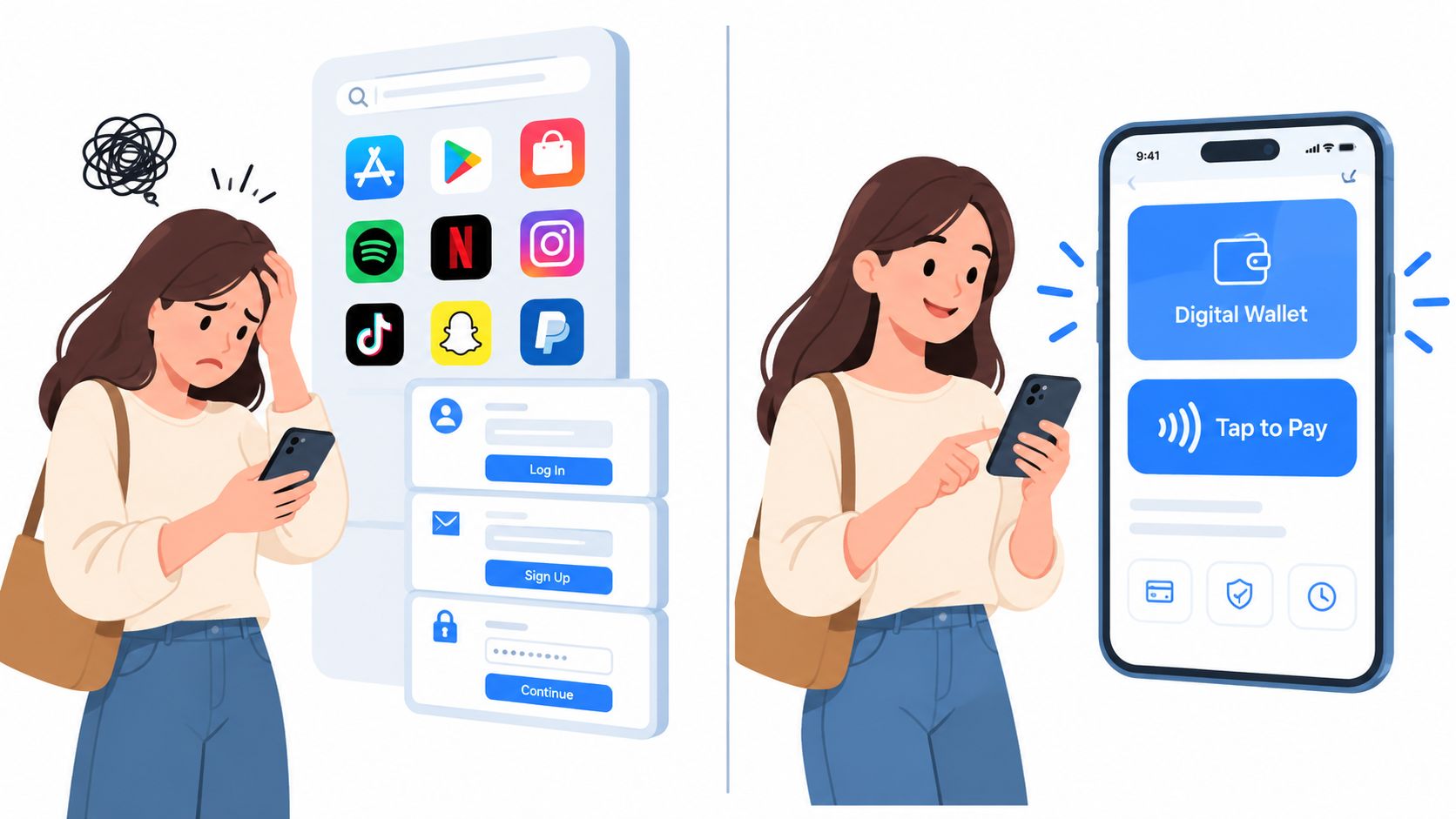
The biggest failure point in loyalty is enrollment friction. A standalone app asks the customer to find it, download it, create credentials, and remember to open it later. That's too much for a coffee run, a salon visit, or a quick retail stop.
Wallet passes remove that friction. Apple Wallet and Google Wallet passes require no separate download, can be added in one tap, and are designed to live on the phone customers already use. Independent guidance also reports 90% push-notification open rates on the lock screen for wallet passes, 65% to 75% active carry-and-use behavior among enrolled wallet-pass users, and only 10% to 20% active use for standalone loyalty apps (wallet-pass comparison guide). That's the difference between a program people join and one they actually use.
Why channel choice beats feature creep
Most owners compare point rules and VIP tiers before they compare enrollment path. That's backwards. If the customer never adds the pass, the rest of the system is irrelevant.
The best loyalty program is the one that doesn't ask for a second app.
That's why wallet-native loyalty is the right default for small businesses. It keeps the promise of digital loyalty without importing the drag of app management.
Wallet passes for Apple Wallet are the practical middle ground here. They reduce friction without forcing you into a heavier software stack or a separate consumer app relationship.
SMB-Focused Tools Versus Enterprise Omnichannel Systems
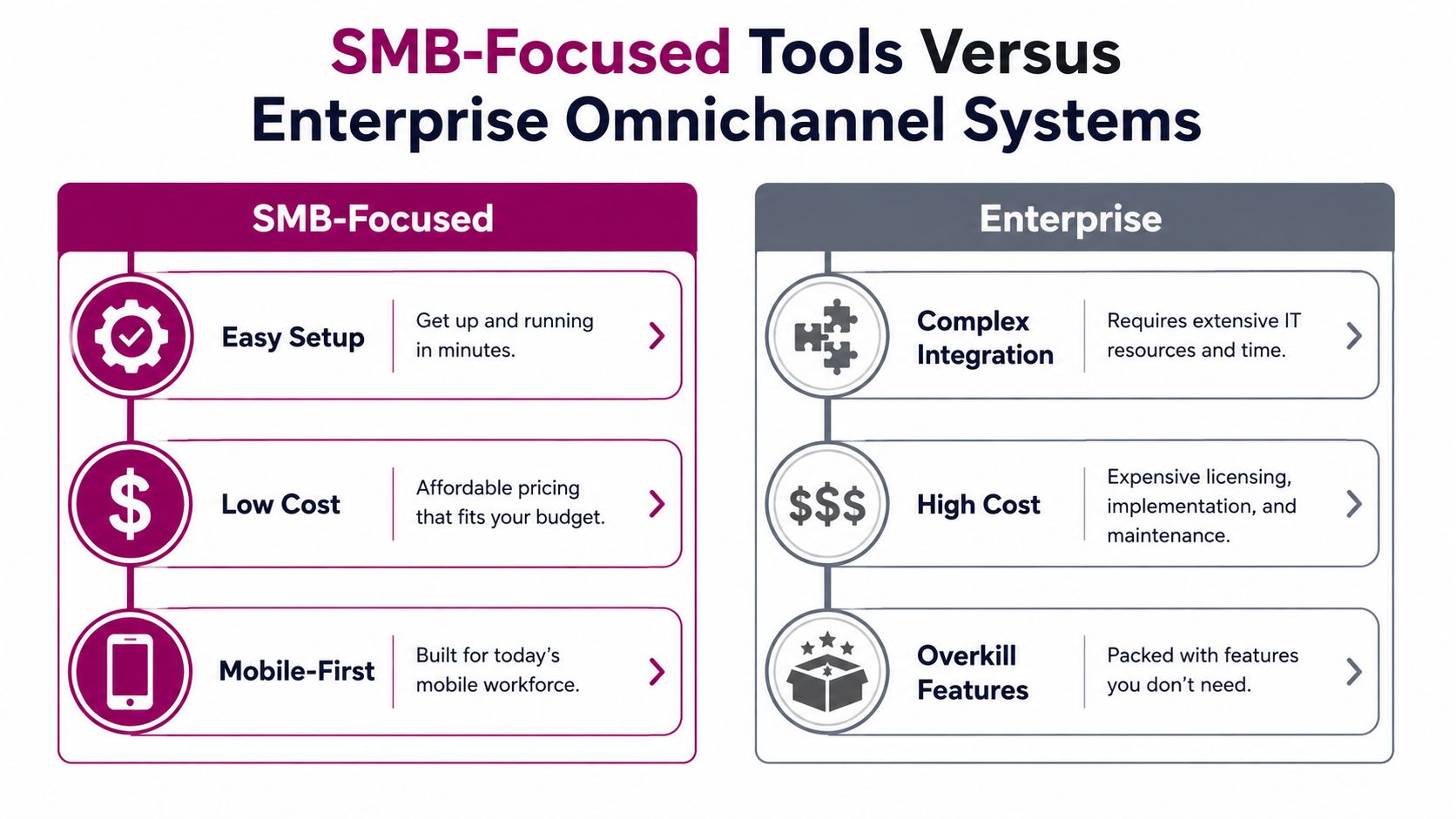
A lot of owners browse loyalty software like they're buying enterprise software for a national chain. That's a mistake. Market coverage shows the space is fragmented, with lightweight add-ons common for SMBs while enterprise suites push deeper customization and integrations, and loyalty leaders are increasingly focused on ROI as points-only programs saturate (industry comparison guide).
For a cafe, salon, bakery, gym, or micro-retailer, complexity is a cost. More integrations mean more things to break. More configuration means more staff training. More features often means more admin work that nobody on a small team wants to own.
What small teams actually need
The right tool has to be usable from a phone, fast to set up, and simple enough that a counter worker can handle it during a rush. If you need a dedicated scanner, a separate admin terminal, or a heavy integration project to launch, you've already overbuilt.
Bottom line: choose the system your staff will still use on a busy Friday night.
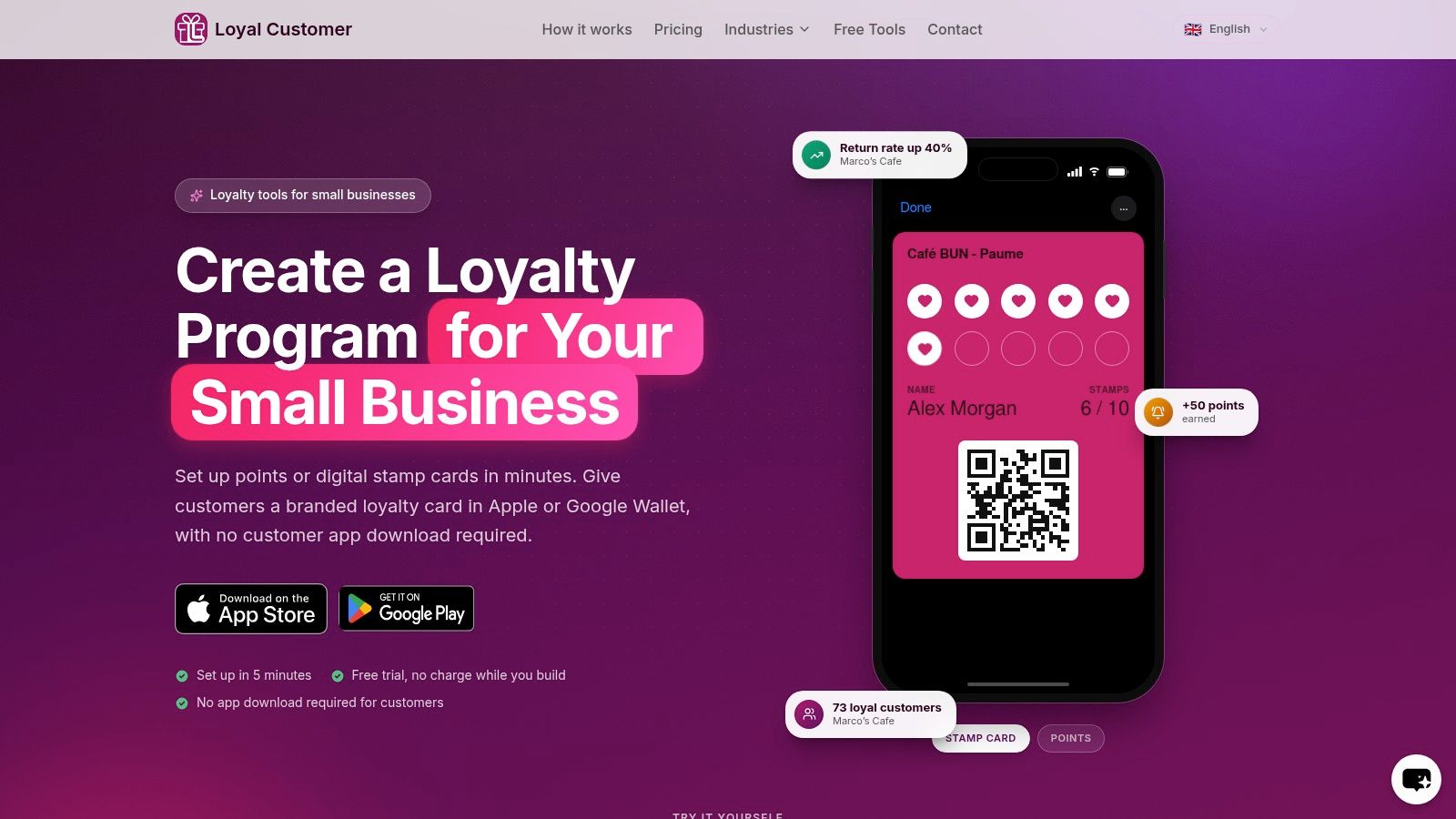
That's where lightweight tools make sense. A platform like Loyal Customer lets merchants run points or digital stamp cards from a phone and create Apple Wallet or Google Wallet loyalty cards, which is the sort of setup most small businesses can maintain. It fits the operational reality instead of forcing the business to adapt to the software.
Implementing a Zero-Friction Loyalty Workflow
Start with the checkout flow, not the marketing copy. The staff script should be short, the setup should happen on a phone, and the customer should be able to join without a long form or a separate app install. If the first launch feels clunky, the whole program will feel clunky forever.
Build the workflow around the counter
- Choose one reward model first. Keep it simple. If your business is visit-driven, use stamps. If basket size matters more, use points.
- Configure the program on a phone. Mobile-first administration matters because small teams don't want another desktop system to babysit.
- Make wallet enrollment the default. Customers should be prompted to add the pass to Apple Wallet or Google Wallet right away, not later after a forgotten email.
- Train staff on one sentence. They should know how to ask for the scan or tap without turning checkout into a tutorial.
- Avoid physical reprints. Digital credentials remove the card-loss and replacement grind that paper systems always create.
How to start a loyalty program is a useful reference point if you're building the rollout internally. The point isn't to create more process, it's to remove steps until the program becomes part of normal service.
The video below shows the mechanics in motion, which is useful if your team needs to see the workflow before they'll trust it.
The launch should feel boring. That's a good sign. In small businesses, boring usually means repeatable.
Final Recommendations for Your Business Type
If you run a cafe, bakery, tea shop, or quick-service counter, choose stamps and make wallet passes the default enrollment path. These businesses win on frequency, not complicated logic. Staff need a reward that customers can understand instantly while they're standing at the register.
If you run a salon, spa, gym, or appointment-based service, points can still work, but only if the earning rule stays simple. Use the model that matches repeat behavior, then keep the redemption clean. The more time you spend explaining the mechanics, the less value the program creates.
If you run independent retail or a micro-shop selling through Instagram or WhatsApp, pick the lightest possible setup. Your real constraint is operational bandwidth, not software ambition. A phone-first loyalty system with wallet passes is usually enough, because your team needs speed more than an enterprise feature map.
If you're considering a more complex omnichannel platform, ask one blunt question. Will anyone on the floor maintain it? If the answer is no, you're buying overhead, not retention.
The correct answer for most small businesses is simple: use customer loyalty software for small business that reduces friction, supports either points or stamps, and works natively with the phone in your customer's pocket. Stop evaluating loyalty software like a feature contest. Evaluate it like a workflow test.
If you want a simple loyalty setup that matches the way small teams work, visit Loyal Customer and review the phone-based points, stamp, and wallet-pass options it offers. It's built for merchants who need a program they can launch, explain, and run without adding another operational burden.