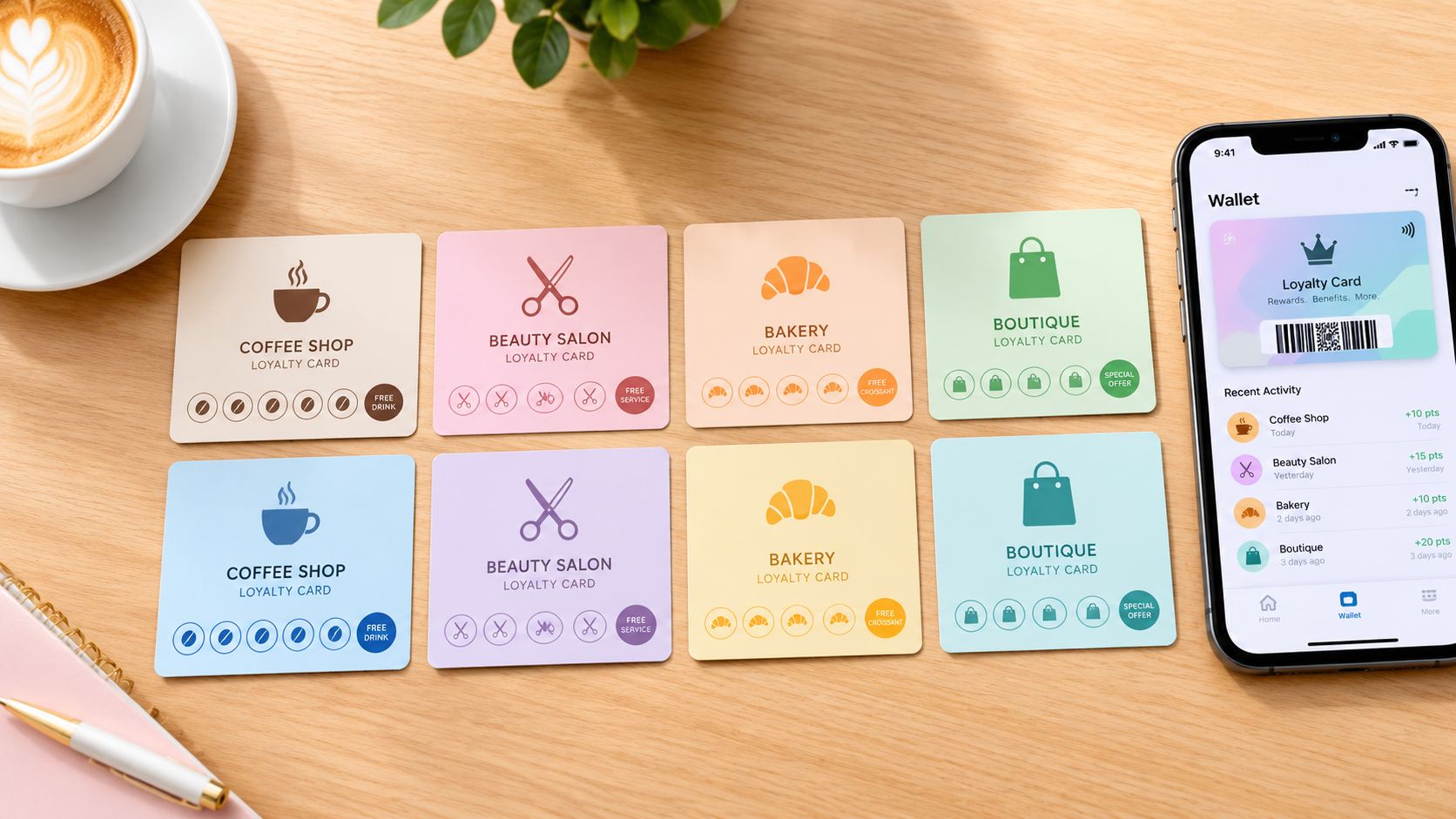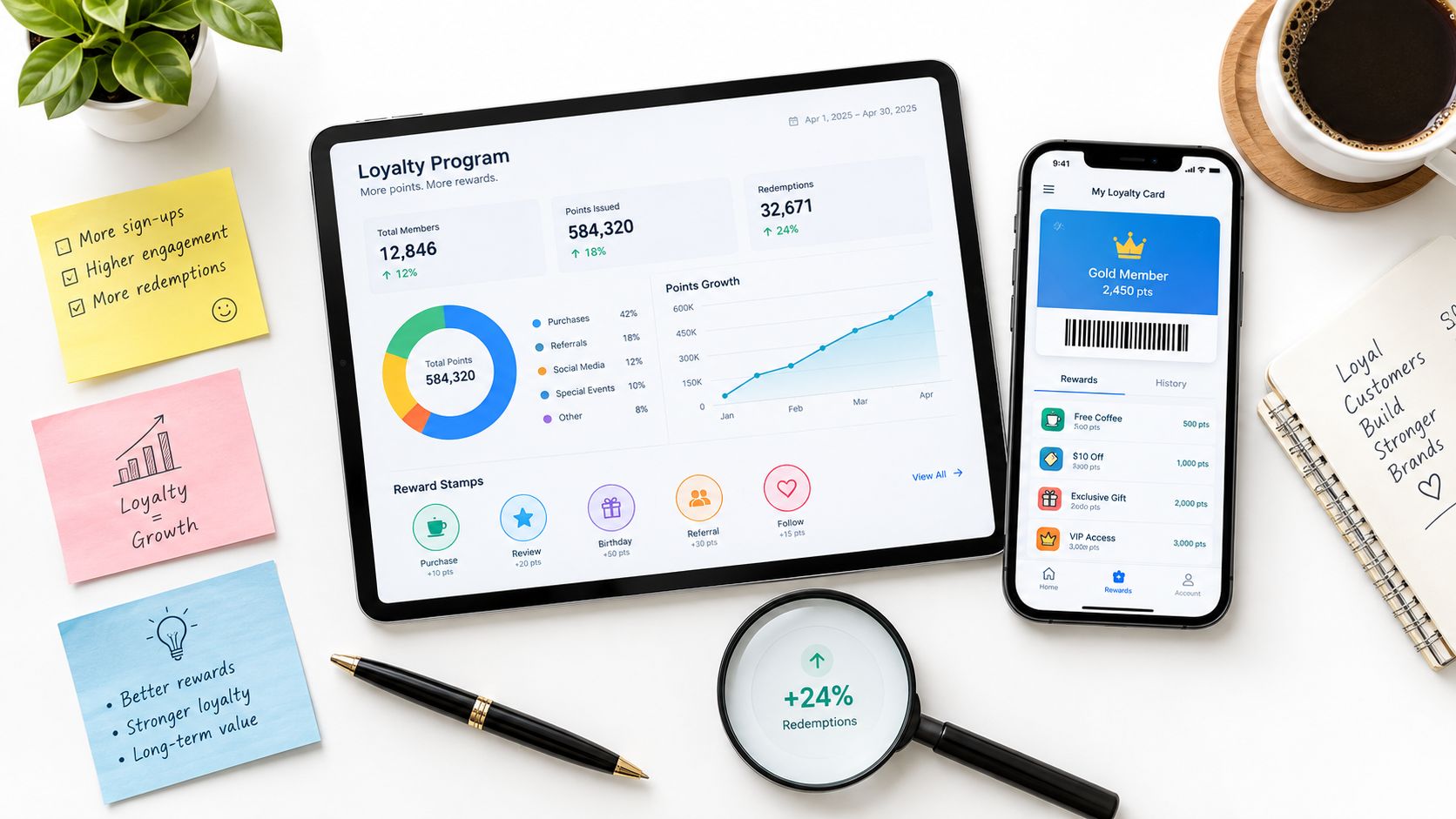
The most popular advice about customer loyalty program software free is to choose the platform with the longest feature list. That's usually the wrong test. A café needs loyalty at checkout, a Shopify store needs retention features inside its ecommerce workflow, and a small salon may need nothing more than a digital stamp card that staff can manage from a phone.
“Free” also describes several different commercial models. Some tools offer a genuinely free core plan, some provide a limited free tier, and others only delay payment through a trial. Compare the practical limits first, including program count, customer or order capacity, integrations, administration effort, offline access, and whether customers can use Apple Wallet or Google Wallet instead of downloading another app.
The options below are evaluated by operational fit, not feature volume. Loyal Customer is relevant for businesses that want phone-based points or stamps and wallet-ready passes for Apple Wallet and Google Wallet, with a free trial for testing the basic customer journey before committing.
Table of Contents
- 1. Loyverse POS
- 2. Smile.io
- 3. Rivo Loyalty, Referrals & VIP
- 4. BON Loyalty
- 5. Joy Loyalty, Rewards & Referrals
- 6. Appstle Loyalty
- 7. Zoho Thrive
- 8. Glue Loyalty
- 9. Punch
- 10. OpenLoyalty
- Top 10 Free Loyalty Program Software Comparison
- Choose the Cheapest Fit, Not Just the Free Plan
1. Loyverse POS
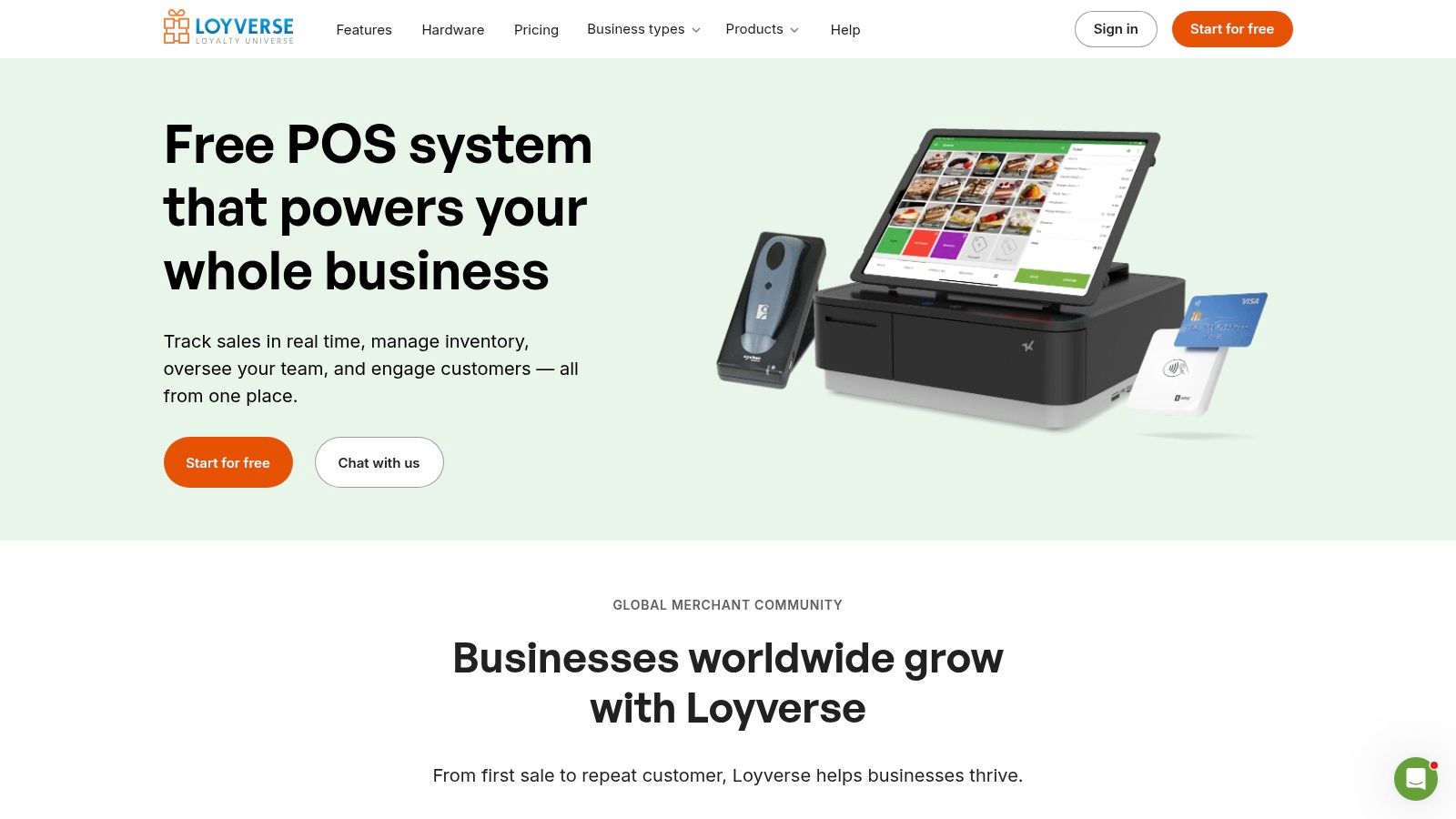
Loyverse POS is a strong starting point for a café, takeaway, salon, bakery, or small retailer that wants checkout and loyalty in one mobile system. Its core point-of-sale system runs on iOS and Android, and the loyalty feature is built into the POS rather than bolted on as a separate marketing application.
A merchant configures how customers earn points, then staff apply accrual and redemption during checkout. Customer profiles give the team a record of membership activity, while basic analytics help the owner see whether the program is being used. Multi-store support, kitchen display tools, and customer display apps make Loyverse more practical for a business that expects its operating workflow to grow beyond a single register.
Where Loyverse fits
The major advantage is one operational surface. Staff don't need to switch between a checkout tool and a loyalty dashboard every time someone earns or spends points. Loyverse also works offline on mobile devices, which matters in shops with unreliable connectivity.
The trade-off is the reward model. Loyverse supports points, not a conventional digital stamp card. Advanced inventory and employee-management capabilities are paid add-ons, so the free core plan may stop being sufficient as the business adds operational complexity.
Owners comparing POS-linked programs can also review this guide to customer loyalty software. The practical question is whether loyalty is an extension of the existing checkout process or a separate customer-retention channel.
Practical rule: Choose Loyverse when staff already need a mobile POS. Don't choose it solely because the loyalty feature is free if your customers expect wallet passes or visit-based stamps.
2. Smile.io
Smile.io is designed primarily for ecommerce brands using platforms such as Shopify, BigCommerce, or Wix. Its limited free plan gives a newer online store a way to test points and referrals without immediately building a custom retention system.
The customer journey is familiar. A shopper earns points for purchases or selected activities, then views available rewards through prebuilt widgets. Referrals can add an acquisition component, while VIP tiers are available on higher plans for brands that want to recognize different levels of customer value. Basic analytics help the team monitor participation, but the free plan is better suited to validating the mechanics than running a complex lifecycle program.
What ecommerce teams should check
Smile's appeal is speed. A non-developer can install the app, configure a points rule, place a widget on the storefront, and begin observing whether customers return to use rewards. Shopify POS support can also help a brand connect online retention with eligible in-person activity.
The limitation is capacity and depth. Higher allowances and advanced capabilities require paid tiers, and the free plan is mainly appropriate for a store that is still proving its loyalty proposition. Before launch, verify the current restrictions on members, orders, reward types, and integrations rather than assuming “free” means unlimited.
For a broader view of reward mechanics, this overview of rewards program software is useful. Smile is a good fit when the store already lives in an ecommerce ecosystem. It's a weaker choice for a local business that needs staff to manage stamps at a physical counter.
3. Rivo Loyalty, Referrals & VIP
Rivo Loyalty, Referrals & VIP takes a Shopify-first approach to retention. It combines loyalty points, referrals, VIP tiers, and store credit or cashback-style options with storefront widgets, account extensions, and Shopify Checkout extensions.
That combination changes where customers encounter the program. Instead of hiding loyalty in a separate page, the merchant can surface points and redemption options in the account area and relevant checkout experiences. Integrations with Klaviyo, Recharge, Gorgias, Skio, Tapcart, and other ecommerce tools can make Rivo more useful for brands with subscriptions, customer service workflows, or mobile shopping experiences.
The operational trade-off
Rivo is more valuable when the store already has a structured ecommerce stack. A subscription brand, for example, may want loyalty to support both one-time purchases and recurring customer relationships. A merchant using a helpdesk or lifecycle marketing platform may also benefit from keeping loyalty events closer to those systems.
The free plan creates a low-risk entry point, but it isn't a guarantee that the full workflow is free. Some reward types and checkout features are gated to paid plans, and pricing scales with store order volume. Test the actual redemption path in a development or low-risk storefront before promoting the program widely.
A loyalty feature only matters if customers can find and use it at the moment they buy. Rivo is strongest when its account and checkout surfaces are part of the store's normal shopping journey, not when the merchant merely enables another dashboard.
Rivo is therefore a better operational fit for a growing Shopify brand than for a coffee shop seeking a simple phone-operated punch card.
4. BON Loyalty
BON Loyalty suits small Shopify stores that want points, referrals, rewards, and multilingual customer-facing displays without a complicated implementation. The free tier provides a way to put the basic program in front of shoppers while the team learns which reward rules make sense.
Its feature set covers the essentials. Merchants can configure points and referrals, use theming controls to align the display with the storefront, and review analytics. Anti-fraud controls are particularly relevant for ecommerce because referral codes and reward balances can be abused when the rules are too open or customer identities aren't handled consistently.
Why multilingual display matters
A store serving customers in more than one language can create unnecessary friction if the loyalty panel, reward names, or joining instructions remain in one language. BON's multilingual display support helps the merchant make the program understandable without designing a separate customer interface from scratch.
The limitation is ecosystem focus. BON is built around Shopify, so it won't be the natural choice for a restaurant using a standalone POS, a salon taking bookings through another platform, or a retailer that needs a custom integration outside ecommerce. Deeper enterprise capabilities sit in higher tiers, which means the free plan should be treated as a validation environment rather than a promise of long-term scale.
Use BON when Shopify is the system of record and straightforward configuration matters more than a broad integration marketplace. Check how the free tier handles the specific reward and referral rules you plan to publish, including fraud review and customer support responsibilities.
5. Joy Loyalty, Rewards & Referrals
Joy Loyalty, Rewards & Referrals offers Shopify merchants a free Starter plan for testing points, referrals, VIP tiers, birthday rewards, and review rewards. That combination makes it more versatile than a basic points-only tool, but the extra mechanics only help when the team can explain them clearly to customers.
A practical launch might begin with one purchase rule and one reward. Birthday or review rewards can be added later, once the merchant knows staff and customers understand the core program. Joy also supports migration from platforms such as Smile, Yotpo, and Rivo on paid plans, which gives an established store a path to change tools without treating its existing program as disposable.
Don't confuse breadth with readiness
Social-action rewards and automations are available on higher tiers. That matters because a merchant may see many possible engagement actions in the product, then discover that the free plan supports only the simpler parts of the journey. The right evaluation is to configure the exact action customers will take, complete a test purchase, and redeem a reward as a real customer would.
Joy's pricing is organized around order volume, so the plan that works during a quiet validation period may not remain suitable as sales grow. Its Shopify-only focus is also a firm boundary.
A small Shopify brand should pick Joy when it wants a structured path from basic rewards toward referrals and lifecycle engagement. It shouldn't pick Joy for a physical business that needs QR enrollment and phone-based in-store administration. For that use case, a digital stamp tool or mobile-first loyalty platform removes more friction than adding ecommerce features.
6. Appstle Loyalty
Appstle Loyalty is most compelling when loyalty belongs alongside an Appstle subscription or membership setup. The product supports points, referrals, VIP tiers, loyalty pages, and widgets, with a free plan available through the Shopify App Store.
The operational benefit is ecosystem continuity. A store that already manages subscriptions or memberships with Appstle can keep related customer journeys closer together rather than introducing a separate loyalty vendor. That can simplify the internal mental model for the team, especially when the program rewards recurring customers or uses membership status as part of the value proposition.
Test the overlap before you commit
The important test isn't whether Appstle lists points, referrals, and tiers. It's whether those features behave correctly alongside the subscription or membership events you care about. Confirm how recurring orders earn rewards, how cancellations affect eligibility, and how staff handle a customer who has both a membership benefit and a loyalty reward.
Some loyalty features are gated to higher plans, and the product is best suited to Shopify stores. A business outside that ecosystem would be paying in complexity for an integration advantage it doesn't need.
Appstle makes sense for an existing Appstle customer that wants a free-to-start loyalty layer. It isn't the best first tool for a standalone retailer, service business, or local café. Those businesses generally benefit more from a workflow designed around visits, checkout, or phone administration than from a subscription-centered ecosystem.
7. Zoho Thrive
Zoho Thrive provides a “Forever Free” plan for businesses that want basic loyalty management without an upfront subscription. Its points engine, campaign setup, customer engagement tracking, and Zoho ecosystem workflows make it particularly relevant to companies already using Zoho applications.
That existing stack is the deciding factor. If customer records, communications, sales activity, and internal workflows already sit in Zoho, Thrive can fit the way the team works. The merchant can configure a points program and connect engagement activity through the surrounding ecosystem instead of starting with a disconnected loyalty database.
The cost is often setup effort
A free plan doesn't eliminate configuration work. POS and ecommerce connectors may require additional setup, and a business without Zoho experience may spend more time mapping customer identities, events, and reward rules than it expected. That effort can be reasonable for a company committed to Zoho, but excessive for a single-location business that only wants a stamp card.
Zoho Thrive is also a relatively newer product within Zoho, with a leaner feature set than Shopify-specialist loyalty apps. A team should confirm that its required customer-facing surfaces, redemption process, reporting, and integrations are available before migrating a live program.
Choose it when ecosystem alignment beats instant simplicity. Choose something else when the staff need to enroll a customer at a counter in seconds and don't want to manage a broader CRM workflow. The free plan is valuable, but only if the surrounding Zoho system reduces rather than increases daily administration.
8. Glue Loyalty
Glue Loyalty targets small and micro-businesses such as restaurants, salons, and independent retailers. Its free basic account covers digital loyalty cards, points, rewards, a rewards catalog, and automated member communications, giving an owner an off-the-shelf customer club without building one from scratch.
The product's positioning is practical. A restaurant can create a membership offer, a salon can connect rewards to repeat appointments, and a retailer can present a digital card instead of handing out another paper card. White-label branding options can help the customer-facing experience feel closer to the merchant's identity, though advanced branding and automation may require payment.
Where a simple club works well
Glue is a reasonable choice when the business wants a general loyalty program rather than a POS replacement or a developer platform. It can provide the structure needed to define rewards and communicate with members, while keeping implementation less technical than a self-hosted system.
The trade-off is depth and control. Teams that need custom APIs, unusual earning rules, or extensive integration work may find Glue less flexible than an open-source platform. Teams that only need one simple punch card may find its broader membership features unnecessary.
Before launch, staff should rehearse enrollment and redemption. Confirm what happens when a customer changes phone numbers, loses access to the card, or has duplicate profiles. Also check which communications are automated on the free account and whether the merchant is responsible for obtaining the permissions needed to message members. Glue fits an SMB that wants a ready-made club, not necessarily the smallest possible loyalty workflow.
9. Punch
Punch is built for the business that still thinks in paper cards. Its free plan supports one punch-card program with one reward tier, and customers can collect stamps through simple QR-based tracking without a POS integration.
That narrow scope is its advantage. A coffee shop can create a “return visits earn a reward” proposition, display a QR code at the register, and train staff on one action. A bakery or tea shop can use the same model without adding dedicated hardware or asking employees to manage a large loyalty dashboard.
Keep the reward path short
Visit-based programs work because customers can see progress without calculating a complicated balance. That aligns with the broader evidence that reward accessibility and earning speed influence whether people use a program. A benchmark compilation on loyalty-program performance reports that 45% of consumers are dissatisfied with how long rewards take to earn, so a merchant should set a realistic path to the first reward rather than making the card feel unreachable.
Punch is not designed for points, VIP tiers, variable reward values, or ecommerce integrations. The free plan's one-program and one-tier boundary is also a genuine constraint for a business with separate offers for different customer groups.
Read this practical guide to digital punch cards before replacing paper. Punch is the best fit when simplicity is the strategy. If the business later needs several programs, richer customer data, or wallet passes across a broader loyalty operation, it will likely outgrow the free plan.
10. OpenLoyalty
OpenLoyalty is the outlier in this list. It is an open-source platform that businesses can self-host and customize, with support for points, campaign rules, rewards, tiers, APIs, and online or offline scenarios.
The software cost may be free, but the operating model isn't lightweight. Someone must provision hosting, configure the application, secure it, monitor availability, manage updates, and build the customer or staff interfaces that a hosted app would normally provide. A development team also needs to connect OpenLoyalty to the POS, ecommerce store, customer database, or mobile experience.
Control comes with responsibility
OpenLoyalty makes sense when the business has unusual loyalty rules or strict requirements around data and integration control. An engineering team can adapt campaign logic, expose APIs, and support workflows that packaged Shopify apps or punch-card tools won't handle.
It doesn't make sense for a small merchant that wants to launch this week without technical support. There is no turnkey POS marketplace experience comparable to a hosted Shopify app, and every missing operational feature becomes the team's responsibility.
Self-hosted software is free only when the team values control enough to own maintenance.
Use OpenLoyalty when engineering capacity is already available and the loyalty program is strategically important. If the owner is also the cashier, marketer, and administrator, a hosted mobile tool will usually produce a faster and more dependable launch.
Top 10 Free Loyalty Program Software Comparison
| Product | Core model | Key features | UX / Quality (★) | Best for (👥) | Price & USP (💰 ✨ 🏆) |
|---|---|---|---|---|---|
| Loyverse POS | Points (POS) | POS checkout rewards, customer profiles, multi-store, offline | ★★★★ | 👥 Cafes, salons, takeaways, micro-merchants | 💰 Free core plan; ✨ Offline & POS‑native |
| Smile.io | Points + Referrals + VIP | Points, referrals, VIP tiers, widgets, Shopify POS support | ★★★★🏆 | 👥 Ecommerce stores (Shopify/Wix/BigCommerce) | 💰 Limited free plan; ✨ App-store trust & easy setup |
| Rivo: Loyalty, Referrals & VIP | Points + Referrals + VIP | On-site widgets, Shopify Checkout extensions, many integrations | ★★★★ | 👥 Shopify stores needing checkout/checkout UX | 💰 Free via Shopify; ✨ Modern checkout integrations |
| BON Loyalty | Points & Referrals | Points, referrals, anti-fraud, multilanguage, theming | ★★★★ | 👥 Small multilingual Shopify brands | 💰 Generous free tier; ✨ Multilanguage support |
| Joy: Loyalty, Rewards & Referrals | Points + VIP + Referrals | Points, VIP, birthday/review rewards, migration help | ★★★★ | 👥 Shopify brands seeking quick validation & migration | 💰 Free Starter; ✨ Migration assistance & social rewards |
| Appstle Loyalty | Points & Referrals | Points, referrals, loyalty pages/widgets, subscription ties | ★★★★ | 👥 Shopify stores using subscriptions/memberships | 💰 Free-to-start; ✨ Cohesive with Appstle subs |
| Zoho Thrive (Loyalty) | Points & Campaigns | Points engine, engagement tracking, Zoho workflow ties | ★★★ | 👥 Businesses in the Zoho ecosystem | 💰 Forever Free plan; ✨ Native Zoho integrations |
| Glue Loyalty | Digital cards & Points | Digital loyalty cards, rewards catalog, member communications | ★★★★ | 👥 SMBs: restaurants, salons, small retail | 💰 Free basic account; ✨ White‑label options |
| Punch (digital punch-card) | Digital stamp (punch) | Single punch-card program, QR tracking, no POS needed | ★★★★ | 👥 Coffee shops, bakeries wanting simple punch cards | 💰 Free forever (one program); ✨ Fast, QR‑based launch |
| OpenLoyalty | Points & Campaigns (self-host) | APIs, rules engine, rewards/tiers, offline support | ★★★ | 👥 Dev teams wanting full control & customization | 💰 Free self-host; ✨ Fully customizable source; 🏆 no SaaS fees |
Choose the Cheapest Fit, Not Just the Free Plan
The cheapest loyalty tool is the one that removes a real operational problem without creating another one. A free plan that forces staff into manual work, leaves customers unable to redeem rewards, or requires an integration project can cost more in time than a modest paid subscription.
Start with the operating model. Choose Loyverse when you need free POS-linked points and want staff to earn and redeem rewards during mobile checkout. Choose Punch when a coffee shop, bakery, or similar business needs one simple digital stamp program with QR tracking and no POS integration. Its narrow scope is a benefit if the business has one offer and doesn't need tiers or ecommerce features.
For Shopify retention, compare Smile.io, Rivo, BON Loyalty, Joy, and Appstle Loyalty by the customer journey rather than the feature list. Smile is a straightforward way to validate points and referrals. Rivo is better suited to stores that want loyalty visible in account and checkout experiences. BON emphasizes a simple Shopify setup with multilingual display support. Joy gives merchants a path toward referrals, VIP tiers, birthday, review, and social-action rewards, although several capabilities require paid plans. Appstle is most logical when subscriptions or memberships already run through its ecosystem.
Choose Zoho Thrive when the business already uses Zoho and the value of connected workflows justifies additional setup. Choose OpenLoyalty when engineering control, custom rules, and self-hosting are more important than a turnkey interface. Choose Glue Loyalty when an independent restaurant, salon, or retailer wants a general-purpose membership and rewards system without building a custom stack.
A separate option is Loyal Customer for businesses that need both points and digital stamps, phone-based administration, and Apple Wallet and Google Wallet cards. Its free trial is best used as a controlled test. Set up the program, enroll real or staff test customers, record accrual, attempt redemption, and inspect how the wallet pass behaves before deciding whether the paid plan fits.
Measure behavior before adding features
Enrollment alone doesn't prove that a loyalty program works. The BCG 2024 survey on loyalty-program expectations found that the average US consumer belonged to more than 15 loyalty programs, while US engagement fell 10% compared with the firm's initial 2022 study. The practical lesson for a small business is simple. Make joining easy, make the reward understandable, and measure repeat behavior instead of collecting inactive memberships.
A workable launch process is:
- Define the reward rule: Decide whether customers earn points for spend or stamps for visits, then state the reward in plain language.
- Test the customer journey: Join, earn, view progress, and redeem the reward as both a customer and a staff member.
- Confirm free-tier limits: Check customer capacity, program count, order volume, notifications, integrations, branding, exports, and the date or conditions that trigger payment.
- Assign staff procedures: Specify who invites customers, how staff verify identity, how they correct mistakes, and what happens during a connectivity failure.
- Set an upgrade trigger: Upgrade when a real limit blocks operations, reporting, or profitable retention, not because a competitor lists more features.
Also budget for the parts software pricing pages often understate, including reward cost, staff minutes, fraud controls, messaging, support, data export, and migration. A free loyalty program is worth keeping when it creates measurable repeat visits or purchases at an acceptable reward cost. If it only increases sign-ups, the business has built a database, not a working loyalty system.
Loyal Customer gives cafes, restaurants, salons, retailers, gyms, and other consumer-facing businesses phone-based points programs or digital stamp cards with Apple Wallet and Google Wallet passes. Test customer enrollment, reward accrual, redemption, and pass behavior through Loyal Customer before choosing the setup that fits your daily workflow.