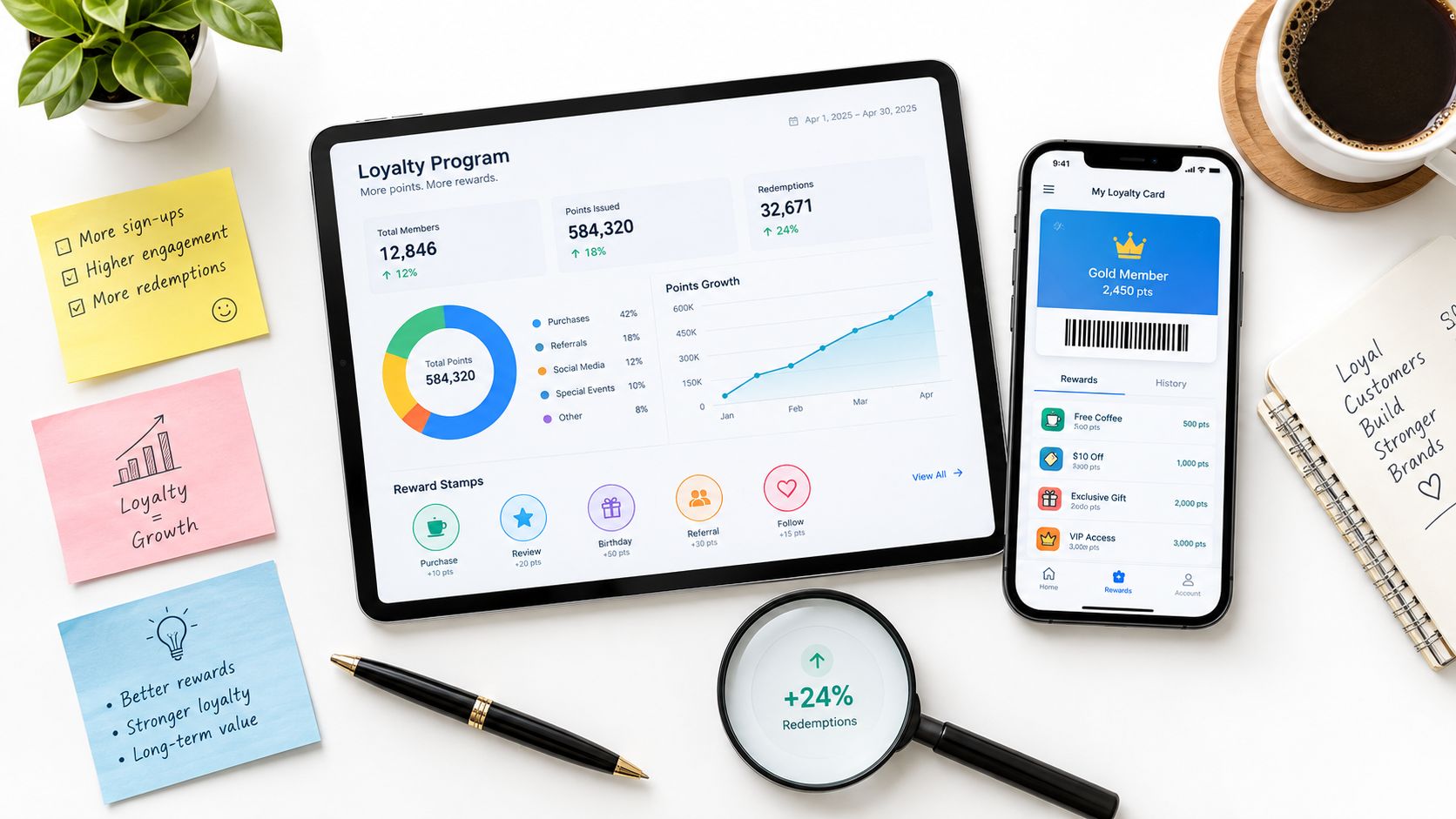
About 90% of online U.S. adults belong to at least one loyalty program, but that doesn't mean the program is working. The harder question is whether your customer loyalty software creates real repeat behavior once the market is crowded.
Most merchants don't lose on enrollment, they lose on activation. People join, then forget, ignore, or only use one program in their category, which is why simple points and stamp setups can feel weaker than they looked in the pitch deck.
Table of Contents
- The Loyalty Adoption Gap Most Businesses Miss
- Points Versus Stamps Which Model Fits Your Business
- Why Wallet Passes Outperform Standalone Apps
- Loyalty ROI and Revenue Growth Drivers
- Setup Speed and Day-to-Day Operations
- Data Privacy and Compliance Considerations
- How to Choose the Right Loyalty Strategy
The Loyalty Adoption Gap Most Businesses Miss
A lot of merchants still judge customer loyalty software by sign-ups, but that's the wrong benchmark. Deloitte's research shows the average consumer enrolls in eight loyalty programs and actively participates in only five, while 51% engage with just one program in their industry. That gap matters more than the install count because it tells you why a shiny launch can still underperform in daily trade. Deloitte's loyalty program research
A café owner can feel good after a launch week surge, then look at the register and see nothing changed. That's the activation problem in plain terms, customers don't need another card, they need a reason to pull it out again. If your program doesn't change behavior at the point of sale, it becomes background noise.
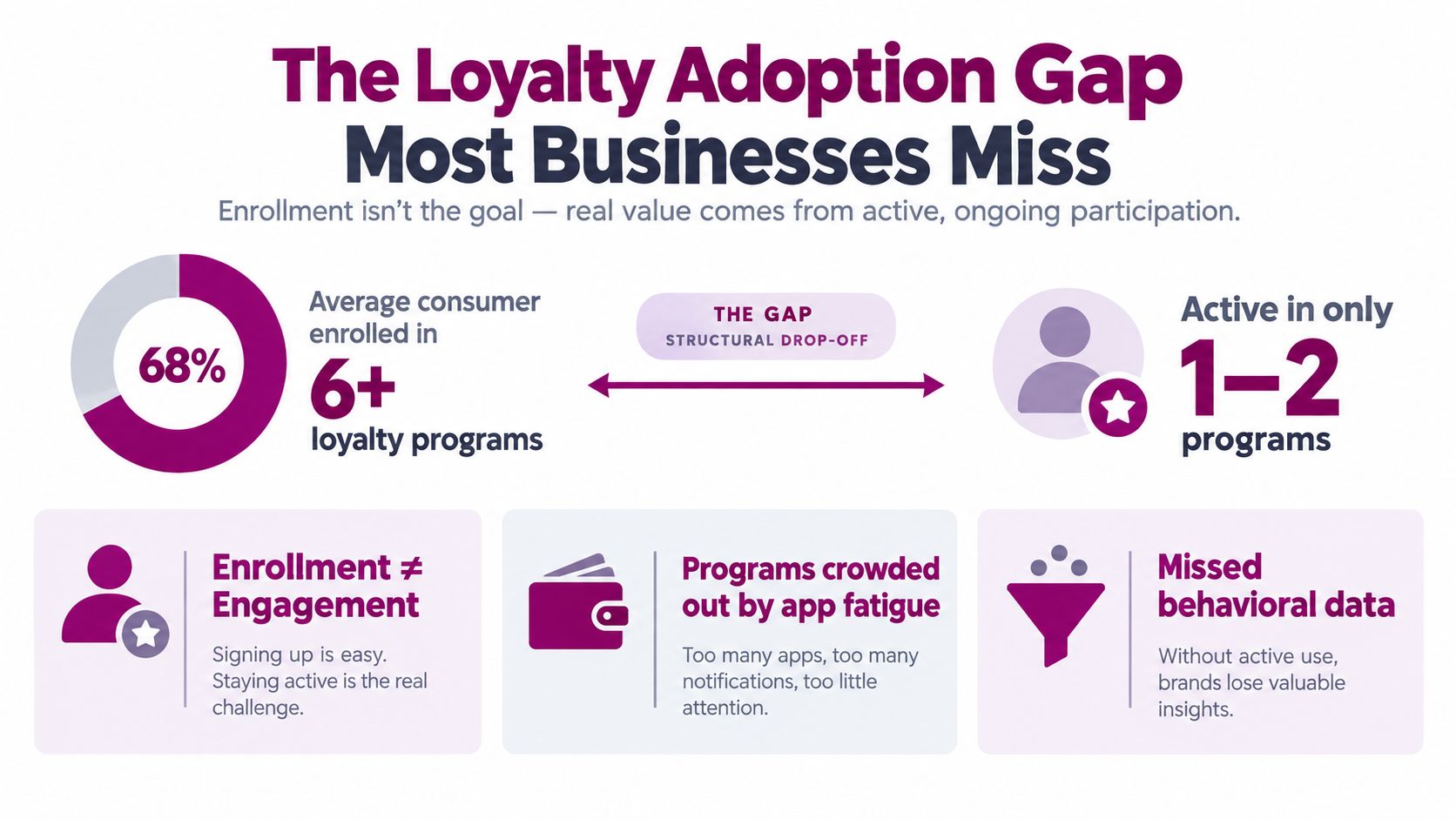
Enrollment is not the finish line
The practical mistake is assuming sign-up equals momentum. In mature markets, many customers already carry loyalty commitments around in their phones and wallets, so a new program has to earn attention, not just permission. That means reward visibility, timely reminders, and a structure people understand in a few seconds.
Practical rule: if a member can't explain the value in one sentence, the program is too hard to activate.
For small businesses, a basic points or stamp setup often needs help from stronger design choices, like clear redemption rules, wallet presence, or simple nudges at checkout. The tool matters, but the behavioral loop matters more. A useful starting point is a straightforward launch guide such as how to start a loyalty program, then making sure the structure supports repeated use, not just registration.
Points Versus Stamps Which Model Fits Your Business
Points and stamps solve different jobs, and businesses often choose the wrong one because they start from software features instead of customer behavior. A points model works best when spend varies and the basket size matters. A digital stamp card works better when visits are frequent, the ticket is small, and the customer should feel progress fast.
The trade-off is behavior, not taste
A points program rewards value. That makes it a better fit for restaurants with larger check sizes, independent retail, or service businesses where a customer might spend more one visit and less the next. It's also easier to extend into tiers, bonus offers, or spend thresholds later.
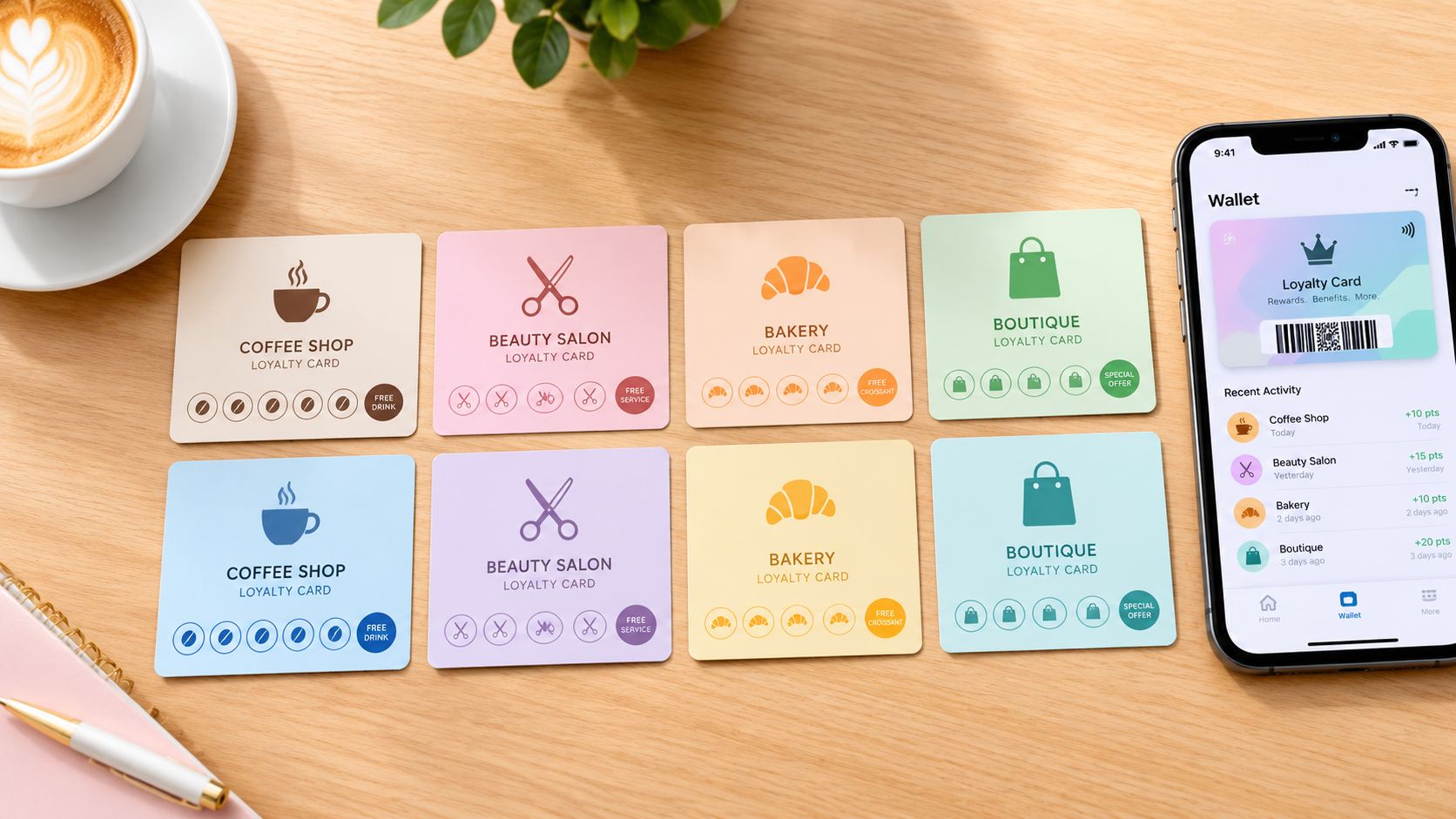
A digital stamp card rewards frequency. That's why it fits cafés, bakeries, salons, and quick repeat services so well. Customers don't have to calculate value, they just want the next stamp and the next reward.
| Model | Best For | Customer Behavior | Setup Complexity |
|---|---|---|---|
| Points | Variable spend, larger baskets, multi-offer programs | Encourages spend growth and repeat visits | Moderate |
| Digital Stamp Cards | Low-ticket, repeat-visit businesses | Encourages visit frequency and habit | Low |
If you run a coffee shop, a stamp card often feels cleaner because the rule is obvious. If you run a boutique or a salon with uneven ticket sizes, points usually give you more room to shape behavior without making rewards feel arbitrary. The right choice is the one customers can remember without thinking.
A common failure is mixing too much sophistication into a simple business model. If your team has to explain the redemption logic every day, the program is too complex for the sales pattern you have. Keep the model close to the way people already buy from you.
The setup resources in points-based loyalty program guidance are useful here because they force the central question, whether points make the business clearer or just add another layer to manage. A good program should feel easier to use than the old paper version, not more impressive on paper.
Why Wallet Passes Outperform Standalone Apps
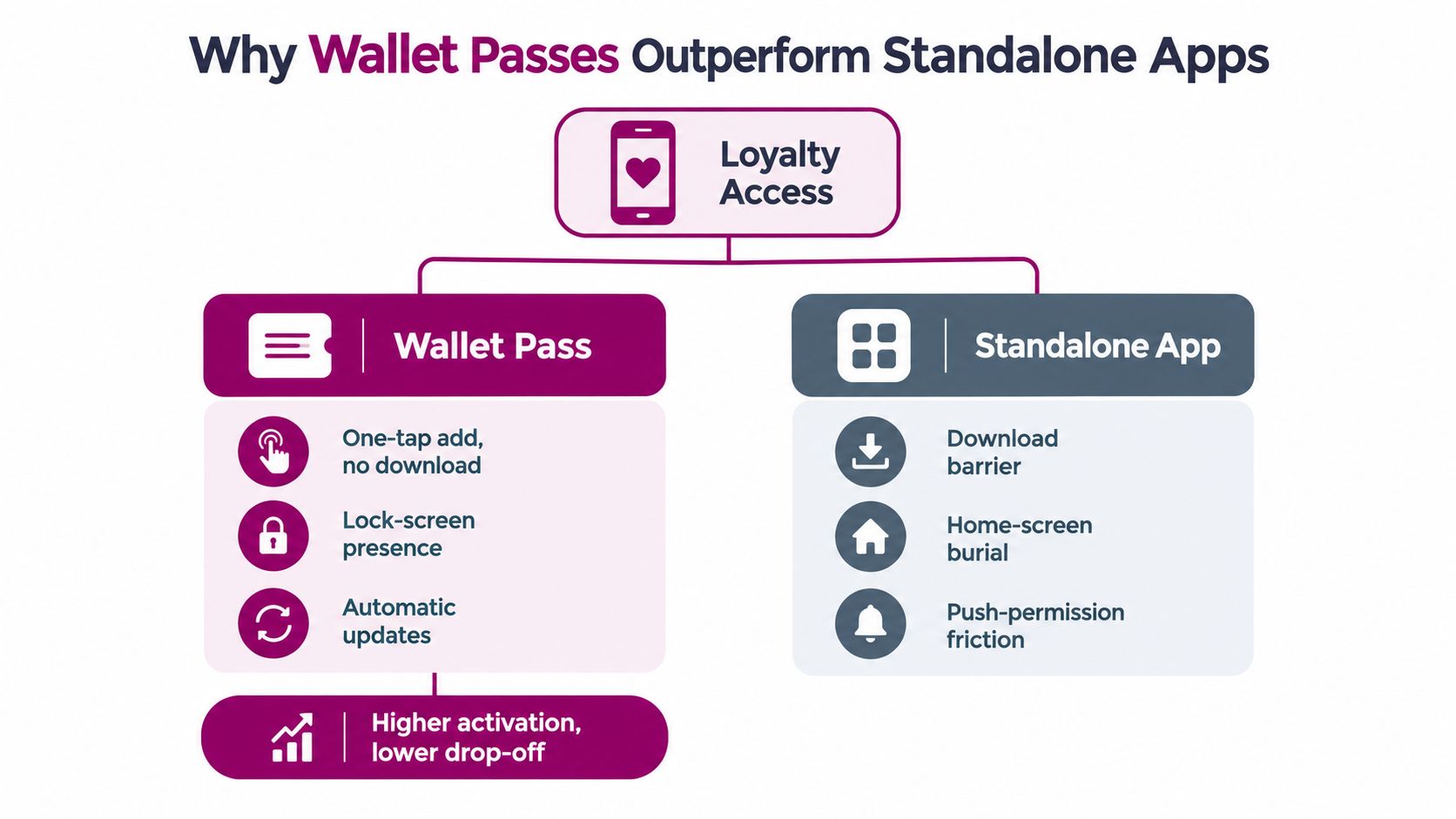
Standalone apps create friction at the worst moment, right before checkout. Customers have to download, open, log in, and remember the app later, which is a lot to ask for a small reward. Wallet-native loyalty strips that friction away by putting the pass where people already look for their cards.
The wallet behaves like a lightweight state container
A wallet pass can carry the loyalty ID, points balance, tier status, and a barcode or QR code inside Apple Wallet or Google Wallet. That makes it available for scan-based redemption without forcing a full app session. In high-frequency, low-ticket businesses, that matters because speed at the counter is part of the experience, not an afterthought. Brandmovers on wallet loyalty passes
The bigger operational win is that the pass can update without making the customer re-engage from scratch. If the balance changes, the pass changes. If a reward is redeemed, the pass stays current. That reduces the number of dead moments where a customer gives up before completing the visit.
The difference is easiest to see in cafes, bakeries, salons, and quick-service retail. These are not places where someone wants to download another app for a free coffee or a haircut perk. They want the reward to live on the device they already use.
What to look for in a wallet-native setup
A strong wallet flow should do three things well. First, it should make add-to-wallet simple. Second, it should keep the card legible at the point of redemption. Third, it should update balances without extra staff work.
Wallet-native loyalty works because it lowers the number of decisions a customer has to make after they've already decided to buy.
If you want a practical implementation example, the pass format described in passes for Apple Wallet shows why this model suits small merchants that need less friction and more consistency. The software should help the reward feel present, not buried.
Loyalty ROI and Revenue Growth Drivers
The financial case for customer loyalty software starts where many owners are already looking, with return. Industry compilation data shows loyalty program managers report favorable ROI at a 90% rate, with an average return of 4.8x. The same source says loyalty leaders are associated with about 2.5x revenue growth compared with other businesses in their sectors. Kognitiv's loyalty software overview
Why the numbers matter for small teams
Those figures don't mean every program prints money. They mean retention infrastructure can be a serious revenue lever when the design matches how customers already behave. A small business doesn't need a giant CRM team to benefit, but it does need a program that customers remember, use, and redeem without friction.
The return is strongest when the program reduces repeat-friction and nudges the next visit. That's why wallets, clear reward thresholds, and simple redemption rules matter so much. They cut the gap between intention and action.
Growth usually comes from three practical levers
- Retention: existing customers return more often when the reward is visible and easy to claim.
- Cross-sell: members are easier to introduce to add-ons, bundles, or higher-margin items.
- Referral value: a program can create a reason to talk about the brand, not just buy again.
This is also where vanity metrics mislead. Enrollment can rise while revenue barely moves if members never redeem or never come back. The right measure is whether the program changes buying behavior at the register, not whether the dashboard looks busy.
For a merchant, the takeaway is simple. Customer loyalty software is no longer just a marketing accessory. It can become part of the core revenue system if it's built around repeat behavior, not just member counts.
Setup Speed and Day-to-Day Operations
Setup speed matters because small businesses don't have time for software that turns into a project. A loyalty system has to fit between opening shift, service rush, and closing tasks, or it won't last. That's why phone-first administration has become such a useful pattern for merchants that need to launch quickly and keep operating without a desktop-heavy workflow.
Phone-first beats software that lives on a back office
When a platform can be configured and run from a smartphone, the owner isn't tied to a terminal or a long onboarding cycle. Basic balance accrual, reward redemption, and program edits can happen from the same device used to manage messages, stock, and orders. For many cafés, salons, bakeries, and small retail counters, that's the difference between adoption and abandonment.
A practical setup also needs to handle the basics without making staff think. If a customer earns a stamp, the team should be able to add it in a few taps. If a reward changes, the new rule should be easy to publish. If the program needs a free trial to test fit, that should shorten the decision, not add another layer of complexity.
Loyal Customer is one option in this category, because it supports points and stamp workflows from a phone and also issues wallet-ready loyalty cards. That kind of setup is useful when a merchant wants a quick start without overbuilding the system around the business.
Quick launch does not mean weak control
A fast setup still needs clear rules. Staff should know how to handle redemptions, how to explain the reward, and when to offer the program at checkout. If those basics are sloppy, the platform won't rescue the experience.
The best early-stage loyalty systems feel almost boring to run, because the customer sees one clear promise and the team doesn't need a script every time.
That's the value of a lightweight launch. It gets the program into daily use fast enough to learn from, then leaves room to improve the offer once you know how customers respond.
Data Privacy and Compliance Considerations
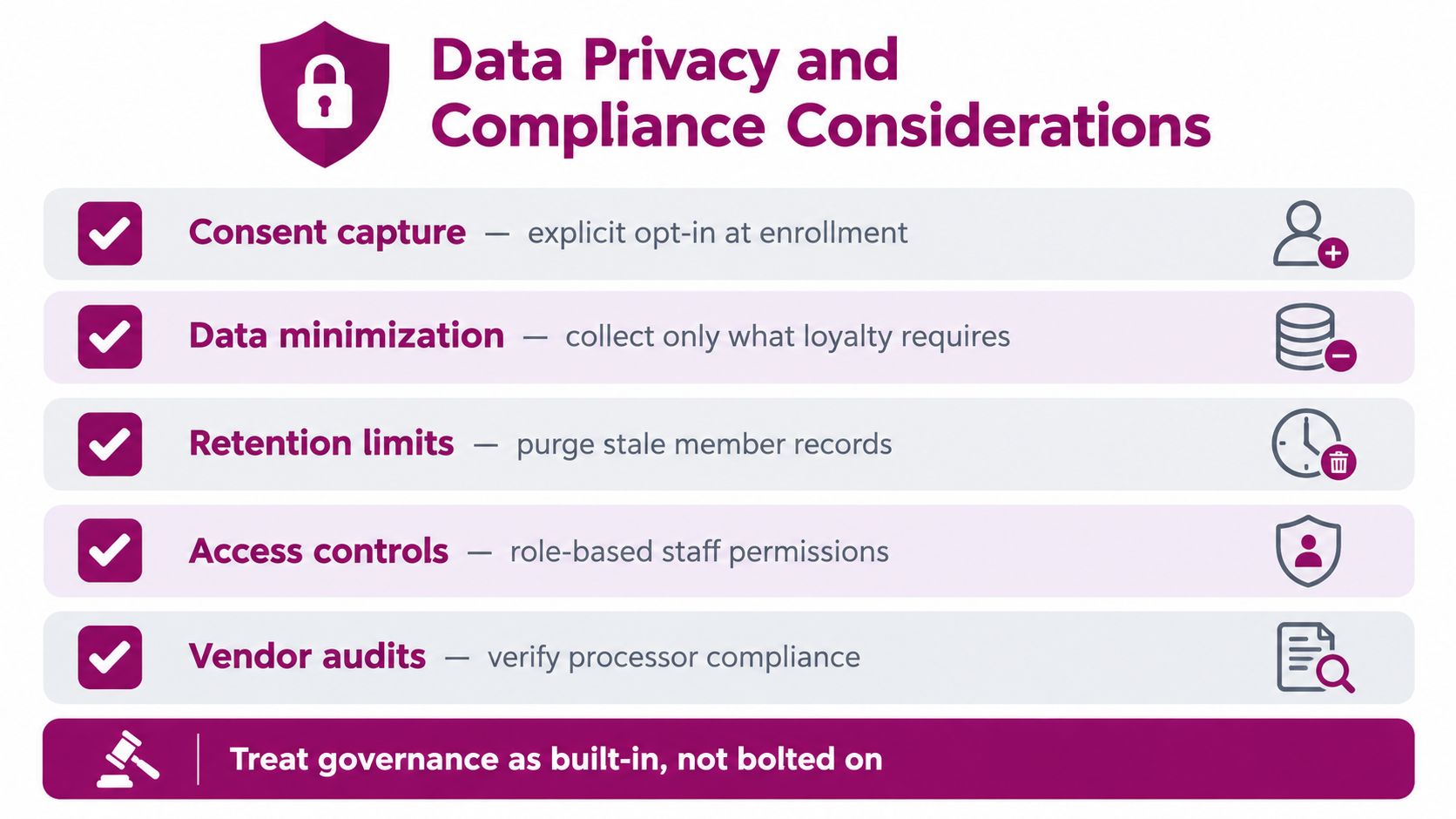
Loyalty programs don't just collect names anymore. They increasingly hold transaction history, points balances, consent signals, preferences, and sometimes partner data, which makes governance part of the product, not an admin detail. Independent privacy guidance also points to the need for identity controls, role-based access, audit trails, retention rules, and consent management. Nector's guidance on loyalty software privacy and integrations
The hidden risk is operational, not abstract
Small merchants often assume privacy risk is only an enterprise issue. It isn't. If your staff can see too much, change too much, or export too much without controls, the program becomes harder to trust and harder to defend.
Omnichannel expectations and real-time synchronization are now baseline expectations in many loyalty setups, but integrations with CRM and POS systems still create execution gaps. That's where hidden debt starts to build. A system that looks simple on the front end can become messy if consent, redemptions, and customer records drift apart behind the scenes.
What a merchant should check before launch
- Consent capture at enrollment, so permission isn't assumed later.
- Data minimization so the platform collects only what the program needs.
- Retention limits to avoid storing stale member records forever.
- Access controls so staff permissions stay role-based.
- Vendor audits to confirm the processor has a compliance posture you can live with.
If the platform can't explain how it handles permissions and record retention, the merchant is buying future cleanup work.
This matters even more once loyalty becomes part of your first-party data strategy. The program should protect trust while still being usable at the counter. If it can't do both, it's not ready.
How to Choose the Right Loyalty Strategy
Choose the model that matches how your customers already buy. If they come in often for small tickets, a stamp card may be enough. If spend varies and you need more room for reward design, points usually give you better control.
Match the tool to the behavior
Wallet support matters when friction is killing repeat use. Compliance matters when you're collecting more than a name and a phone number. Setup speed matters when your team needs to launch without extra hardware or a long onboarding project. And if a basic points or stamp program no longer stands out in your category, the answer is usually not more complexity for its own sake, it's better activation and a clearer reason to come back.
A simple starter program can work well when the purchase pattern is obvious and the reward is easy to understand. A richer retention strategy makes more sense when you need stronger data handling, mobile convenience, or more control over how customers move through the program. The right choice is the one that reduces friction for customers and admin work for staff at the same time.
If you want to run loyalty without turning it into a software project, Loyal Customer gives small businesses a phone-first way to manage points, stamps, and wallet-ready passes. Visit Loyal Customer to see how a practical setup can fit your shop, salon, café, or takeaway and help turn repeat visits into a habit.