The average gym loses roughly one-third of its members each year, with annual retention at 66.4%. If you want to start a gym loyalty program, start it as a retention intervention first and a discount scheme second.
A weak program hands out perks and calls it loyalty. A strong one changes member behavior, makes progress visible, and helps people stay engaged long enough for habits to form.
Table of Contents
- Why Your Gym Needs a Loyalty Program Beyond Discounts
- Designing a Behavior-Based Loyalty System
- Creating Attainable Reward Tiers and Milestones
- Points Versus Stamps and the Power of Wallet Passes
- Launching Your Gym Loyalty Program Effectively
- Avoiding Common Loyalty Program Mistakes
- Best Practices for Long-Term Loyalty Success
Why Your Gym Needs a Loyalty Program Beyond Discounts
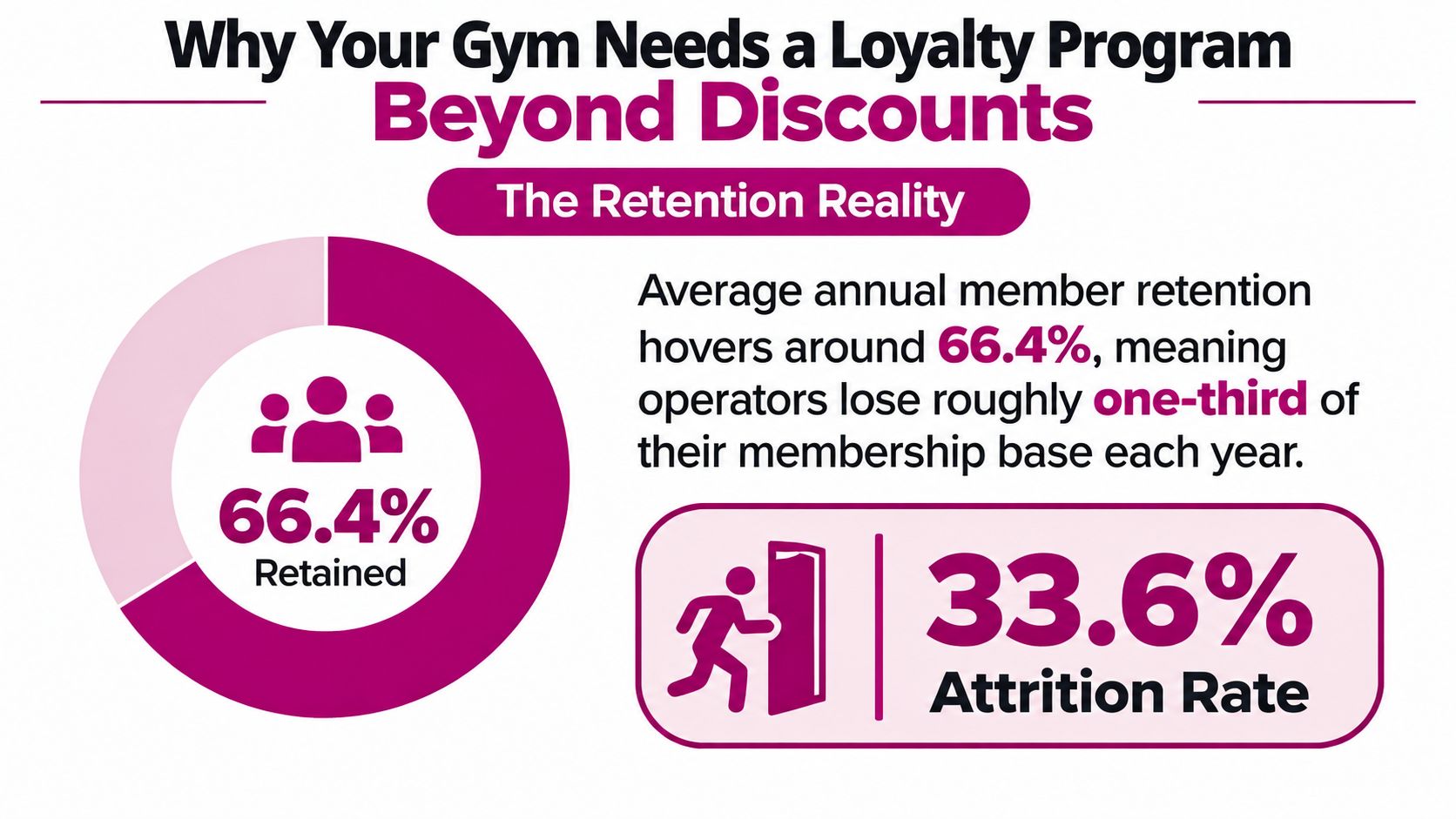
A gym loyalty program only earns its keep if it addresses churn, not just spend. The industry benchmark of 66.4% average annual member retention means the typical operator still loses about one-third of members each year, and other industry summaries put six-month cancelation around 50% among new members, which tells you where the pressure really sits, early in the relationship. Health & Fitness Association benchmarking data is the useful reference point here, because it gives you a baseline for whether your gym is improving or just handing out extras.
That changes how you think about rewards. A discount on merchandise or a free month might feel good, but it doesn't automatically increase visits, improve onboarding, or keep first-time members from drifting away. What works better is rewarding the behaviors that lead to continuation, like completing an orientation, attending a class early, or returning after a gap.
Practical rule: if a reward doesn't make attendance or commitment more likely, it's probably just a cost center.
A behavior-first program also gives you cleaner measurement. You can compare enrolled members against non-enrolled members, then control for membership type and join date instead of guessing whether the program helped. That's a much better way to judge how to start a gym loyalty program than asking whether members “seem happier.”
For a broader view on the business case, this guide to loyalty program benefits is a useful companion.
Designing a Behavior-Based Loyalty System
Start with the behavior you want more of, then build the program around that behavior. If you open with rewards and hope the right habits follow, you'll usually end up subsidizing people who were already active.
Pick the behaviors that predict retention
The most useful targets are simple and observable. Four visits a month, a group class within 30 days, an onboarding consultation, or a qualified referral all give you a clear earning rule and a clear reason for the reward. Those are easy for staff to explain and easy for members to understand.
ABC Fitness reports that members attending four or more times per month remain about seven months longer than lower-frequency users, and that members who attend group fitness during their first 30 days show 40% higher retention. ABC Fitness industry statistics supports the logic of early, behavior-based rewards, not just generic points for spending.
Build the first version small
A launch does not need twenty earning rules. Pick two or three measurable actions, then give each one a clear point or stamp value. If you make the system too broad, staff will forget the details and members will stop caring.
A practical rollout looks like this:
- Set a baseline for visits, cancellations, and activation by cohort.
- Choose the first behaviors that are realistic for new members.
- Assign a visible reward that can be reached within a short window.
- Pilot one location or one new-member cohort before a wider rollout.
- Compare enrolled and non-enrolled members over the same period.
The best first test is not “does everyone like it?” It's “does it change who comes back?”
If you're mapping this in software, a points model gives you more flexibility, while a stamp model keeps the message simpler. The main thing is not the label, it's whether the earning rule matches the habit you want to build. For a deeper walkthrough of the mechanics, see this points-based loyalty program guide.
Creating Attainable Reward Tiers and Milestones
Reward thresholds decide whether members stay interested or mentally file the program away as too hard to use. When the prize feels distant, participation falls off fast.
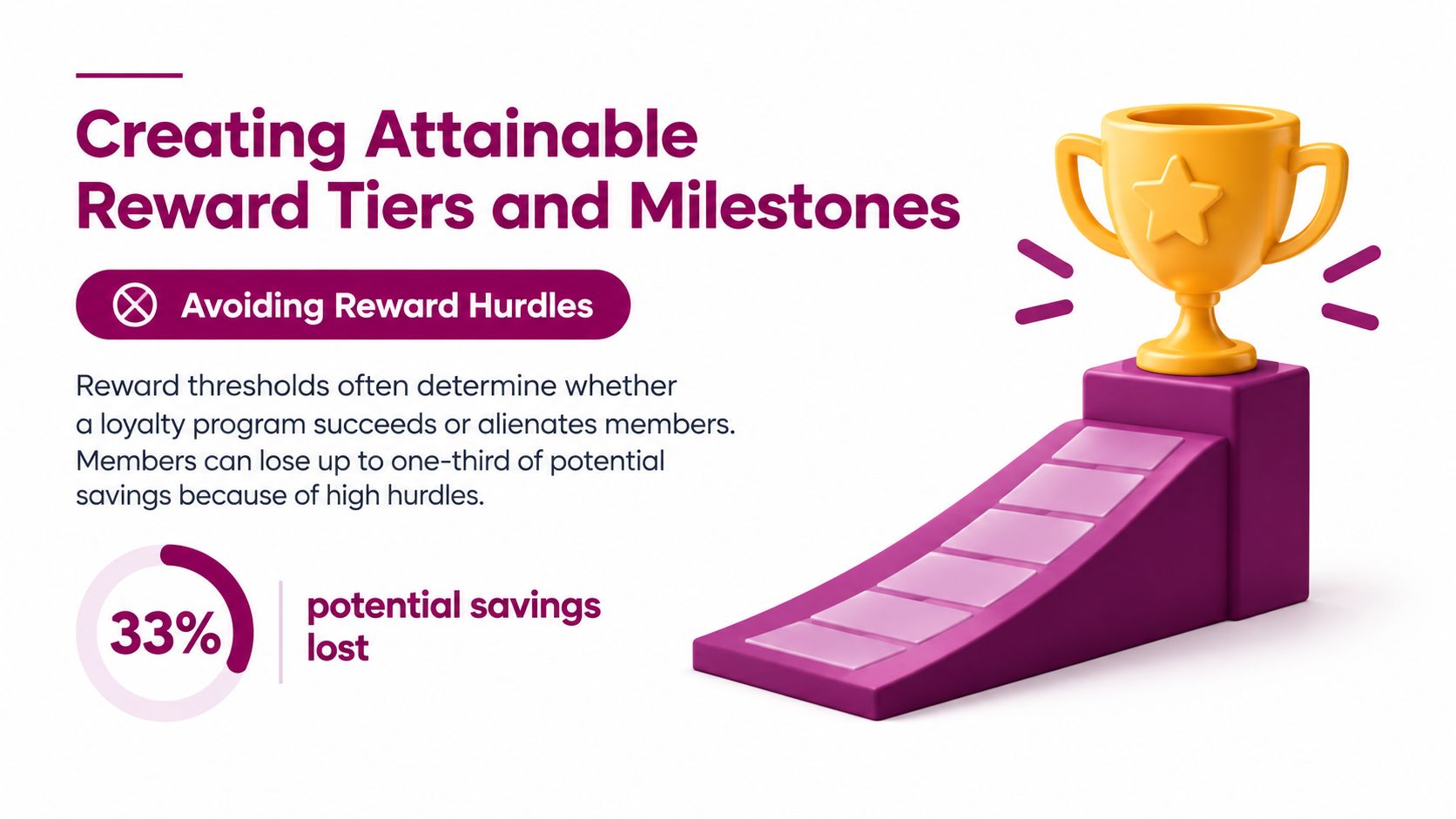
Research on loyalty-program design shows that members can lose up to one-third of potential savings because of hurdles like expiry dates, spending minimums, and redemption requirements, and a survey of the 100 largest U.S. retailers found that 85% of rewards programs used some form of hurdle. Designing reward programs with fewer hurdles is relevant to gyms because the same friction applies when a member has to decode complicated earning rules before they'll act.
Use several visible milestones
A better gym structure gives members multiple reachable targets. An introductory reward can sit near the front of the journey, a mid-level benefit can mark continued effort, and a stronger reward can sit further out for people who keep showing up. That approach keeps the program feeling alive instead of remote.
The best rewards in gyms are usually connected to the experience members already value. A guest pass, class credit, merchandise item, or small service upgrade tends to feel more natural than a vague point balance with no obvious use. The reward should reinforce the habit, not distract from it.
Keep redemption obvious
If members can't tell how close they are to the next reward, you've already created friction. Use a visible balance, a stated target, and a clear expiry rule if points expire at all. A wallet pass or checkout view works well because the member sees the next milestone right where the decision happens.
Clear thresholds don't just improve redemption, they reduce the feeling that the program is a trick.
At launch, resist the urge to over-engineer tiers with exclusions and special cases. A simple structure that members can explain to each other will outperform a clever system that only staff understand. If you want the program to shape attendance, it has to be easy to remember during a busy day.
Points Versus Stamps and the Power of Wallet Passes
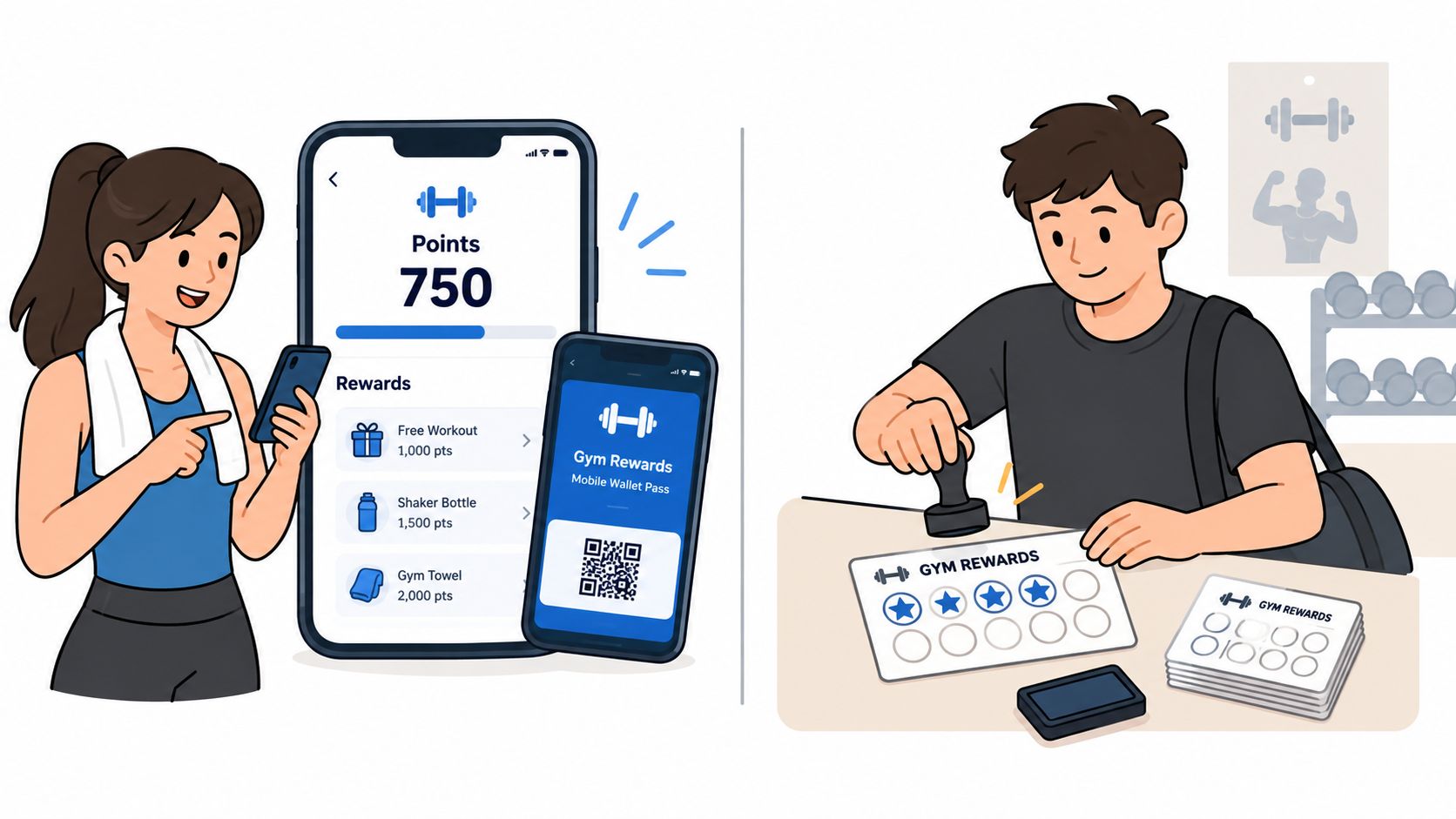
Points and stamps solve different problems. Points work better when you want flexibility across actions, while stamps are cleaner when the reward is tied to repeat visits or classes. Both can work, but the wrong one makes the program harder to explain than it needs to be.
A wallet pass changes the experience because it removes the need for a separate app or a paper card that gets forgotten in a drawer. Apple Wallet and Google Wallet both support stored loyalty credentials, so members can carry the pass they already use on their phone. That's useful in a gym because the pass can travel with the member instead of getting lost between front desk visits.
For a gym team, the operational upside is simple. Staff can add a point or stamp during check-in, the member can present the pass at reception, and the current balance stays visible without extra app downloads. Loyal Customer's wallet-ready cards fit that model by letting a gym manage a points program or digital stamp card from a phone while the customer stores the pass in the native wallet app.
The structure also matters more than the format. The loyalty research review notes that program structure, point structure, reward structure, and communication are distinct design elements, so the pass should show the balance, the threshold, and any expiry rule clearly. How to create Apple Wallet passes is worth looking at if you want the mechanics of a wallet pass without adding another app into the mix.
Paper punch cards still work in some settings, but they're easy to forget and hard to track. Wallet-native passes solve both problems without forcing your members into another download cycle.
Launching Your Gym Loyalty Program Effectively
A good launch starts with measurement, not hype. Before you switch anything on, record six-month retention, monthly visits per member, first-30-day activation, cancellation rate, and how many members reach your chosen attendance milestones.
Then keep the first version simple. One action-to-reward rule, one visible balance, one attainable milestone, and one pilot group is enough to tell you whether the idea deserves a broader rollout. If you test with a new-member cohort or one location, you'll also learn whether the program helps the people most at risk of leaving.
Set up the operational basics
Staff should know exactly when to award a point or stamp and how to explain the next reward in one sentence. Recognition matters most when it happens during a visit, because that's when the habit is forming. If members have to ask about their balance later, you've already lost some of the momentum.
Use the same comparison group every time. Enrolled members and non-enrolled members should be measured against each other with membership type and join date held constant, otherwise you'll mistake natural differences for program performance. A bigger enrollment number doesn't tell you much if the new members were already more active.
Avoid launch mistakes that hurt participation
Complicated tier structures tend to slow participation because the earning rules feel distant. Rewarding only purchases can also backfire, because you may end up subsidizing behavior that would have happened anyway.
A cleaner launch usually wins. Keep the threshold visible, make the reward reachable, and show progress where members already look, at checkout or in their wallet pass. That way, the program becomes part of the visit rather than a marketing message floating above it.
Avoiding Common Loyalty Program Mistakes
The biggest mistake is assuming every member should be pushed through the same attendance leaderboard. Gym retention depends on onboarding quality, coaching, scheduling, social connection, and injury prevention too, not just transaction frequency.
Some members need a more flexible path. A beginner who completes an introductory session, someone returning after an injury, a shift worker who can only attend irregularly, or a member using hybrid training should all have a fair way to participate. If the program only rewards the people who are already easiest to retain, it misses the point.
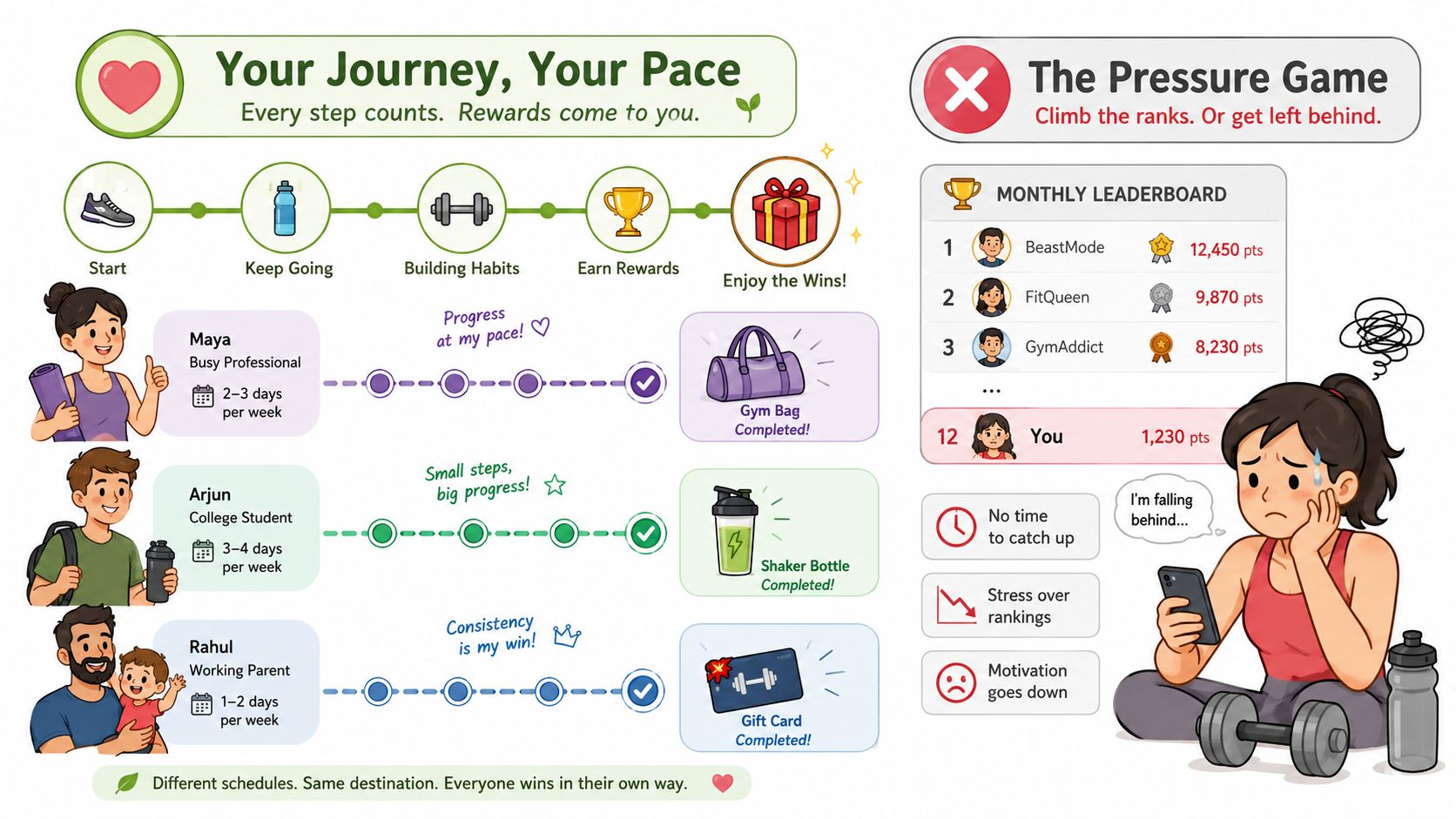
Reward pathways, not just attendance volume
You can reward beginner-friendly classes, coaching check-ins, mobility work, bringing a friend, or returning after a break without turning the gym into a competition board. That keeps the program aligned with the kind of engagement that supports retention rather than shaming anyone who can't train like a regular.
Many loyalty schemes go wrong here. They accidentally reward only the most frequent visitors, then wonder why new, older, injured, or schedule-constrained members don't engage. A fair program measures retention, attendance quality, redemption, and satisfaction by cohort, instead of assuming one formula fits everyone.
Match the reward to the member
Different members value different outcomes. A guest pass may excite one person, while another cares more about recognition or a class credit. The more closely the reward fits the member's path, the less likely it is to feel like generic marketing.
If the program works only for your easiest-to-serve members, it's not a loyalty program. It's a filter.
Best Practices for Long-Term Loyalty Success
Long-term success comes from clarity, not complexity. Members should always know what they're earning, how they redeem it, and whether any points expire, because vague rules kill trust.
Review the program by cohort, not just as one big number. Early-stage members, established members, and long-tenure members often respond differently, so your thresholds may need adjustment as behavior changes. The central question is whether the program is improving incremental retention and contribution margin, not whether it's creating more enrollment chatter.
A mobile-first system helps because it keeps administration close to the floor of the gym. If the balance, reward, and threshold are visible in the wallet pass or at checkout, staff can keep the program active without switching between too many tools. That also makes it easier to update milestones when member behavior shifts.
Gyms that keep loyalty programs alive usually do three things well. They keep the rules simple, reward actions that lead to continued attendance, and check the data often enough to refine the offer before it gets stale. That's the answer to how to start a gym loyalty program and make it survive beyond launch week.
If you want to run a loyalty program that's built around attendance, visibility, and low-friction redemption, visit Loyal Customer to see how points, digital stamp cards, and wallet-ready passes can fit into your gym's daily workflow. It's a practical way to keep progress visible and make rewards easier to understand at the front desk.