81% of consumers who are not currently enrolled in a loyalty program say they'd join if their favorite bakery offered one. That makes the key question not whether to launch, but how to launch a program customers will keep using.
Bakery loyalty programs fail most often for one simple reason, they ask people to remember one more thing. A paper card disappears into a pocket, a separate app needs a download, and a reward that lives nowhere obvious gets forgotten before the next visit. The bakery that wins is usually the one that removes friction before it tries to add value.
Table of Contents
- Why Bakery Loyalty Programs Fail Before They Start
- Designing a Digital Membership Card Your Customers Will Keep
- Connecting the Pass to Points or Stamps
- Running a Smooth Enrollment and Checkout Flow
- How One Bakery Distributed Passes and Followed Up
- Measuring Whether the Program Actually Helps
- Starting Your Bakery Loyalty Program Next Week
Why Bakery Loyalty Programs Fail Before They Start
The strongest reason to move now is participation. 52% of consumers already take part in restaurant, café, snack, or deli loyalty programs when those businesses offer them, and 96% of existing members say the programs are a good way to get more value for their money, according to the National Restaurant Association's 2024 Restaurant Technology Landscape Report. That tells me the appetite is already there, but only if the format is easy to use.
Format beats cleverness
I've watched paper punch cards die in glove compartments and watched standalone apps stall because nobody wanted another icon on their phone. The problem isn't usually the offer, it's the handoff at the counter. If the customer has to search for a card, remember a login, or ask the cashier what to do next, the program has already lost momentum.
Wallet-native passes solve that first hurdle better than most bakery owners expect. 60% of current loyalty users prefer smartphone apps, while 18% prefer physical cards and 22% have no preference. Among prospective members, 33% preferred an app and 39% preferred a card in the same research, which is exactly why a pass that sits in Apple Wallet or Google Wallet can work so well. It behaves like the thing customers already reach for when they pay, not like a marketing add-on they need to manage.
Practical rule: if the loyalty card is harder to open than the payment card, it's too hard.
That's why the format matters more than a flashy reward menu at launch. A bakery can absolutely run points or stamps, but the first job is making the program feel native on the phone and visible at checkout. Once that's true, the rest of the system has a chance to work.
Designing a Digital Membership Card Your Customers Will Keep
A wallet pass should feel like a useful card, not a miniature ad. If it looks busy, customers ignore it. If it looks clear, it stays installed and gets shown without hesitation.
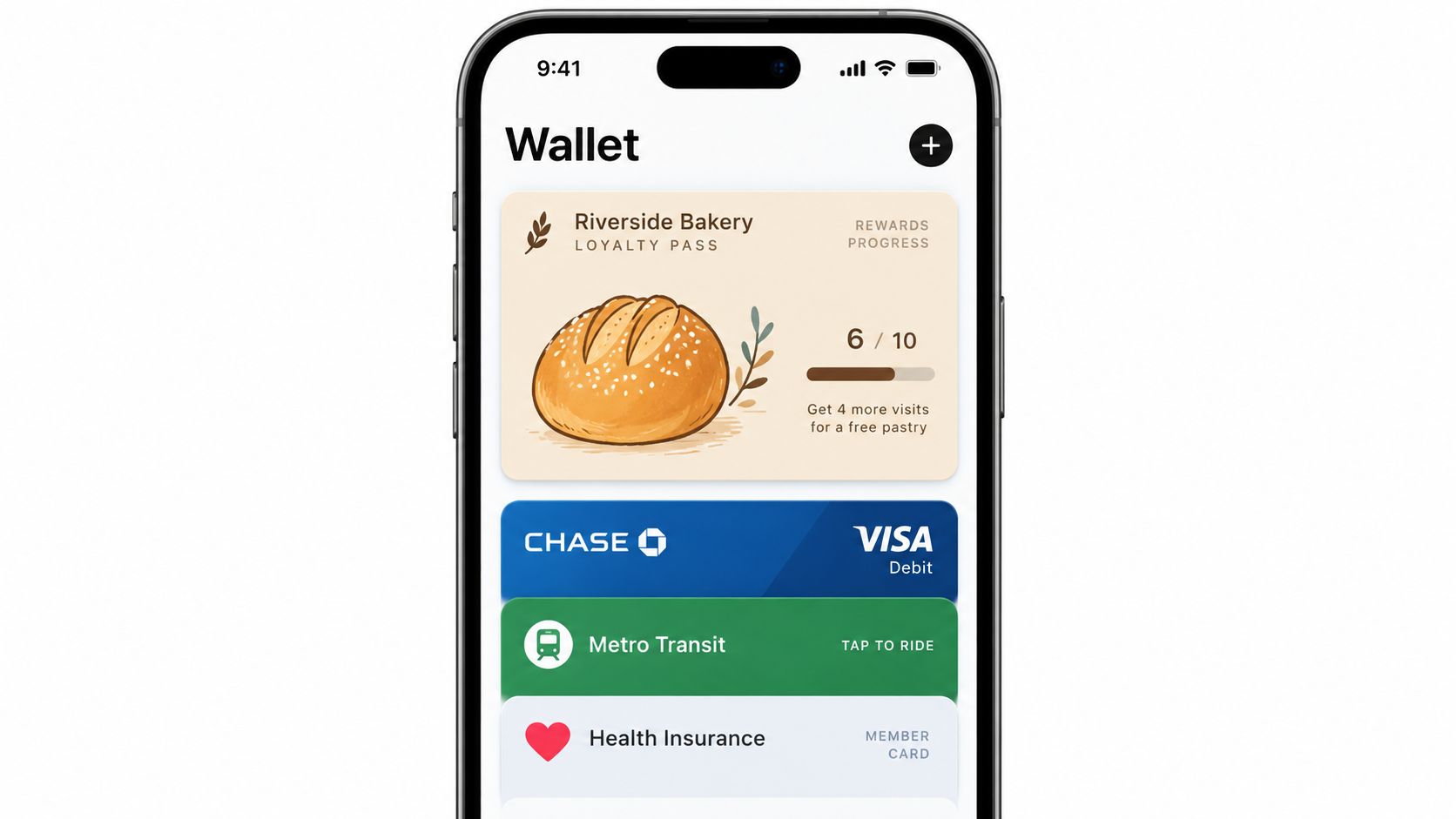
Keep the visible fields ruthlessly simple
Start with the bakery name, the reward state, and the balance. Customers need to know at a glance whether they're earning stamps, points, or both. Anything beyond that, such as a long slogan or a paragraph of terms, turns the pass into clutter and creates questions at the counter.
The visible headline should say what the customer is tracking right now. “4 stamps toward a free coffee” is more usable than a branded phrase nobody can decode in two seconds. The pass also needs strong contrast, because people will open it in bright light, while carrying bags, or with one hand full of pastries.
Match the brand without sacrificing readability
A bakery can absolutely use its own colors, logo, and tone. The trick is to keep the background clean and the text large enough to scan quickly. A pretty pass that makes staff squint is not a good pass.
Keep the call-to-action short. Something like “Show this at checkout” beats clever copy because the customer isn't browsing a campaign, they're trying to complete a purchase. That same principle is why I'd rather see one clear reward field than five promotional messages stacked into the design.
For a helpful comparison of what works on paper versus in a wallet, see digital versus paper loyalty cards. The design lesson is simple, the pass must be obvious enough to survive rush-hour service.
A pass customers keep is one they understand without thinking.
Connecting the Pass to Points or Stamps
A wallet pass only works if progress is visible and trusted. Customers need to see that every visit counts, otherwise the card becomes decoration.
Choose the model that matches buying behavior
Points fit bakeries with wider price variation. A customer who buys a loaf, coffee, and a pastry shouldn't be treated exactly like someone who only grabs one inexpensive item. Points reward spending behavior, which is useful when the basket mix changes from visit to visit.
Stamps fit simpler routines. If the same item drives repeat traffic, a visit-based model is easier to explain and easier for staff to manage. That's why many bakeries still do well with stamp-style rewards, especially when coffee is part of the traffic pattern. If you want a deeper side-by-side view, points versus stamps is the right decision frame.
Compare the two models before you build
| Feature | Points Program | Stamp Program |
|---|---|---|
| Best for | Mixed baskets and different price points | Repeat visits built around one clear routine |
| Customer feel | Earn by spending | Earn by showing up |
| Reward visibility | Balance-based and flexible | Count-based and very simple |
| Staff workflow | Better when orders vary | Better when the rule stays the same |
| Margin control | Easier to tune by basket value | Easier to explain and promote |
The main trap is setting the first reward too far away. If people can't picture themselves reaching it soon enough, they stop caring. A bakery that wants real engagement usually does better when the first reward feels reachable, not heroic.
Watch the distance to reward. If the first win feels abstract, most customers won't start.
In practice, that means using a model that your team can explain in one sentence at the counter. If the cashier can't describe the earning rule quickly, the pass is too complicated for daily service.
Running a Smooth Enrollment and Checkout Flow
Enrollment should feel like a quick yes, not a sales pitch. The customer sees the pass, taps once, and moves on with their day.
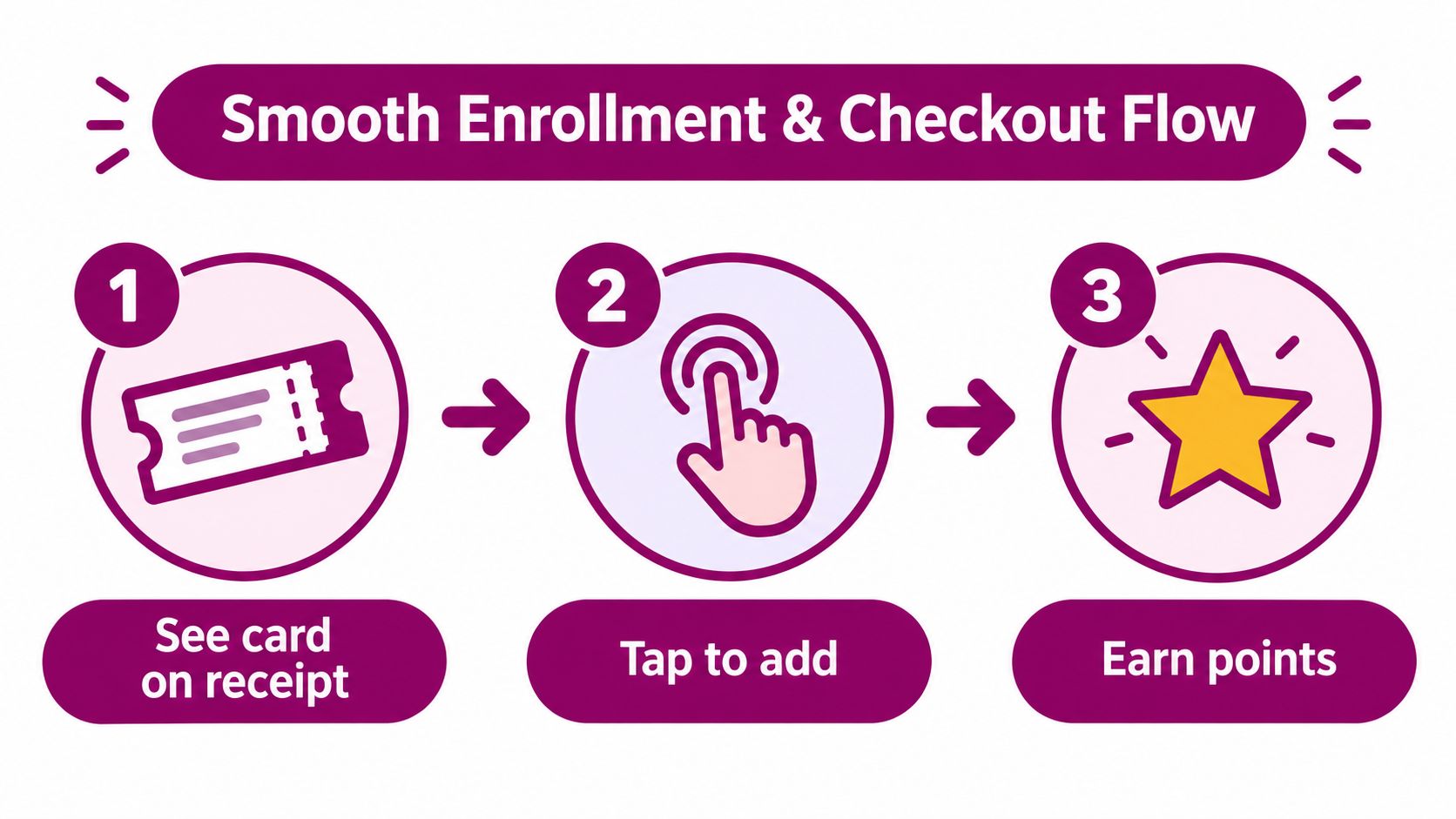
Make the add-to-wallet moment obvious
Place the prompt where the customer is already looking, on the receipt, at the register, or on a tablet screen during checkout. If the add button is buried in a long explanation, participation drops because staff will stop mentioning it. The best prompt says what happens next, not why the program is wonderful.
The first transaction matters too. A customer who adds the pass and sees no update after the first visit will assume the system is broken. That's why the backend has to be tested before launch, on both iPhone and Android, so the balance or stamp count moves the way people expect.
Train staff for speed, not persuasion
The counter team doesn't need a script that sounds rehearsed. They need a simple line that fits service flow, then a way to confirm the pass in seconds. If staff hesitate, customers hesitate.
A clean rollout usually includes three checks:
- Enrollment visible at the counter. Customers should see the invitation without asking.
- First update confirmed. The first earn or redemption has to display correctly.
- Staff can verify quickly. No one should be hunting for the right screen during a rush.
That last point is where many bakeries slip. They launch before their team is comfortable, then blame the customer for low adoption. In reality, a confusing checkout flow kills more loyalty programs than bad rewards do.
How One Bakery Distributed Passes and Followed Up
The first mistake most owners make is waiting for people to discover the program later. The better move is to ask at the exact moment the customer is already happy, standing at the counter with a bag in hand.
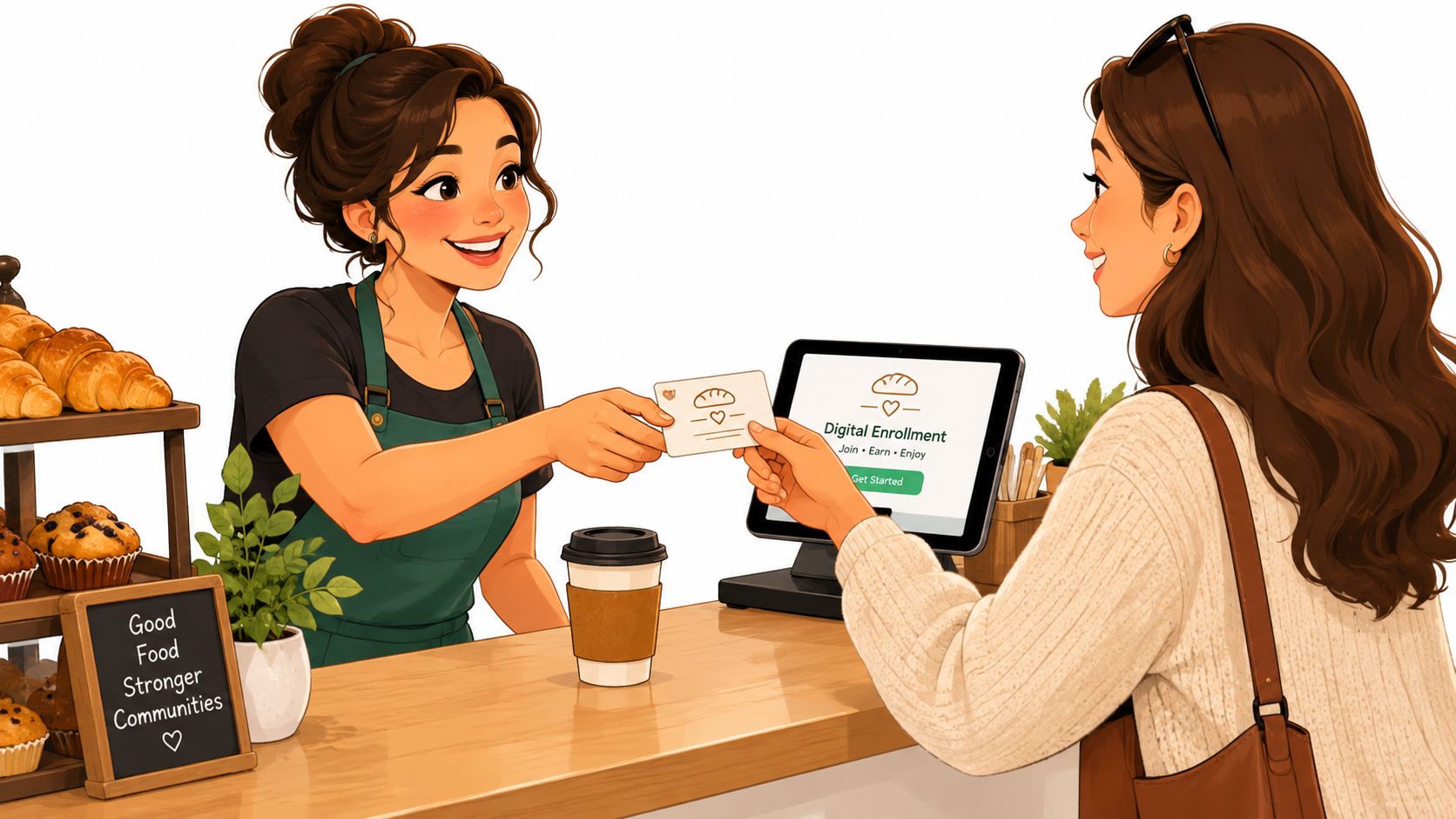
At one independent bakery, the owner started with a simple counter ask. If a customer bought coffee or a mixed basket, the staff member offered the pass, and the customer could add it in a couple of taps. That mattered more than the launch post on social media, because the ask came at a moment of real intent.
The follow-up had to stay light
After the first wave of enrollments, the owner sent a short reminder instead of a constant stream of offers. The best responses came from simple messages tied to actual behavior, not generic blasts. A birthday reward with a tight window worked better than a broad discount because it felt timely, not noisy.
The bakery also learned to adjust the threshold when a reward sat untouched for too long. That's the part many operators miss. A program can look healthy on launch day and still underperform if the reward distance doesn't match the way people buy.
A useful operating rule is to let the counter do the heavy lifting, then let digital reminders do the cleanup. The pass gets into the wallet at checkout, and later messages bring back customers who've drifted off their normal cycle. That combination is far more durable than one big launch campaign.
Measuring Whether the Program Actually Helps
A loyalty program looks successful when it creates activity, but the true test is whether it creates profitable activity. That means tracking members against a non-member group, not just counting redemptions.
Use a cohort view, not vanity numbers
Start with the four weeks before launch and record baseline purchase frequency and average order value for non-members. Then track enrollment, transaction identification, first-reward activation, monthly active earning, redemption, and average ticket by enrollment cohort. The comparison matters, because a busy bakery can make almost any program look better than it is if you only watch aggregate sales.
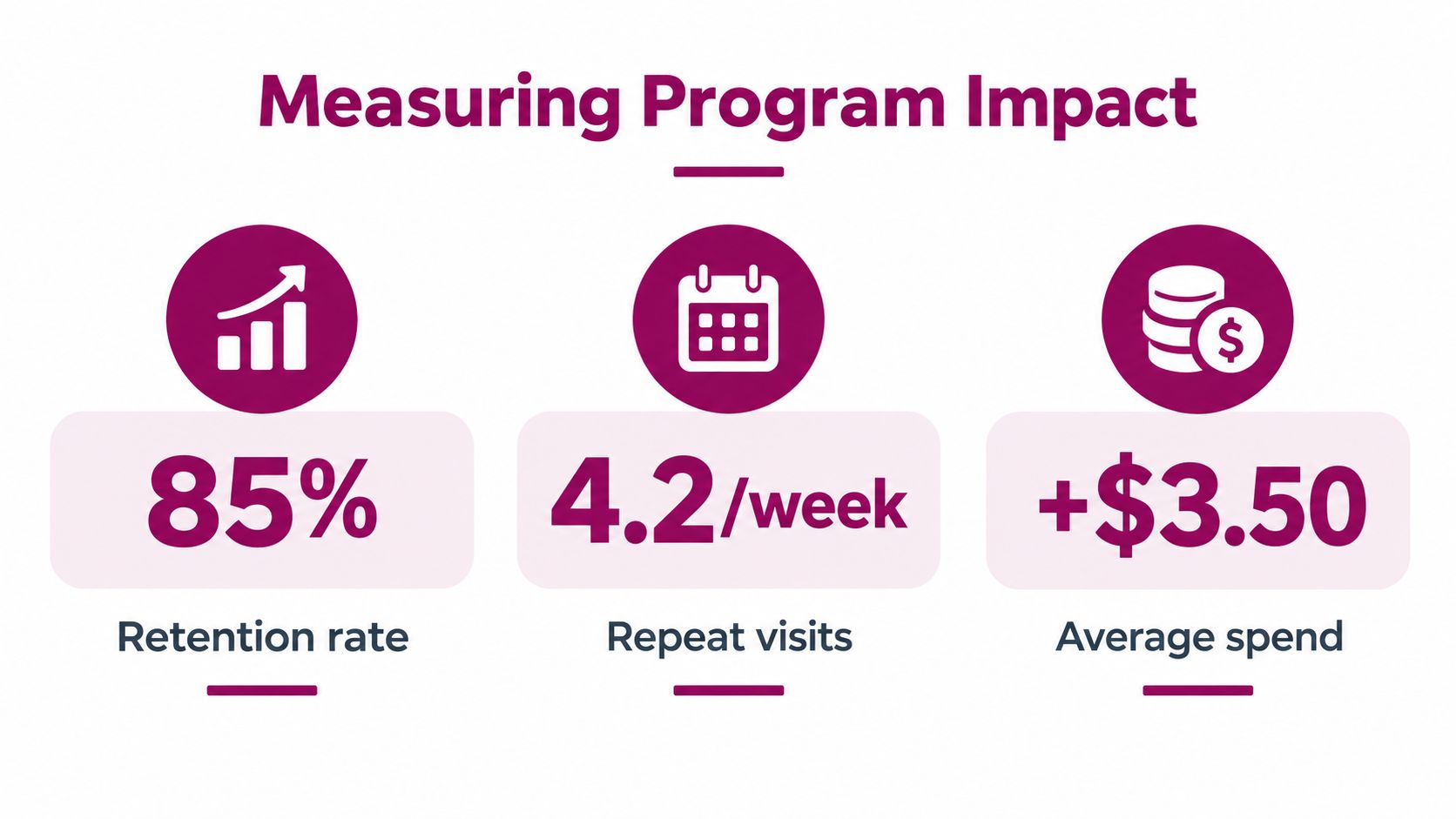
The most useful benchmarks are operational, not flashy. Healthy programs often aim for 25% to 40% customer enrollment, 15% to 25% reward redemption, about 22% higher annual visit frequency among members, and 15% to 25% higher average checks for identified members, according to Restaurant Velocity. For a bakery, the first reward should usually be reachable within roughly 5 to 10 visits. Programs that require more than 10 visits for the first reward have been associated with about 50% lower engagement in the same source.
Watch margin, not just excitement
A redemption rate below 10% can signal that the reward is too hard to earn or too weak to matter. A rate above 40% can mean the offer is expensive unless the extra visits and basket size make up for it. The calculation centers on incremental contribution margin, which is additional member visits multiplied by contribution margin per visit, minus reward cost, communication cost, and platform cost.
One more warning matters here. Occasional customers can make a program look healthier than it is if they're mixed into the same pool as loyal regulars. Segment by visit frequency, then compare members against matched non-members. That's the cleanest way to see whether the program changed behavior or just collected attention.
Starting Your Bakery Loyalty Program Next Week
The fastest launch path is the one your team can repeat on a busy morning. Pick the pass design, choose points or stamps, decide the first reward, and make sure the add-to-wallet prompt appears where customers can see it. Then test the flow on both Apple Wallet and Google Wallet before anyone outside the store hears about it.
The other thing to check is staff readiness. If the team can't explain the program in one sentence, the customer won't join. If the first transaction doesn't update cleanly, fix that before you promote the program further.
A practical starting point is to review the bakery setup guide at Loyal Customer for bakeries, then launch with a simple model you can monitor monthly. Keep the first week focused on enrollment, first-use success, and redemption tracking, not on adding extra rewards or complicated rules. The bakeries that move fastest are the ones that keep the system simple enough to run every day.
If you want a wallet-ready bakery loyalty program without wrestling with paper cards or a separate app, Loyal Customer lets you issue points or digital stamp cards and place them in Apple Wallet or Google Wallet. It's a practical way to turn repeat visits into something customers can keep on their phone, without adding unnecessary hardware at the counter.