

A member signs up in January with real intentions. They ask about classes, buy a water bottle, and promise themselves they'll train before work. By March, they're coming twice a month. By May, the membership is gone, without a complaint that gives your front desk a chance to help.
That's a useful scenario to plan around because the cancellation request isn't the only moment you can act. Staff can notice an unfinished induction, a missed class, or a regular member who's stopped appearing at their usual time. Each gives you a reason to offer help before the conversation becomes about leaving.
Good gym member retention strategies connect those signals to specific actions. A welcome email alone isn't onboarding. A loyalty card alone isn't a habit. A discount won't resolve an intimidating class, an inconvenient schedule, or a failed payment.
Treat the cancellation request as the last signal, not the first opportunity to respond.
Build your retention process around the membership timeline: help members start confidently, recognize consistent attendance, make progress visible, and respond when circumstances change. For each intervention, decide what triggers it, how a wallet-based reward supports it, and what you'll measure. Keep the first version simple enough that the person covering reception can explain it and carry it out.
Table of Contents
- 1. Structured First-30-Day Onboarding
- 2. Visit-Based Digital Stamp Cards for Habit Formation
- 3. Points-Based Rewards and Tiered Milestones
- 4. Community-Driven Classes and Group Accountability
- 5. Personalized Goal Tracking and Progress Reporting
- 6. Proactive Attendance Monitoring and Re-Engagement
- 7. Wallet-Based Member Access and Frictionless Check-In
- 8. Flexible Membership Options to Prevent Cancellations
- How the Eight Gym Member Retention Strategies Compare
- Start With One Strategy and Track Cancellations for 60 Days
1. Structured First-30-Day Onboarding
Don't finish the sale by handing over an access card and pointing toward the changing rooms. Give the member a named contact, a realistic starting plan, and a booked return visit.
A shared calendar makes that conversation concrete.

Start with practical questions: When can they attend? Which equipment feels unfamiliar? Would they rather train independently or join a coached session? Record the answers in your membership system so another staff member can continue the conversation.
ABC Fitness's industry statistics report that members who establish a habit through correct onboarding during their first 12 weeks retain at 87% at the six-month mark. Treat that industry-reported figure as a reason to test structured onboarding locally, not as a promised outcome.
Make completion visible
For a beginner joining after work, onboarding might include a facility orientation, a coached introduction to their program, and a follow-up conversation. Book those appointments before they leave instead of expecting them to arrange everything themselves.
- Trigger: A new membership begins, or an onboarding appointment is missed.
- Wallet mechanic: Issue a welcome pass and award a completion bonus after the agreed onboarding steps.
- Measurable check: Compare onboarding completion, early attendance, and cancellations among members joining in the same period.
For implementation ideas, use this gym loyalty program guide alongside your existing induction process. Keep sensitive health information in the appropriate member record, not on the visible pass.
Use the video as a supporting resource, not a substitute for a personal introduction.
2. Visit-Based Digital Stamp Cards for Habit Formation
A digital stamp card answers a straightforward member question: Does showing up count for something today? It's a good fit when attendance is the behavior you want to recognize and reception needs a reward rule that's easy to explain.
Make progress visible without turning every workout into a competition.
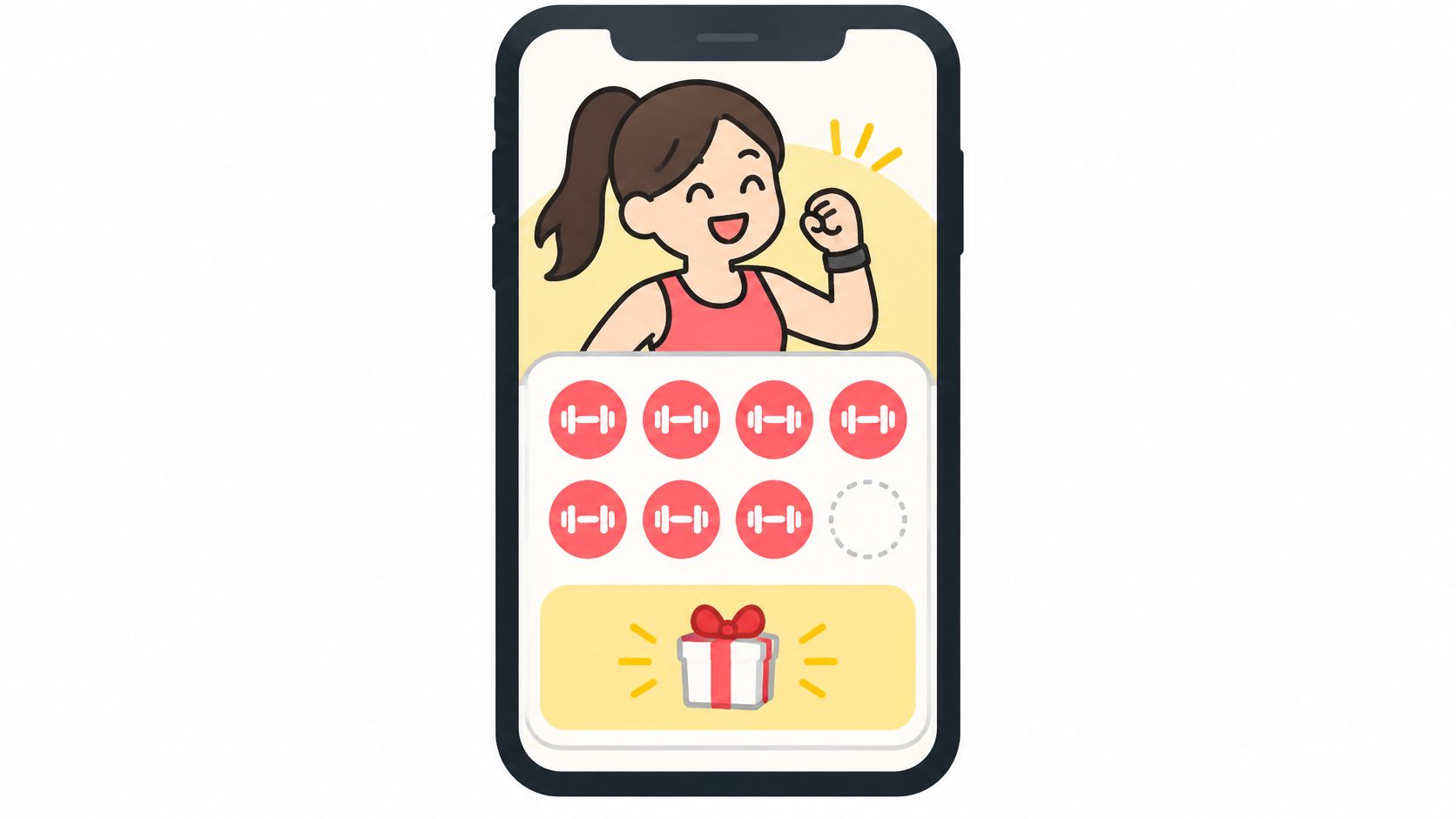
Say a studio offers a complimentary recovery drink after a completed attendance card. Staff validate the visit, add the stamp, and explain the next reward. The member doesn't need to calculate a balance or understand different earning categories.
Choose a reward that feels useful without creating a capacity problem. A guest invitation during a quiet period may suit a full-service gym; an unrestricted free place in a consistently full class may displace a paying booking.
Reward consistency, not excessive training
Set the card target around the member's planned routine. Don't encourage extra sessions that conflict with recovery or a coach's advice just because someone wants to finish the card.
- Trigger: A verified workout or eligible class attendance.
- Wallet mechanic: Add a stamp to the member's wallet card and start a fresh card after redemption.
- Measurable check: Track repeat attendance, card completion, redemption costs, and continued visits after the reward.
These digital stamp card ideas can help you choose a reward structure, but keep the earning rule specific to your gym. Define whether multiple entries, cancelled classes, and guest visits qualify.
A full card isn't proof of improved retention. Compare participants with similar members who aren't receiving the incentive, and check whether attendance continues once the novelty wears off.
3. Points-Based Rewards and Tiered Milestones
Choose points when you need to recognize different activities, not just visits. Attendance, a completed referral, personal training purchases, and merchandise purchases can sit within one program, provided members can understand the earning rules.
The trade-off is administration. A stamp card is easy to grasp; a points program gives you more flexibility but creates more questions about eligibility, redemption, and outstanding balances.
Make the first redemption understandable
Say a member attends regularly and occasionally buys coaching sessions. They could redeem points for a guest pass or a technique review, while longer-term milestones earn a modest recognition perk. Display the available balance and redemption requirement clearly on the wallet pass.
Keep redeemable points separate from status recognition in your records. Spending points shouldn't unexpectedly erase a milestone the member has already earned. If your software doesn't support tiers, don't promise automatic tier tracking; use a simpler milestone reward instead.
- Trigger: A validated eligible activity, purchase, or completed referral.
- Wallet mechanic: Update the points balance and make the next available reward clear.
- Measurable check: Review redemption activity, reward costs, outstanding balances, and retained membership revenue.
Use a gym loyalty program setup guide to document the rules before reception starts enrolling members. Staff should be able to explain how someone earns and redeems without opening a long policy document.
Margin rule: Offer perks you can afford to fulfil when members actually redeem them, not rewards that only look affordable because you expect people to forget.
Avoid giving all the meaningful benefits to high spenders. A member on the basic plan who trains consistently should still have a credible route to recognition.
4. Community-Driven Classes and Group Accountability
A member with a few visits still drops off when every session feels anonymous. Ask if they want company before assigning a workout buddy. Some want an instructor who remembers their name. Others want a quiet hour without introductions, public praise, or team challenges.
ABC Fitness's Wellness Watch reporting found that 67% of members identified community as their biggest motivation and accountability driver. Offer a place to belong without making every class a social obligation.

Offer a low-pressure first connection
Invite a beginner to one suitable class. Explain the format, the length, and where to stand before they arrive, and introduce them privately to the instructor. Afterward, ask whether the pace, atmosphere, and class size suited them.
If they prefer independent training, book an equipment orientation or a quieter training window. That preference is not a sign they are leaving.
- Trigger: A member expresses interest in group training or attends an introductory class.
- Wallet mechanic: Add a class stamp, or offer an optional guest-class reward.
- Measurable check: Track repeat class attendance, member feedback, crowding complaints, and retention by participation preference.
Public leaderboards help competitive members and can leave beginners feeling permanently behind. Record milestones on the wallet pass and mention them privately unless the member wants public recognition.
Established groups return for a predictable class. Keep the instructor, the description, and the expected ability level clear. A busy events calendar will not hold them if those three keep changing.
5. Personalized Goal Tracking and Progress Reporting
When a member says the gym isn't working, ask what result they expected and what you've measured. A record of attendance alone won't answer a question about strength, confidence, mobility, or training technique.
A related new-member study discussed in the fitness-club follow-up paper found that 79.9% remained members at the twelve-month follow-up, but only 37.0% were classified as regular exercisers throughout the first year. Membership continuation and active participation are different outcomes.
Make progress discussions about the member's goal, not a standard sales script.

Show a useful win and the next step
Say a member wants to feel confident using free weights. Record the movements they can perform comfortably, review technique at the agreed appointment, and show how their program has progressed. Don't substitute a body-composition target they never asked for.
Progress reviews should also reveal obstacles. If the plan isn't fitting their schedule, adjust it before suggesting a paid upgrade.
- Trigger: The member reaches an agreed review date or completes a training block.
- Wallet mechanic: Award points or a milestone stamp for completing the review or an appropriate process goal.
- Measurable check: Record review attendance, goal progress, subsequent visits, and whether the member continues.
Reward actions members can control, such as completing an agreed program or attending a review. Avoid rewarding rapid weight changes or comparing unlike abilities.
Keep detailed assessments and sensitive measurements in a suitable private system. A wallet pass can show reward progress without displaying personal health information to anyone nearby.
6. Proactive Attendance Monitoring and Re-Engagement
Your attendance report needs an owner, not just a dashboard. Assign someone to review flagged members, contact them, record the response, and close the task with a clear next action.
Use each member's normal pattern where possible. A missed regular class may matter more than a longer gap for someone who deliberately attends occasionally. Exclude planned travel, freezes, and known absences before sending reminders.
A 2024 Australian study of full-service fitness-centre members found churn rates ranging from 4.6% to 23.7% across its member segments, supporting a segmented rather than uniform approach.
Contact the person, not the attendance gap
Suppose a previously consistent member stops booking evening classes. A staff member can ask whether their schedule has changed and offer a suitable alternative. A generic message urging them to work harder would miss the problem.
Don't lead with a discount. First establish whether they need a different time, a program adjustment, a billing fix, or space.
- Trigger: A meaningful decline from the member's usual attendance pattern.
- Wallet mechanic: Offer a clearly defined return reward after a verified visit, when an incentive fits the situation.
- Measurable check: Track responses, return visits, continued attendance, and cancellations after outreach.
A return visit is a useful signal. Continued attendance tells you whether the intervention helped beyond the reward.
Avoid repeatedly paying members to disappear and return. If someone keeps lapsing, revisit the underlying plan rather than increasing the bonus.
Use your CRM for inactivity alerts and contact records unless your loyalty system explicitly supports those functions. A wallet reward can reinforce the return; it doesn't replace the conversation.
7. Wallet-Based Member Access and Frictionless Check-In
A queue at reception is a poor place to explain an app download, reset a password, and untangle a forgotten membership card. Help members save their digital pass before they're trying to enter a busy class.
Apple Wallet and Google Wallet can hold loyalty credentials, but a loyalty pass isn't automatically a door-access credential. Your access-control system must recognize the credential before it can open anything.
Separate the reward scan from entry permission
Say your gym already uses key fobs for entry. Keep that working system and introduce a wallet loyalty card for recording eligible visits at reception. Don't promise members they can leave the fob at home until door compatibility has been confirmed and tested.
For a staffed studio, reception may validate attendance and record the reward without changing access hardware. That's a narrower, more manageable launch than replacing entry, booking, billing, and loyalty together.
- Trigger: The member completes their initial visit or needs a replacement loyalty card.
- Wallet mechanic: Help them save the pass, then show where stamps, points, and available rewards appear.
- Measurable check: Monitor pass adoption, missed reward transactions, staff corrections, and check-in difficulties.
Train staff to distinguish an entry problem from a reward problem. A valid membership shouldn't become a dispute at the desk because a loyalty scan failed.
Keep a fallback for members without a compatible phone or those who don't want to use a wallet. Record their eligible activity through an approved staff process so the retention program doesn't exclude them.
The useful outcome isn't issuing more passes. It's making participation easier while maintaining accurate attendance and reward records.
8. Flexible Membership Options to Prevent Cancellations
When a member asks to leave, establish the reason before offering an alternative. Temporary travel, a changed work schedule, financial pressure, and dissatisfaction require different responses.
There's also administrative churn. A FitTech Global industry analysis reported that 40% of departures occurred without members directly cancelling with the gym, with failed payments identified as the most common cancellation source. Don't assume every lost account reflects a decision to stop training.
Match the option to the problem
For a member temporarily working away, offer a clearly documented pause if your policy allows it. For someone who can no longer attend regularly, a smaller class package may fit better. For a failed payment, provide a secure account-update route rather than a motivational offer.
Explain the price, effective date, access rights, and restart process before asking for agreement. A pause that surprises someone with a charge later can damage the relationship you were trying to preserve.
- Trigger: A cancellation inquiry, failed payment, or reported change in circumstances.
- Wallet mechanic: Preserve earned rewards during an agreed pause where your rules allow it, then offer a relevant return milestone.
- Measurable check: Separate payment recoveries, accepted pauses, resumed memberships, downgrades, and voluntary cancellations.
Trust comes first: Present a suitable alternative, then honour the member's decision. Don't make cancellation harder to improve a retention report.
Say a member chooses to pause rather than cancel. Record the planned return, confirm the terms in writing, and contact them before resumption through an agreed channel.
Measure whether they return and continue. A growing list of paused accounts isn't the same as a healthy active membership base.
How the Eight Gym Member Retention Strategies Compare
A new member and a regular who has gone quiet do not fail for the same reason. Onboarding and stamp cards belong in the first weeks. Points, classes, and progress checks suit people who already attend. Attendance outreach, wallet check-in, and a controlled pause matter once visits drop or circumstances change. Every cost below uses the same scale, Low or Moderate, plus the main driver.
| Item | Best For | Typical Cost to Run | Main Trade-Off |
|---|---|---|---|
| Structured First-30-Day Onboarding | Helping new members build habits early | Low: mostly staff time for early follow-up | Requires consistent follow-through |
| Visit-Based Digital Stamp Cards for Habit Formation | Encouraging regular visits with simple rewards | Low: digital stamps and small rewards | Can prioritize visit quantity over workout quality |
| Points-Based Rewards and Tiered Milestones | Rewarding varied behaviors and long-term loyalty | Moderate: reward fulfilment plus rule administration | Rules and point values can be confusing or feel unfair |
| Community-Driven Classes and Group Accountability | Building social connection and visit frequency | Moderate: ongoing instructor time and class planning | Some members may prefer training alone |
| Personalized Goal Tracking and Progress Reporting | Keeping members motivated with visible progress | Moderate: staff time and progress-data upkeep | Lack of progress can discourage members without support |
| Proactive Attendance Monitoring and Re-Engagement | Reconnecting with members before they cancel | Low: targeted outreach rather than replacing a member | Outreach can feel intrusive if overdone |
| Wallet-Based Member Access and Frictionless Check-In | Simplifying entry and displaying rewards digitally | Moderate: wallet-pass setup and staff training | Depends on compatible phones and member comfort with digital passes |
| Flexible Membership Options to Prevent Cancellations | Retaining members whose circumstances change | Moderate: revenue paused or reduced, plus admin oversight | Needs clear limits so pauses do not become silent exits |
I would match the row to the week the member starts to drift, then accept the trade-off in that row before adding a second program.
Start With One Strategy and Track Cancellations for 60 Days
Choose the strategy that addresses the clearest problem in your own membership records. If new members never complete their introduction, fix onboarding. If established members stop appearing without contact from staff, start with attendance monitoring. If departures follow billing failures, repair the payment-recovery process before adding rewards.
For context, the Health & Fitness Association's 2025 benchmarking report reported a median annual member-retention rate of 66.4% for 2024 among participating operators. That's a global reference point, not a substitute for comparing members with similar plans, tenure, and attendance patterns at your facility.
Establish a baseline you can use
Before making the change, record cancellations, visit frequency, and the specific behavior you want to improve. Separate voluntary cancellation from failed-payment attrition, and keep paused accounts identifiable.
Give the test a named owner. Reception needs to know who qualifies, what to say, how to record the action, and when to escalate a member's question.
- Define the trigger: Specify the event that starts the intervention, such as incomplete onboarding or a decline in attendance.
- Choose the reward: Tie it to a useful action and document eligibility and redemption rules.
- Record the cost: Include rewards, staff time, and any displaced paid bookings.
- Compare fairly: Use a comparable group where practical, and note differences in tenure, plan, or joining period.
Keep other major changes limited during the test. If you revise pricing, replace the class timetable, and launch rewards together, you won't know which change affected the result.
At the end of the proposed review period, look beyond redemption. Did members return, keep attending, and remain enrolled? Did staff carry out the process reliably? Were the rewards affordable when redeemed?
Lower cancellations matter, but so does the quality of the retained membership. Don't count a pressured pause or an unresolved billing dispute as a success. Continue tracking longer-term outcomes before treating an early improvement as permanent.
For a lightweight loyalty test, we let gyms build a branded digital card in a few minutes and start a 7-day free trial when they're ready to launch. Choose the reward and measurement first, then configure the card around that process.
Start with the next group of members who meet your chosen trigger. Brief reception, record the baseline, and put the review date in the calendar before issuing the first reward.
Loyal Customer offers phone-managed points programs and digital stamp cards with branded passes for Apple Wallet and Google Wallet, without a separate customer app. Visit Loyal Customer to build a card and test a repeat-visit reward that supports your gym's retention process.