A client settles into the chair, you finish a clean fade, and out comes the paper punch card. He checks three pockets, shrugs, and says he'll bring it next time. He won't. That card is in a kitchen drawer or the wash, along with the six haircuts already recorded on it.
That's the argument for a card that lives in Apple Wallet or Google Wallet. It doesn't get lost, it updates after every visit, and it never asks a client to download another app. Mobile coverage makes that realistic: GSMA's connectivity report put mobile internet use at 4.7 billion people, 58% of the world's population, by the end of 2024.
What follows is my ranking of the best loyalty apps for barber shops in 2026. Every pick is judged on two things: how the card gets into the client's phone, and how much extra work it adds at checkout.
Table of Contents
- 1. Loyal Customer
- 2. Bargly
- 3. Loyalia
- 4. FadeUp
- 5. InvitePass
- 6. Stamp Me
- 7. Square Loyalty
- 8. Vagaro
- 9. SQUIRE
- 10. GoodBarber
- How the top barber shop loyalty apps compare
- Choosing Your Loyalty App and Launching It Right
1. Loyal Customer
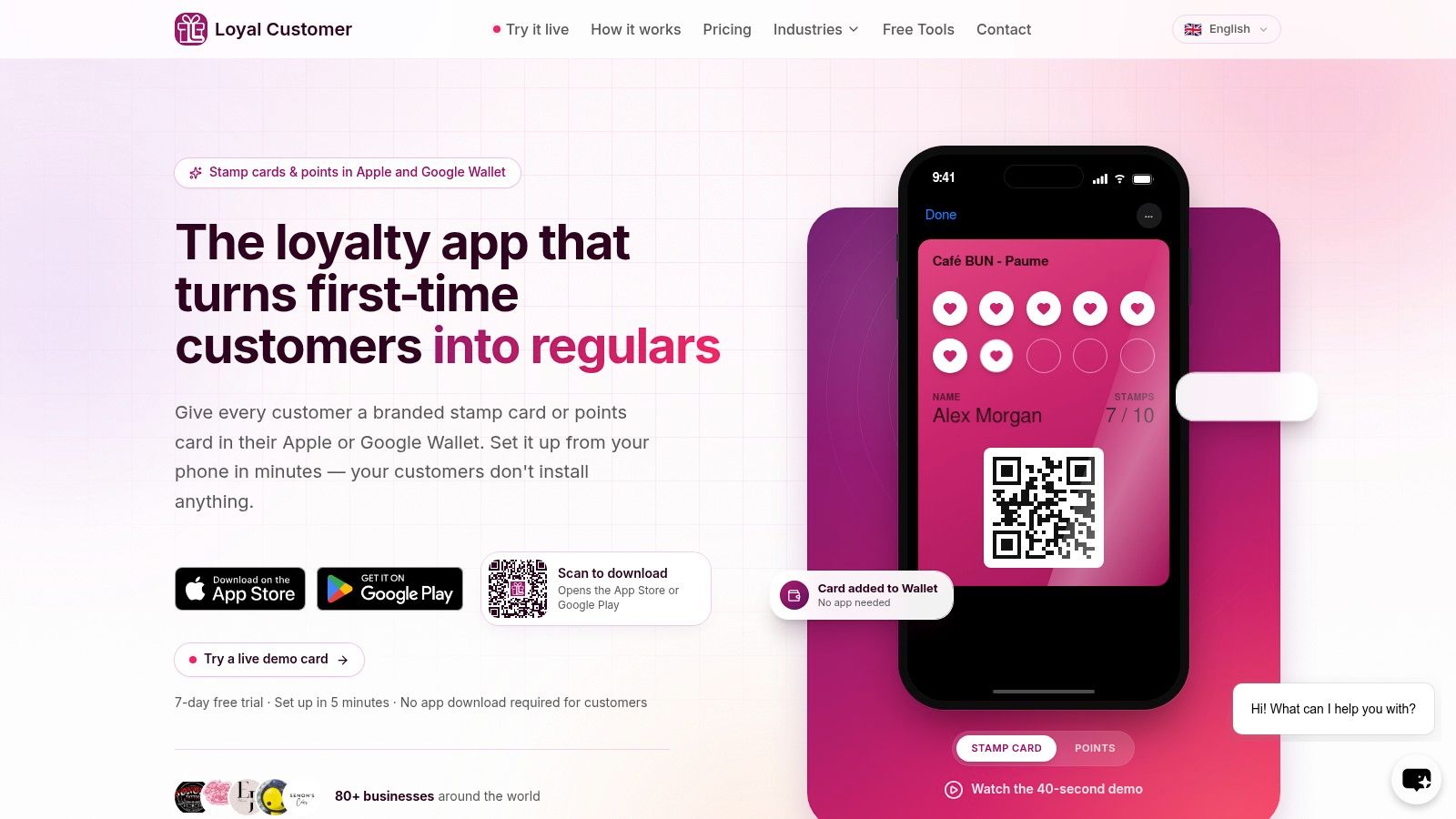
Loyal Customer is the shortest route I see from “we should do loyalty” to a card sitting in a client's Apple Wallet or Google Wallet. The client opens your unique public link, confirms the phone with a one-time code, and adds the pass without installing an app. You run the program from your own phone, which matters when the checkout desk is also the coffee shelf and the card reader.
Setup and checkout in practice
Setup is phone-based and takes a few minutes: build the card, choose points or a stamp card, and use the step-by-step preview to check the Wallet pass before launch. Each business runs one loyalty program, so decide whether you reward visit frequency or spend before clients start joining.
At the chair, scan the client's Wallet pass with the built-in QR scanner in the Loyal Customer app, or find them by name, email or phone. Points or stamps post instantly, the card updates after the visit, and you need no POS integration, tablet or extra hardware. If you want to see the client side first, there is a free loyalty card demo at the Loyal Customer demo page.
The stamp-first default has evidence behind it. Across 5,821 loyalty cards issued by mostly independent businesses, 78.9% of stamp-card holders scanned at least once, compared with 68.5% of points-card holders, according to reviocard's 2026 loyalty benchmark.
Pros
- No customer app: the pass lives in Apple Wallet or Google Wallet and updates itself after each visit.
- Two models, one tool: stamps for visit frequency or points for spend, with branded card design and unlimited offers, discounts and stamp rewards.
- Phone-only operation: QR scanning works on any smartphone, with customer lookup as a backup.
- Low-commitment launch: a 7-day free trial starts when the program launches, the plan can be cancelled at any time, and more than 80 businesses worldwide use it.
Cons
- 100 customer slots on the single plan, so a busy shop should count active regulars before launch.
- One program per business, with phone verification for new customer sign-ups.
For the full setup order, this walkthrough on loyalty program software for barber shops covers it step by step.
2. Bargly
Bargly treats loyalty as a shopfront. It's aimed at U.S. barbershops and pairs a digital loyalty card with local discovery, deals and flash sales, which suits a shop whose problem is quiet Tuesdays rather than regulars who drift away.
The free Lite plan gets you a QR scanner and one loyalty card. Paid tiers add analytics plus team and multi-location tools, so the pricing question is whether you need the discovery engine or just the card.
Checkout stays light: clients show their card, you scan. The heavier lifting happens in the dashboard, where you set promotions and watch which deals fill chairs.
Pros
- Free starting point: test a basic card without a card on file.
- Discovery plus retention: promotions put you in front of nearby clients, not only existing ones.
- Room to grow: multi-location and reporting features sit on the higher plans.
Cons
- Tight free tier: active discounts and monthly redemptions are capped until you pay.
- More platform than card: a single chair will spend time in settings it never needs.
3. Loyalia
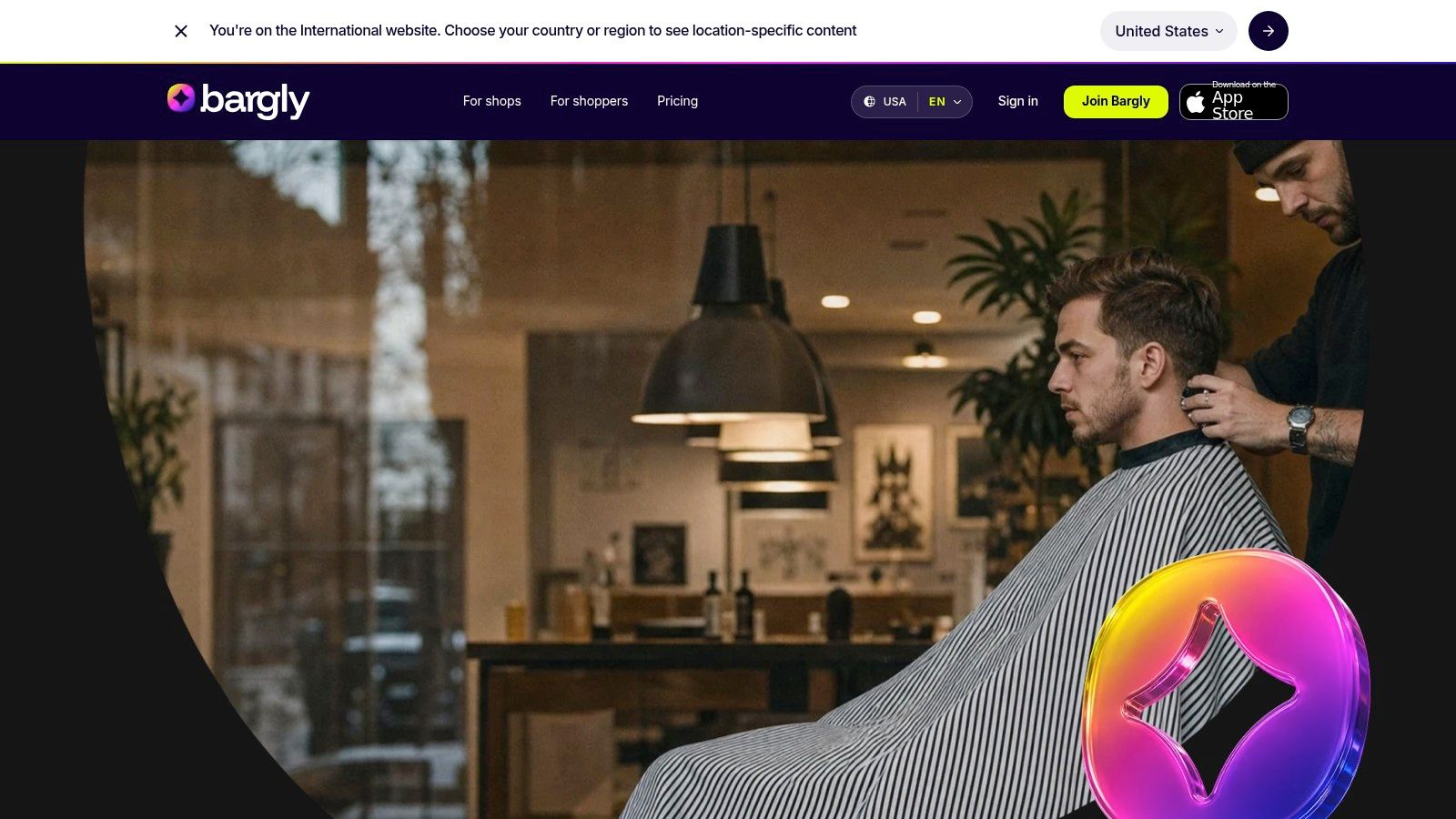
A loyalty card that never leaves the customer's phone is the pitch. Loyalia issues cards directly into Apple Wallet and Google Wallet, staff scan a QR code to log each visit, and activity lands on a shared dashboard. The client downloads nothing.
The wallet mechanic is well supported at platform level. Apple documents loyalty passes that let customers check in, earn points and receive offers at physical locations, with automatic pass download once terms are accepted (Apple Wallet loyalty passes). For a barber, the practical result is that the loyalty card sits next to the card the client pays with, so it surfaces whenever the phone is already out.
At the chair, the whole transaction is one scan and no extra screen to open. The cost only shows up when staff forget the habit.
Loyalia sells a paid Business plan with a free trial period. Check Loyalia's site for current pricing, plan limits and availability in your country before you commit.
Pros
- Wallet-native: clients keep the card without a separate download.
- Fast checkout: a QR scan is the whole interaction.
- Room for rewards beyond stamps: coupons, cashback or memberships depending on tier.
Cons
- Scan discipline is everything: one missed scan is one annoyed regular.
- Rewards only: no booking or POS, so it sits beside your existing tools.
4. FadeUp
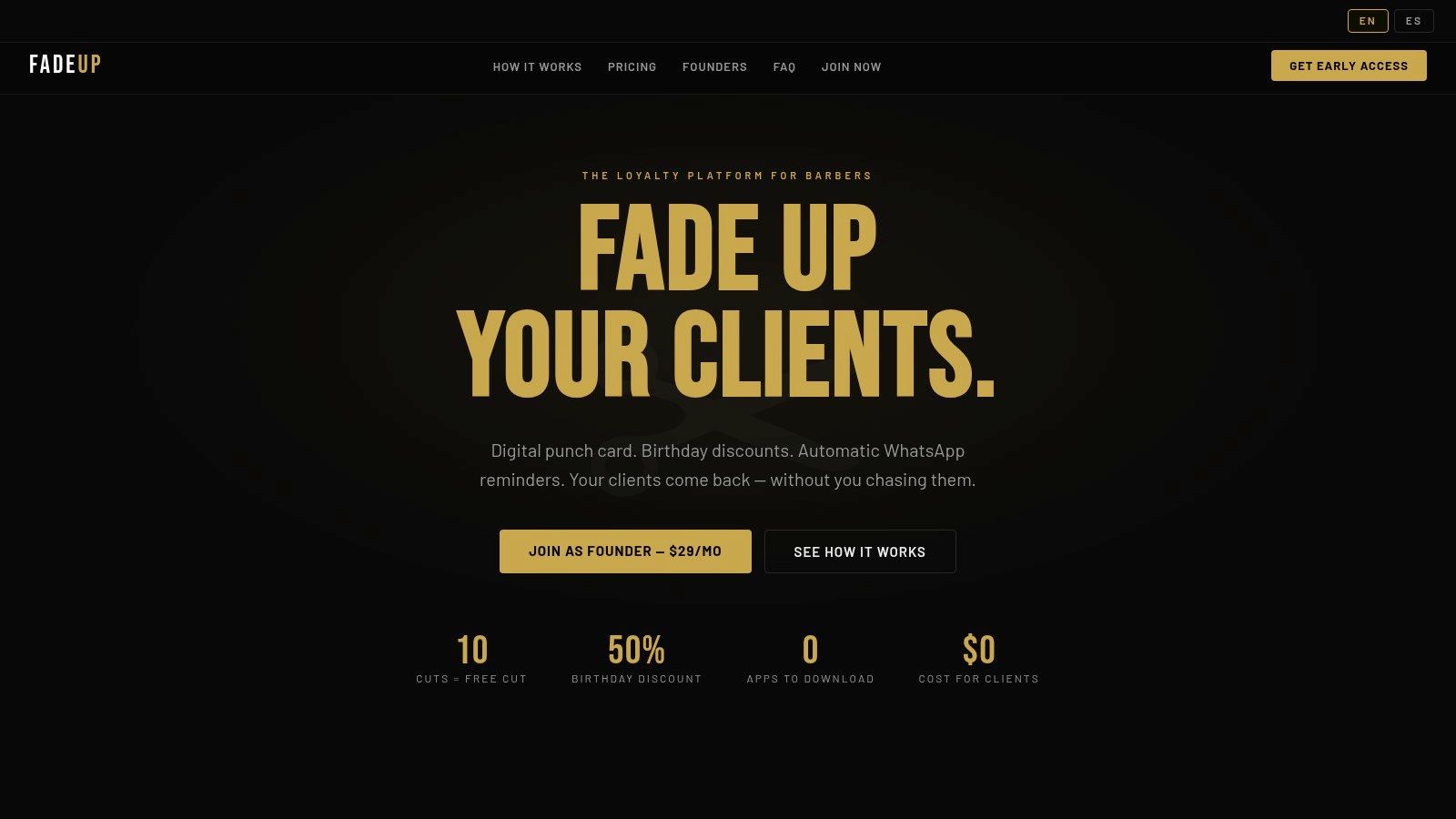
FadeUp is built around haircut frequency rather than generic spend, and the threshold is where most barber programs go wrong. Industry tracking reported an average gap of about 48.5 days between repeat client appointments (appinstitute's analysis of barber apps). That's roughly seven weeks between visits.
Run the arithmetic before you pick a number. A ten-stamp card means a regular waits the better part of a year and a half for a free cut. Most give up long before that.
Set the threshold inside the cycle: if clients return every seven weeks, a five-visit card pays out in under nine months and still feels achievable in the chair.
On the client side there's no app to install, per FadeUp's site, so the card doesn't die in a download prompt. The cost lands on you instead: checkout adds a stamping step, and the automated nudges run through WhatsApp, which some clients read and some ignore.
Tiers, setup costs and client caps change, so check FadeUp's own pricing page for current numbers before you commit. Two things to confirm there: the setup charge on top of the subscription, and how many active clients the entry plan allows.
Pros
- Barber-specific: punch cards, a public booking page and overdue-visit reminders.
- No client app download, so signup friction stays low.
- Birthday discounts give you a second reason to message a quiet client.
Cons
- Setup fees sit on top of the subscription.
- Starter caps active clients, so a busy chair hits the ceiling fast.
- WhatsApp automation isn't for every shop or every client.
5. InvitePass
InvitePass is for the shop that already likes its booking setup. The loyalty layer sits beside whatever appointment software you run, so nothing gets ripped out to add rewards.
Delivery is the question to settle first. Google Wallet's own flow has the customer open the wallet, select the loyalty card and show a stored barcode at the counter (Google Wallet help), and that is the interaction your barber needs to run one-handed. InvitePass advertises digital stamp cards, but its barbershop page doesn't confirm whether the card lands in Apple or Google Wallet or somewhere else. If it isn't a wallet pass, ask what the client has to install.
Beyond the stamps, it adds perks like membership-anniversary gifts, a second touchpoint for your longest-standing clients.
Pros
- No rip and replace: loyalty sits beside your current appointment software.
- Clean separation: booking stays where it is, rewards live in their own tool.
- Anniversary perks reward the clients who've been with you longest.
Cons
- Pricing isn't listed on its barbershop page, so get a written quote.
- Not a booking or POS suite, which is fine if you already have both.
- Unconfirmed wallet delivery means you should run the signup and redemption steps yourself before rollout.
6. Stamp Me
Stamps are the whole product here. Stamp Me is a loyalty tool first, with a merchant console that manages cards and multiple programs from one place rather than shop software with rewards bolted on.
At the chair, stamping is the checkout step. The tool supports multiple stamp methods, so you can pick whichever runs fastest one-handed while the client is still in the seat.
Design the card to carry what a client actually looks for. Apple's iPhone guide says a loyalty pass can show points, a card balance and coupon expiration dates, and can be presented by barcode or QR code (Apple iPhone user guide). That's a practical checklist for your card layout.
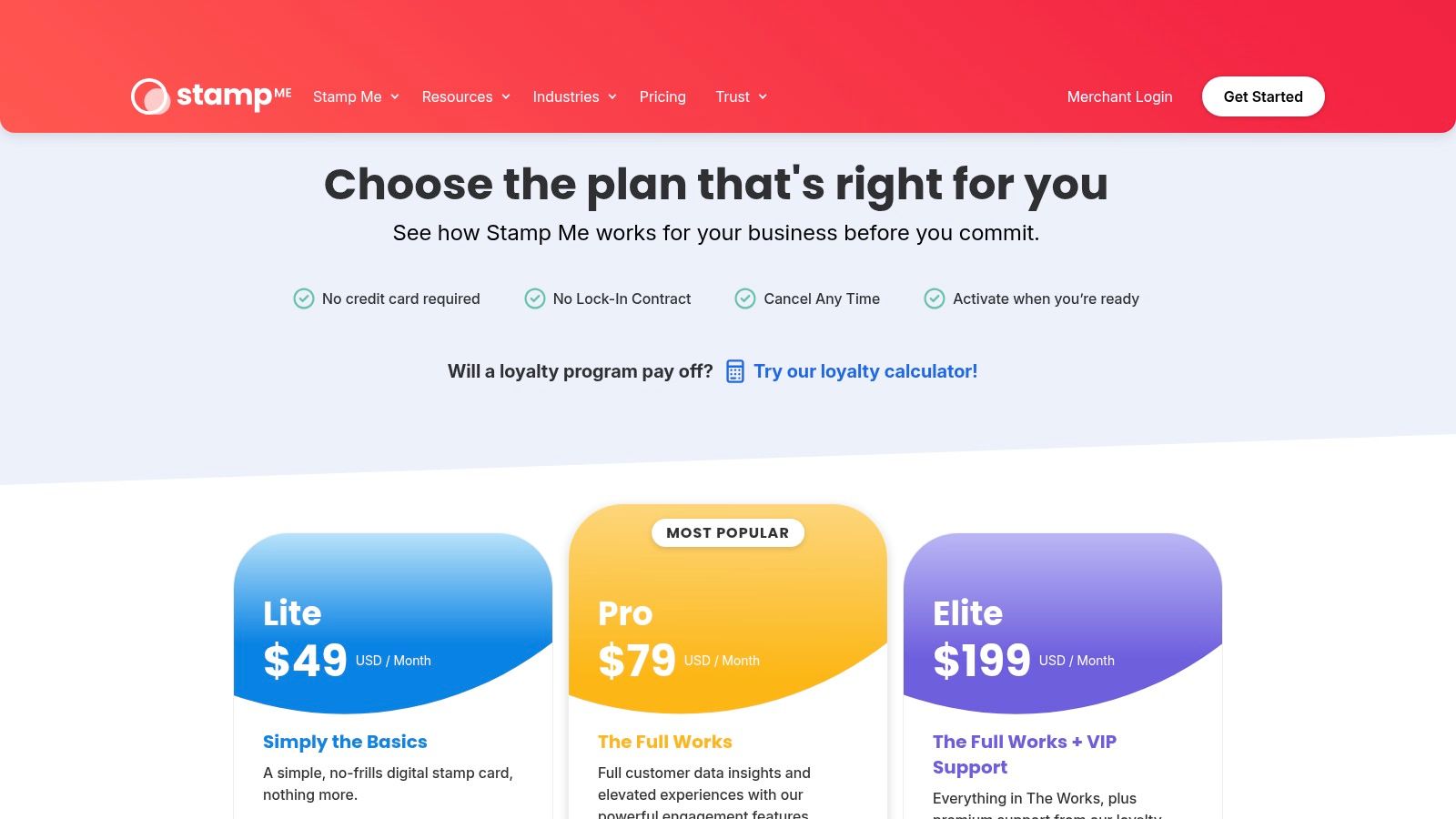
Pricing is tiered, so check the current plans before you commit: the paid tiers make sense for a shop that will use the messaging tools, less so for one that just wants a basic punch card.
Pros
- Multiple programs managed from a single merchant console.
- Engagement tools such as birthday and lapsed-customer messaging on eligible tiers.
- Multiple stamp methods, so checkout isn't locked to one scanning style.
Cons
- Priced for the full toolset, more than a two-chair shop needs for a simple card.
- No booking or POS built in, so your appointment tool stays separate.
- Feature tiers vary, so confirm stamp and messaging options on your plan.
If you're weighing stamps against points at the counter, this guide to a loyalty program for barber shops works through the trade-offs.
7. Square Loyalty
If your till is already a Square terminal, this is the least disruptive loyalty you can switch on. Points accrue from visits, spend, or selected items and categories, enrollment happens at checkout or through Square Online, and texts go out automatically when points or rewards land. The client never installs anything new: their phone number at your existing checkout is the whole signup.
Apple's store-card documentation says a pass can display store points, a rewards balance and terms and conditions, and stays up to date as those change (Apple Wallet store-card passes). That balance view is what keeps a points program visible between visits.
Pros
- Tied to checkout: no separate system and no double entry.
- Flexible earning rules: visit-based, spend-based, or item-specific.
- Automatic texts when points or rewards land, so clients see progress without asking.
Cons
- Points are harder to read than "four more cuts" for a walk-in client.
- Best only if you're on Square already.
- No single fixed monthly price appeared on the loyalty page, so confirm current costs.
8. Vagaro
Vagaro is the option for a shop that wants one login for everything. Loyalty here is a rewards layer on top of appointments, client records, payments, memberships and packages: points for eligible services, products, referrals or reviews, redeemable against services and products.
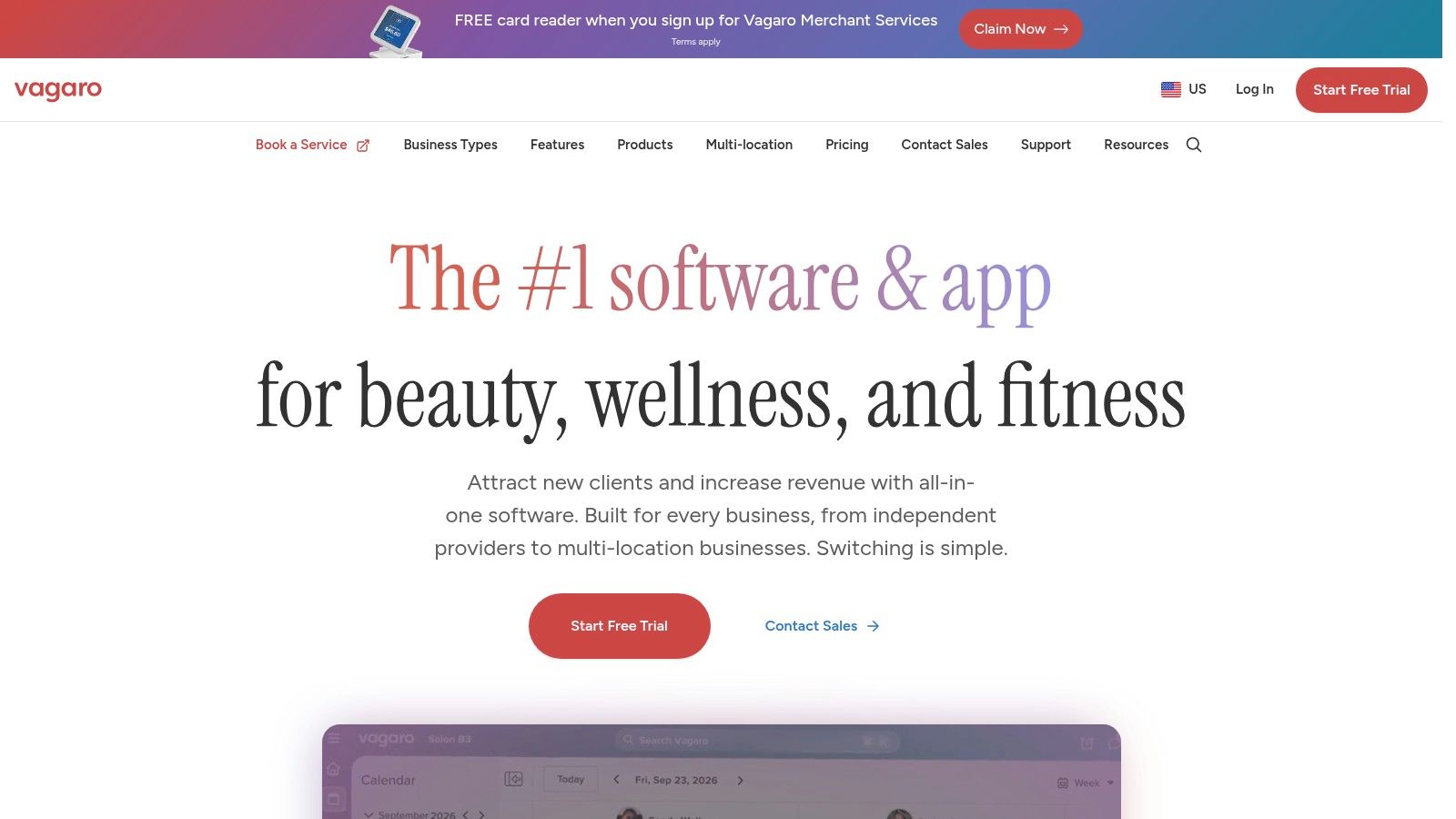
Advertised pricing starts at $23.99/month for one bookable calendar, with additional calendars charged separately. Memberships and packages matter more to a barbershop than a punch card does, because they turn a good month into committed revenue.
Pros
- One system: scheduling, client history, payments and rewards together.
- Rules tied to services rather than a blanket spend figure.
- 30-day free trial advertised.
Cons
- More complex than a card, with a real learning curve for staff.
- Costs climb with calendars and optional modules.
- Check compatibility with the POS and client records you already run.
For salons and spas running the same problem, this breakdown of a loyalty app for salons and spas is worth a read before you buy.
9. SQUIRE
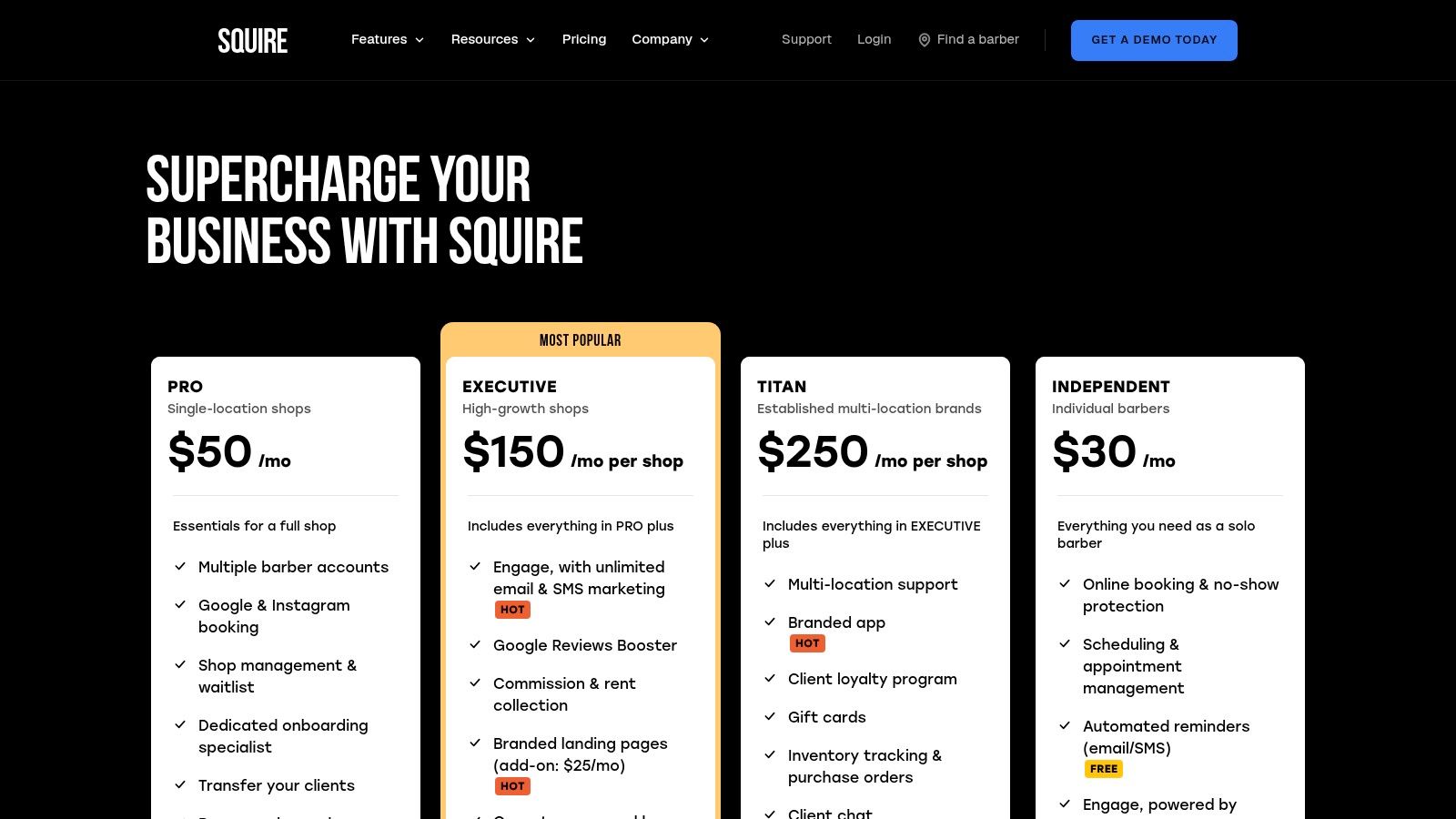
SQUIRE is barbershop software where loyalty is one feature rather than the product. It's worth a look if you want booking, payments and rewards in one place. The catch is where rewards sit: on the advertised Titan plan at $250/month per shop, above Independent at $30, Pro at $50 and Executive at $150.
That price needs context. Zenoti's 2026 barbershop benchmark found new guest visits in the segment fell 17% in 2025 while membership sales rose 20%, and that members who visited at least twice in their first 60 days churned at roughly half the rate of those who visited once (Zenoti's barbershop membership report).
Paying for a tool that gets clients back inside 60 days is defensible. Paying $250 a month for a punch card on its own is not.
Pros
- Built for barbershops, not adapted from another industry.
- Rewards by visits or spend, with customer progress visible.
- 14-day trial advertised on some plans.
Cons
- Loyalty isn't on every tier.
- Titan is a heavy bill for a solo barber who only wants rewards.
- Overlaps with booking and POS tools you may already own.
10. GoodBarber
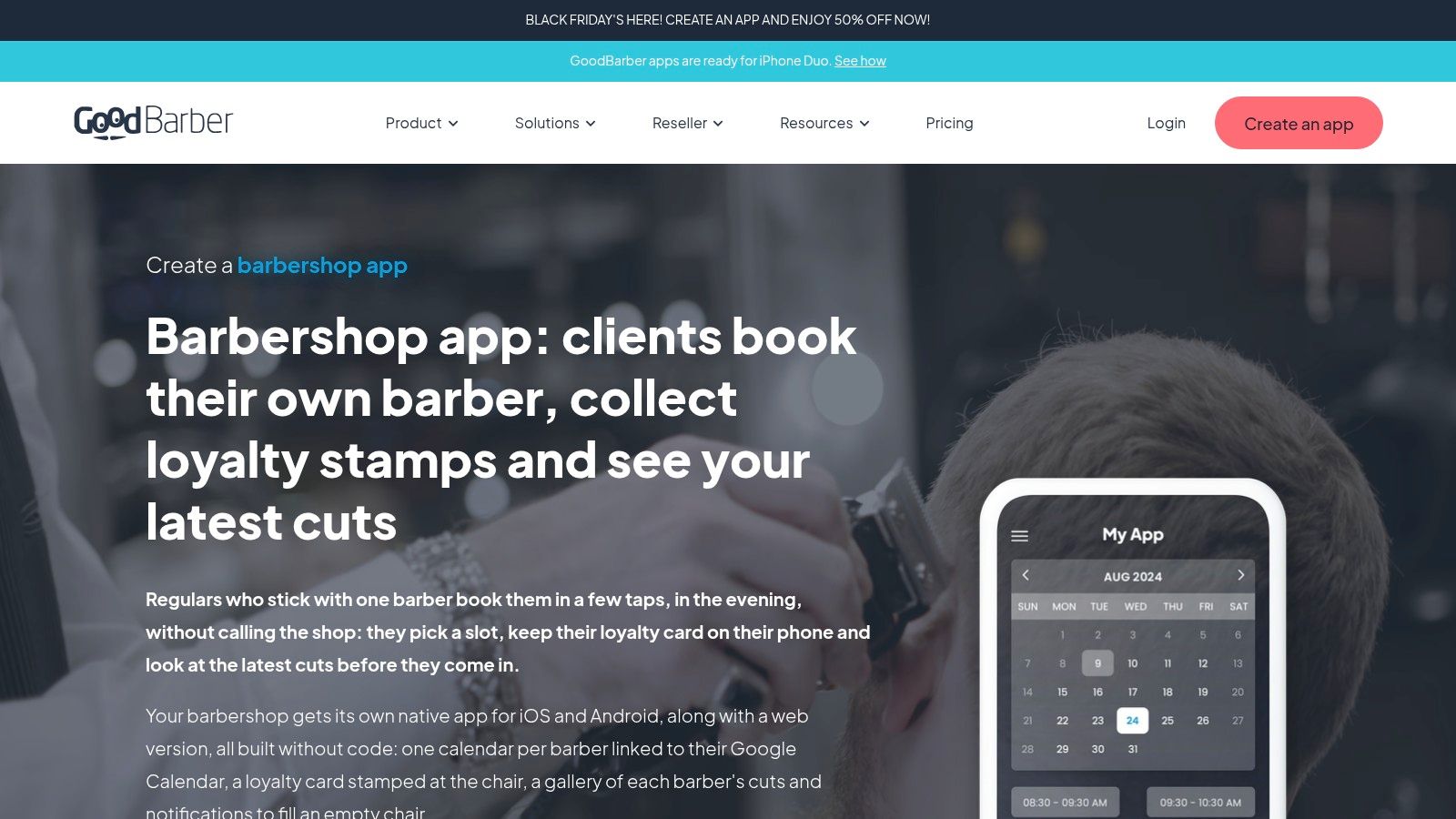
A client has to install your shop app before the stamp card is on their phone. GoodBarber is the one pick here that works that way. It builds a branded iOS and Android app, plus a web version, with booking by barber, push notifications and a QR-stamped loyalty card inside it.
Premium and Pro are billed annually, and the loyalty card is an add-on, not part of the base price. The card lives in that app. It is not a pass the client already carries in Apple Wallet or Google Wallet, so checkout waits on an account they still have to create.
Walk-in shops lose more than they gain. If half your clients will not create an account before their cut, the card never gets opened. I would pay for the add-on only when booking and push notifications are the reason you want the app, not stamps alone.
Pros
- Your name on the app, with booking and push notifications in one place.
- Per-barber availability, which suits shops with dedicated regulars.
- 30-day free trial advertised.
Cons
- Clients need the app and an account to use the loyalty card.
- Loyalty is an add-on, not part of the base price.
- No POS, so payments stay elsewhere.
How the top barber shop loyalty apps compare
The practical split is delivery: a pass that lands in Apple Wallet or Google Wallet, a stamp card that lives on the client's phone, or a branded app clients must install before the first reward counts. Checkout work matters just as much as the feature list.
| Card delivery | Client install | Program type | Entry point | Best for |
|---|---|---|---|---|
| Apple Wallet or Google Wallet pass from the shop's unique link | Nothing beyond Wallet | Digital stamps or spend-based points | Free 7-day trial after launch | Loyal Customer: small businesses wanting one simple wallet-based program |
| Loyalty card, discounts and promotions tied to local discovery | Bargly account | Loyalty card, discounts and promotions | Free plan | Barbershops seeking local discovery and promotions |
| Apple Wallet and Google Wallet pass | Nothing beyond Wallet | Stamps, cashback, coupons or memberships | $39/month | Barbershops wanting wallet cards and scan-based visit tracking |
| Digital punch cards on phones | No separate app, according to the site | Punch cards and repeat-visit rewards | $29/month plus $99 setup | Barbers focused on repeat haircut visits and booking tools |
| Digital stamp cards used alongside existing appointment software | Runs through the current booking flow | Stamp cards and visit incentives | Built around existing appointment software | Shops adding loyalty alongside existing appointment software |
| Digital stamp cards for customer engagement | Phone-based stamp card | Stamp cards and customer-engagement tools | $49/month | Businesses seeking a dedicated digital stamp-card platform |
| Apple Wallet pass | Square checkout flow | Points based on visits, spend or items | Square POS setup | Barbershops already using Square POS |
| Points, memberships and packages inside the Vagaro system | Vagaro account for booking and client records | Points, memberships and packages | $23.99/month | Shops wanting loyalty alongside scheduling and business management |
| Visit- or spend-based rewards in SQUIRE; branded app available | Branded app available | Visit- or spend-based rewards | $30/month; loyalty on Titan plan | Barbershops seeking integrated booking, payments and operations |
| QR-stamped loyalty card inside a branded app and web app | Yes, branded app and account | QR-stamped loyalty card and club tiers | $63/month billed annually | Shops wanting loyalty and booking in a branded app |
For a single-chair or small crew, the cheapest checkout is the one that adds no extra device and asks clients for no install. Wallet delivery fits that best; app-based cards make sense only when booking or discovery is already worth the download.
Choosing Your Loyalty App and Launching It Right
Three decisions decide everything, and you should make them in order. First, pick the model: stamps for visit frequency, points for spend. Second, pick the delivery: a wallet pass or a customer-facing app. Third, trial your shortlist with real clients rather than a demo account.
The market you're selling into is not small. IBISWorld puts the U.S. barber-shop market at about $7.0 billion in revenue in 2025 across roughly 154,925 businesses (IBISWorld barber shops). That's a fragmented market of small shops, which is exactly where a program run from a phone beats anything needing hardware or an IT setup.
For most single-shop barbers, a wallet-first tool that runs from a phone is the lowest-friction start. With Loyal Customer, clients join through your unique link, verify their phone with a one-time code, and add the card to Apple Wallet or Google Wallet with nothing to download, while you see every customer in one list with their balance or stamp progress, transaction history and last visit.
A launch checklist that keeps it simple:
- Sign up for a trial and build the card before you announce anything.
- Design the card with your shop name, one reward and a threshold your clients can reach in a normal haircut cycle.
- Test the checkout scan with a colleague standing in as a client, on the phone you'll use behind the chair.
- Invite your first ten regulars in person, and watch how many of them reach a second scan.
Loyal Customer gives barbershops a loyalty card that lives in Apple Wallet and Google Wallet, with either a digital stamp card or a points program run entirely from your phone. It fits this list because clients join from your own link, verify with a one-time code, and add the card without downloading an app, while you scan stamps or points at the chair with no scanner or POS. Visit Loyal Customer to try the free loyalty card demo and see how a card reaches a client's phone in minutes.