Loyalty members accounted for 39% of total restaurant visits in 2024, and loyalty traffic rose 5% even as overall restaurant traffic fell 2%. That's not a side project anymore, it's a core operating system for restaurants that want repeat traffic instead of one-off wins, especially when 67% of restaurants already run a program and operator-reported ROI is strong enough to keep adoption moving. The practical question isn't whether a restaurant customer loyalty program works. It's which mechanic fits your business, how little friction you can tolerate, and how you keep rewards from turning into margin leakage.
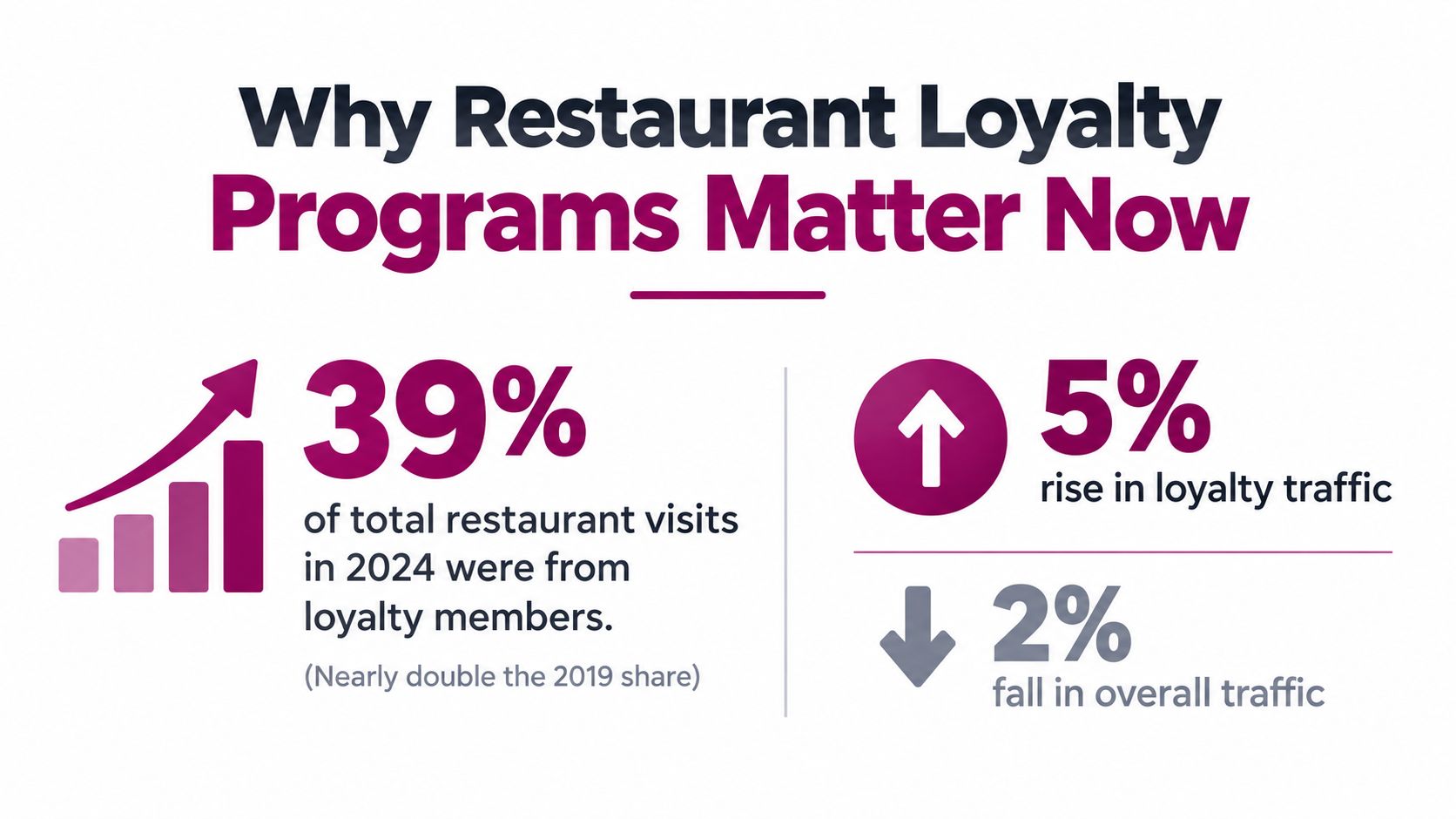
Table of Contents
- Why Restaurant Loyalty Programs Matter Now
- Points vs Stamps Choosing the Right Model
- How to Implement a Wallet-Native Loyalty Program
- Measuring Success Beyond Redemption Rate
- Real-World Examples That Avoid the Discount Trap
- Common Mistakes That Turn Loyalty Into a Discount Engine
- Your 90-Day Loyalty Program Rollout Plan
Why Restaurant Loyalty Programs Matter Now
The biggest change in restaurant loyalty is that it stopped being a retention add-on and became a traffic driver. In 2024, loyalty members accounted for 39% of total restaurant visits, and that share had roughly doubled since 2019, which tells you something important about where demand is concentrated. The restaurants winning repeat visits are no longer just serving customers, they're building habits.
That matters even more if you run a cafe, bakery, or quick-service spot and haven't launched yet. You're not competing against a handful of local alternatives anymore, you're competing against brands that already make return visits easy, visible, and rewarding. When loyalty traffic rises while total traffic slips, the program isn't just keeping people around, it's pulling more of the total visit pool toward members.
Practical rule: if loyalty is already driving a third or more of visits in a big market, a non-member experience starts to look like a leak in the business model.
The adoption numbers reinforce the shift. Industry coverage says 67% of restaurants have launched loyalty programs, with 68% adoption in full-service and 71% in quick-service, so the market has moved past experimentation. For operators, that means the decision is less “should we have one?” and more “how do we build one that people use?”
A loyalty program also has to be judged by economics, not just engagement. Operator-reported results show 92.7% of loyalty program owners saw positive ROI, with an average return of 5.3x (NRN coverage of loyalty traffic and ROI). That doesn't mean every program works. It does mean the model is solid enough that execution is the key differentiator.
Points vs Stamps Choosing the Right Model
The first decision is simple on paper and decisive in practice. Points reward spend, stamps reward visits. Both can work, but they shape customer behavior differently, and the wrong one usually creates confusion before it creates loyalty.
When stamps win
A stamp card is the cleaner fit when your business runs on repeat, similar transactions. Coffee shops, bakeries, sandwich counters, and lunch spots benefit because customers don't need to calculate value every time they buy. One visit, one stamp, a visible path to a reward. That simplicity matters, because 47% of loyalty members use their memberships several times a month and 32% use them several times a week, so the best programs need to fit into a routine, not interrupt it (Deloitte on restaurant loyalty behavior).
Stamps also lower the mental load for staff. Nobody has to explain tiers, conversions, or earn rates at the register. If your average order is fairly consistent, a stamp model creates a clean habit loop.
When points make more sense
Points fit better when ticket sizes vary, or when you want the program to reward larger orders without redesigning the whole structure. A full-service restaurant, a multi-channel concept, or a place with delivery, takeout, and dine-in usually needs more flexibility than a fixed punch card can offer. Points also scale better if you want to layer in promotions later, because you can adjust earn rates and reward levels without changing the basic framework.
The downside is friction. If the customer can't tell how close they are to a reward, points start to feel abstract. That's where many programs drift into dead weight. The program is technically working, but it's not emotionally visible enough to change behavior.
Bottom line: stamps are easier to understand, points are easier to tune. Simplicity helps launch, flexibility helps optimize.
| Business Type | Recommended Model | Why It Fits |
|---|---|---|
| Coffee shop | Stamps | Frequent, similar purchases make progress obvious |
| Bakery | Stamps | Repeat visits are easier to reward than spend variation |
| Quick-service restaurant | Points | Larger or mixed-size orders need flexibility |
| Full-service restaurant | Points | Spend-based rewards fit varied check sizes |
| Multi-channel concept | Points | Easier to unify dine-in, takeout, and delivery |
A lot of operators try to force one model forever. That's a mistake. Pilot one, watch how customers use it, then adjust. The right answer often changes once you see whether your guests respond more to visit frequency or spend-based progression.
How to Implement a Wallet-Native Loyalty Program
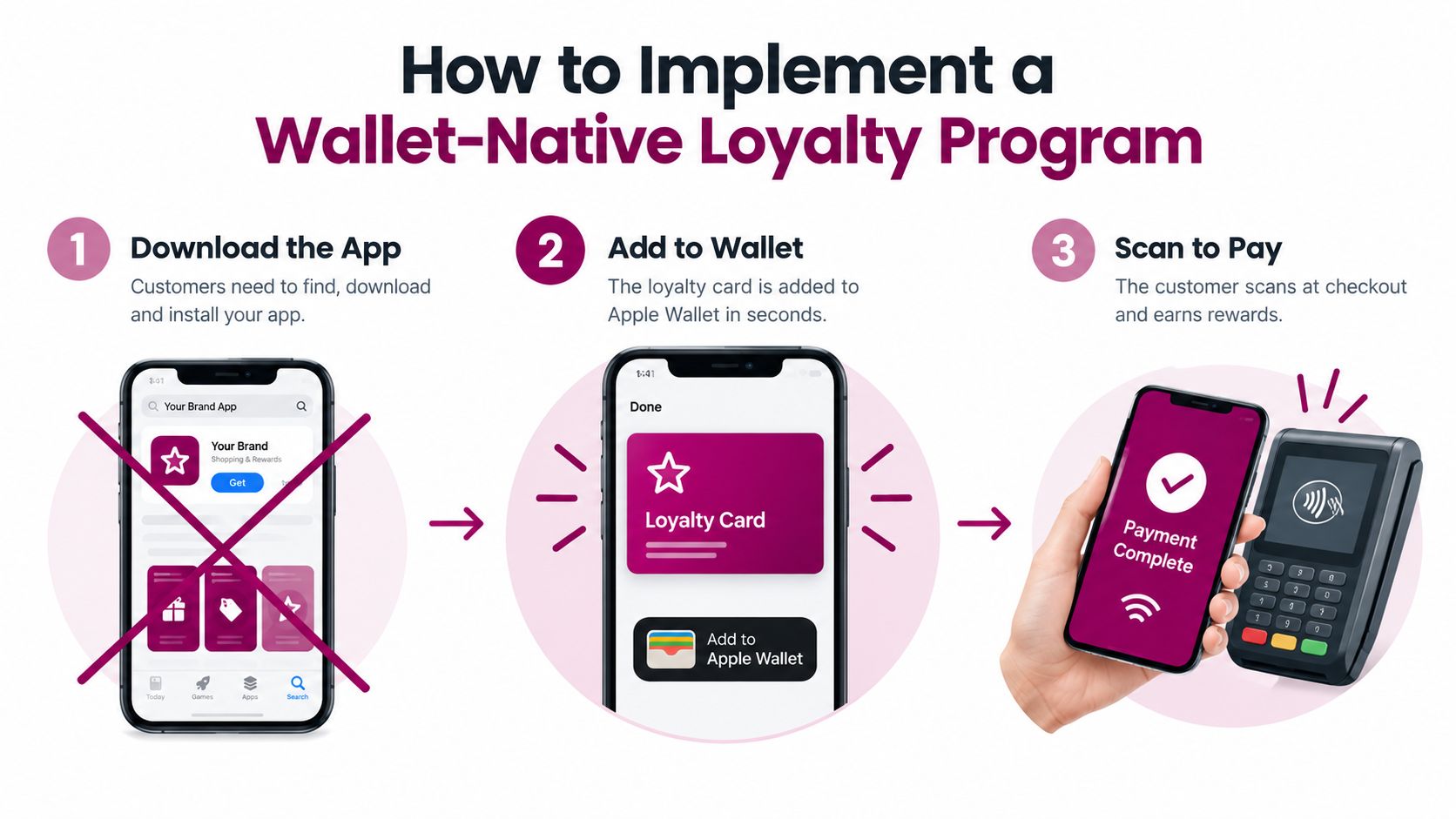
The hard part isn't the reward logic. It's getting people to join without making them download another app they'll forget about in two days. Wallet-native loyalty cards cut that friction because customers can add them to Apple Wallet or Google Wallet without a separate install, and independent statistics show 65% to 75% adoption for wallet passes versus 10% to 20% for standalone apps (LoyaltyPass wallet loyalty statistics).
The setup flow
Start with a digital pass, not a separate app. Create the loyalty card, define the earn and redeem rules, and give customers a QR code or link so they can add the pass to their phone in a few taps. After that, the pass becomes the customer-facing home for the program, and you can update balances or offers centrally.
That matters because the pass stays visible where the customer already checks for payment and tickets. It doesn't sit behind an app icon they won't open. It also shortens the path from enrollment to repeat visit, which is where many programs lose momentum.
Why wallet messaging matters
Wallet-based notifications are a stronger nudge channel than email for this use case. Mobile-wallet loyalty messaging can achieve about 20% open rates compared with about 2% for email (LoyaltyPass wallet loyalty statistics). That doesn't replace email, but it does make wallet updates much better suited to timely reminders about points, stamps, or rewards.
A practical rollout should feel almost invisible to the customer. A pass is added, the balance updates, and the reward stays in view. If you need to explain the system more than once, the setup is probably too complicated.
For a walkthrough of the Apple Wallet path, this Apple Wallet loyalty card guide is useful.
Measuring Success Beyond Redemption Rate
Redemption rate matters, but it cannot carry the whole evaluation. I have seen programs with weak redemption that never built a habit, and others with heavy redemption that eroded too much margin. The practical question is whether the offer changes repeat behavior without turning the program into a discount engine.
Watch visit frequency and average spend per visit next. Loyalty members tend to visit more often and spend more per visit than non-members, so the return comes from both habit and basket size. If redemptions rise while visit frequency stays flat, the program is getting more expensive without creating stronger loyalty (Deloitte on restaurant loyalty behavior).
The mechanics have to work together. Earn velocity, reward value, and reminder cadence all shape whether guests feel motivated or feel pushed toward a markdown. A reward that arrives too late feels out of reach. A reward that arrives too easily trains customers to wait for the next deal.
A simple test helps here. If a first reward does not feel reachable within normal visit behavior, the program is too slow to reinforce the habit.
Early reinforcement matters because the first reward should usually land within 2 to 4 weeks of normal visit behavior, which helps retention and engagement (Spindl on restaurant loyalty ROI). That is the point where progress feels real without dragging so long that interest fades. Measure the full system, not just the cost of redemptions.
Real-World Examples That Avoid the Discount Trap
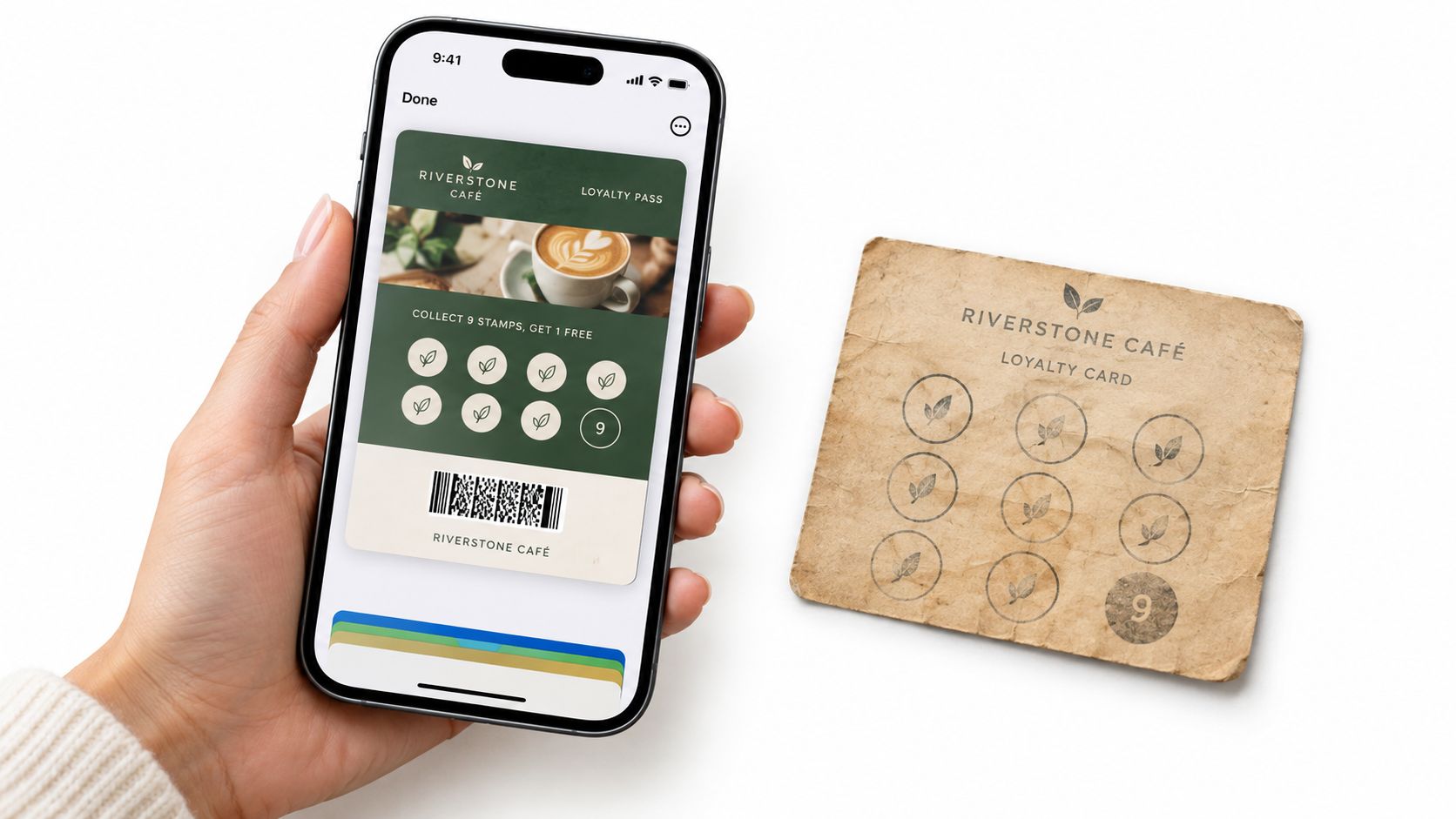
A neighborhood coffee shop doesn't need a complex points engine to create repeat business. A digital stamp card in Apple Wallet works because the customer understands it instantly, collects progress on every visit, and can see the reward without hunting through an app. The reward can be simple, the behavior is still strong, and the staff isn't stuck managing paper cards or manual counts. If you want a more detailed walkthrough of the pattern, this restaurant loyalty examples guide shows how similar formats behave in practice.
The point is not to make the reward expensive. The point is to make the path obvious.
A quick-service restaurant often needs a different mechanic. Points make more sense when a larger order should earn more than a small one, because the system can protect margin while still giving guests a reason to come back. A family order, a catering pickup, and a single lunch sandwich don't deserve the same reward structure, and points let you reflect that difference without forcing a discount on every transaction.
The common thread
Both models work best when they reward habit and convenience rather than raw price cuts. The customer comes back because the program is easy to follow and easy to use, not because the restaurant is always running a temporary deal. That distinction matters in local markets, where repeat behavior usually grows from routine, not promotion.
A good operator can also mix formats over time. A cafe might start with stamps, then add points for larger catering or bundled orders. A quick-service brand might do the opposite, beginning with points and testing a simple visit-based reward for a narrow segment. The model should match the behavior you want to repeat.
Common Mistakes That Turn Loyalty Into a Discount Engine
The fastest way to weaken a loyalty program is to make it feel like a permanent sale. Analysts at The Wise Marketer note that 65% of restaurant loyalty programs lean heavily on discounts, while only 18% use personalization and 6% use gamification effectively (The Wise Marketer on restaurant loyalty design). That is a clear sign of how easy it is to build a rebate system and label it strategy.

When the program is mostly price cuts, customers wait for the next offer instead of building a habit. That is a poor trade when diners are already more selective and some are cutting restaurant spend or switching favorite spots more often. The program should reward repeat behavior, not teach people that value only appears during a markdown.
The corrective moves that help
Set a floor for discounting. Not every reward needs to cut price, and not every redemption should hit margin the same way. A free item, a bonus visit, or a convenience-based perk can carry more weight than another percentage-off message.
Tiering can also create momentum without constant markdowns. If the guest sees a clear path from basic participation to a stronger reward, the program feels like progress rather than a coupon inbox. Wallet visibility helps here too, because the customer sees status in the moment, not after digging through email.
Rule of thumb: if the only thing customers remember is the discount, the program has already lost some of its value.
The cleanest fix is usually better structure, better visibility, and a tighter link between behavior and reward. Spindl's ROI guidance for restaurant loyalty programs is useful here, because it keeps the focus on what the program is meant to change, not just what it costs (Spindl ROI guidance).
Your 90-Day Loyalty Program Rollout Plan
The cleanest rollout is the one you can maintain. Start by picking the model that fits your ordering pattern, then keep the launch narrow enough to measure accurately. If you want a practical starting point, this how to start a loyalty program guide lays out the basic setup sequence without turning it into a science project.
Weeks 1 to 2
Choose the model, define the reward, and decide how customers will join. If your business is visit-heavy and simple, stamps are easier to launch. If your checks vary or your channels are mixed, points usually give you more control.
Build the program around one clear first reward. Make sure the path to that reward feels reachable in normal use, not only for your heaviest spenders. Test the guest experience from the customer side before you show it to staff.
Weeks 3 to 4
Launch a small pilot and watch the friction points closely. The first test customer should be able to understand the offer, join, and see progress without help. If that doesn't happen, the program is too complicated.
Tune the earn rate and reward value together. If redemption looks like it will sit outside the healthy range, adjust before the full rollout. This is the point where many operators either overreact with bigger discounts or underreact and leave the program too weak to matter.
Weeks 5 to 12
Measure weekly, not once at the end. Track how often members return compared with non-members, how often they redeem, and whether the reward is pulling visits forward or just subsidizing them. Keep an eye on the balance between repeat behavior and margin.
A loyalty program is not a one-time launch. It's a running system that should move with customer habits, menu changes, and seasonality. If you keep it simple enough to manage and strict enough to protect margin, it becomes one of the few marketing systems that can improve both traffic and retention at the same time.
If you want to launch a loyalty program without building a fragile discount machine, Loyal Customer gives you a practical way to run points or stamp cards from a phone and issue Apple Wallet and Google Wallet passes from the same workflow. Visit Loyal Customer to see how a wallet-native setup can fit your restaurant, then test the simplest version before you scale the program across every location.