The 42% of salon clients who visit more than once a year generate 80% of all salon revenue, while the remaining 58% contribute only 20%, according to the 2025 Zenoti beauty and wellness benchmark. For a nail salon, that changes the question completely. A loyalty app isn't a decorative punch card. It's a front-desk system for protecting the repeat visits that keep technicians booked and cash flow steadier.
The right loyalty app for a nails salon should make three things easier: rebooking before the client leaves, encouraging profitable add-ons, and recording rewards without slowing checkout. A branded standalone app may offer extensive features, but if clients won't install it or staff won't use it consistently, it won't improve retention. In many independent salons, a QR code and a wallet-native pass are more practical than another app competing for space on the customer's phone.
Table of Contents
- Why Salon Revenue Depends on Repeat Clients
- Comparing Points Stamps and Memberships
- The Case for Wallet-Native Loyalty Passes
- Designing Rewards That Drive Add-On Spend
- Minimizing Front Desk Friction and Staff Burden
- Tracking the Metrics That Actually Matter
- Launching Your Salon Loyalty Program
Why Salon Revenue Depends on Repeat Clients
Nail services have a built-in retention opportunity. Clients often return for maintenance, and the salon already knows their preferred technician, shape, finish, and service routine. The operational challenge isn't convincing every customer that nails exist. It's turning the first appointment into the next appointment before attention shifts to another salon.
The revenue concentration data makes that priority clear. The Zenoti benchmark says that 42% of clients who visit more than once annually generate 80% of salon revenue, and it identifies a retention rate above 70% after the second visit as strong. A separate salon-retention source cited in the same benchmark reinforces the pattern, loyal clients can represent 80% of sales while accounting for 42% of customers. These figures support a simple conclusion: a small improvement in repeat behavior can matter more than a broad awareness campaign that brings in more one-time visits.
The second visit is the critical behavior
A first visit proves that a client is willing to try the salon. The second visit shows that the salon has begun to become a habit. That's why the loyalty program should make progress visible immediately, rather than offering an abstract promise about future savings.
Useful mechanics include:
- Immediate progress: Add the first stamp or points balance during checkout, so the client sees that today's appointment already counts.
- A reachable first reward: Make the first milestone feel attainable without giving away a full-service margin.
- A rebooking prompt: Present the reward alongside the next-appointment conversation, not as a separate marketing message weeks later.
- Recognition: Use the client's known preferences and service history to make the interaction feel personal rather than transactional.
Progress motivation works because clients can see movement toward a benefit. Loss aversion also matters. Once a customer has accumulated progress, abandoning the salon means leaving that progress behind, especially when the digital pass keeps the balance visible.
Front-desk rule: The loyalty conversation should support the rebooking conversation. It shouldn't replace it.
A weak program rewards activity without shaping the next action. A stronger one gives the receptionist or technician a natural reason to say, “You've started your rewards balance today. Would you like to reserve your usual appointment while you're here?” The program then becomes part of the service workflow, not an isolated promotion.
Why loyalty beats constant discounting
Discounts can fill a quiet period, but repeated blanket discounts train clients to wait for a lower price. Loyalty mechanics let the salon choose what behavior deserves an incentive, such as returning sooner, booking an off-peak slot, or adding nail art to a standard service.
That distinction is especially important during slow seasons. A salon that rewards every visit equally may give away margin to clients who were already coming in. A salon that uses targeted bonuses can direct demand toward specific times, services, or booking behaviors while preserving the regular price elsewhere.
The app should therefore be judged by more than signups and redemptions. Ask whether it helps clients make the next booking, choose a higher-value service, or remain active after the second visit. Those are the behaviors that connect loyalty activity to salon economics.
Comparing Points Stamps and Memberships
The three common models solve different problems. Digital stamps are usually easiest to explain, points provide more flexibility for varied spending, and memberships create a recurring commercial relationship that requires more commitment from both the salon and the client.
| Model | Best For | Client Behavior Driven | Operational Complexity |
|---|---|---|---|
| Digital stamps | Encouraging routine visits | Returning for the next milestone | Low |
| Points | Increasing add-on and service spend | Choosing upgrades or higher-value services | Medium |
| Memberships | Building predictable recurring revenue | Maintaining an ongoing service relationship | High |
Digital stamps keep the routine visible
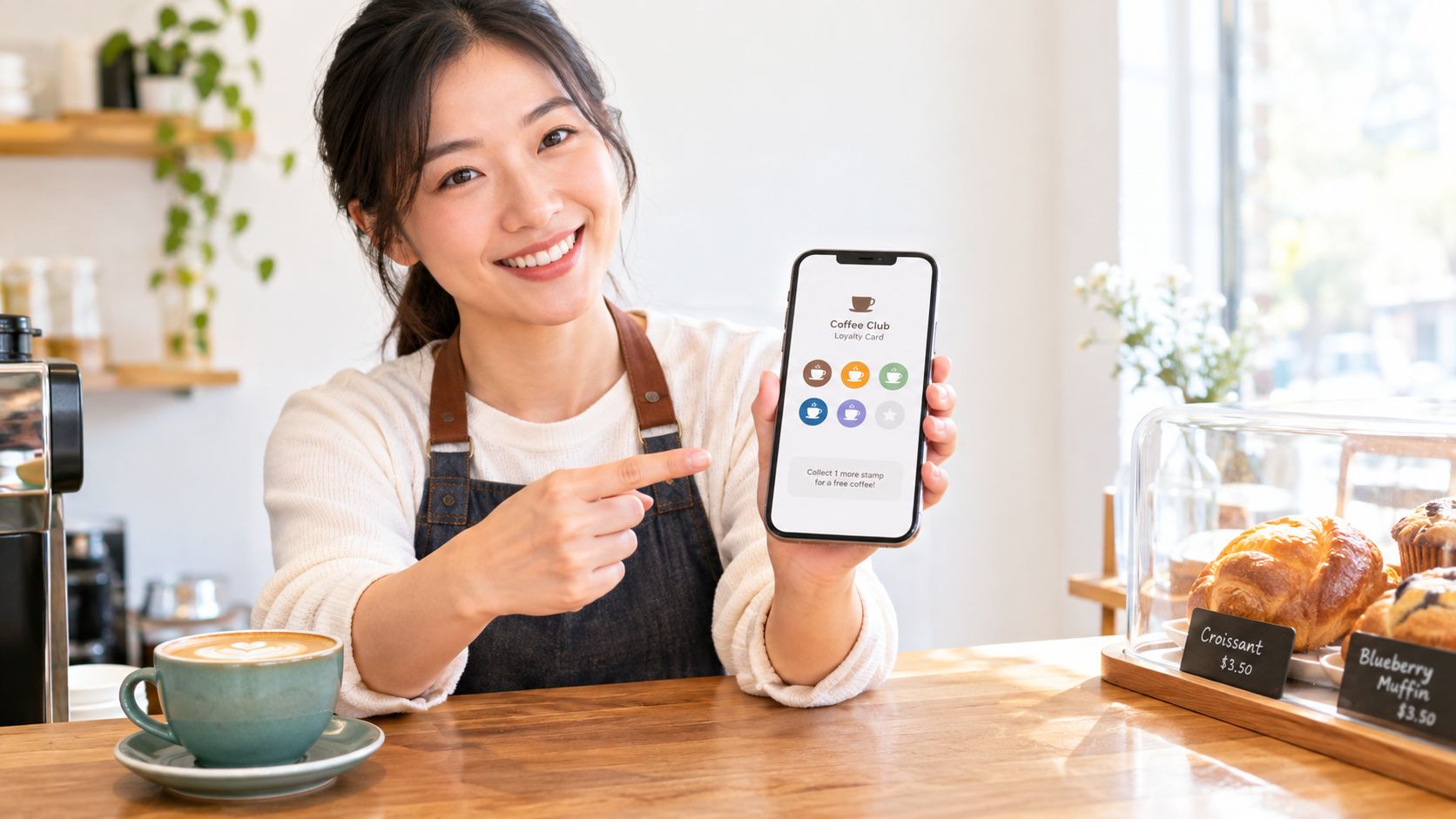
A stamp model works well when the salon wants to increase visit frequency without asking clients to understand a complicated formula. One visit equals one step. The client can see how close they are to the next benefit, and staff can explain the system quickly.
This model is particularly useful for a salon trying to fill recurring gaps in the calendar. The reward can be tied to a visit during a quieter period, a particular service category, or a rebooking action. The key is to avoid making the rules so narrow that staff has to pause and interpret them at checkout.
A digital stamp card preserves the familiar punch-card psychology while removing the paper card from the process. For an overview of how points programs can be structured when a salon needs more flexibility, see this guide to points-based loyalty programs.
Points support basket expansion
Points make more sense when services have different prices or when the salon wants to promote add-ons. A client can earn more for choosing nail art, a premium finish, or another profitable upgrade, while the salon retains control over which rewards are available.
The risk is cognitive overload. If clients can't tell how points are earned or what they can redeem, the balance stops motivating them. Keep the earning logic simple, publish a short reward menu, and ensure staff can answer the basic questions without opening several screens.
Points are also useful for segmented promotions. The salon might award a temporary bonus for an underbooked service or a specific appointment window. That flexibility is valuable, but it creates a greater responsibility to monitor whether the incentives are producing the intended behavior.
Memberships trade simplicity for commitment
Memberships are not merely a more advanced loyalty card. They involve recurring billing, benefit rules, cancellation handling, and a clear promise about ongoing value. They can suit salons with a stable base of frequent clients who appreciate priority access or included upgrades, but they shouldn't be the default starting point for every operator.
A membership may be appropriate when the salon's main goal is predictable cash flow and stronger retention among established regulars. It's less suitable when the immediate problem is that first-time visitors aren't returning. In that case, a stamp or points model creates less resistance and gives the salon cleaner evidence about client behavior.
Choose the model by bottleneck:
- Need more repeat visits: Start with stamps.
- Need more add-on spend: Use points with bonuses for selected upgrades.
- Need recurring revenue from committed regulars: Consider memberships after the basic rebooking process works.
- Need several behaviors at once: Begin with one primary mechanic instead of launching a complicated hybrid program.
The most expensive mistake is digitizing an unclear offer. A simple model that staff applies at every checkout will outperform a complex program that clients and technicians only partly understand.
The Case for Wallet-Native Loyalty Passes
Independent salons often overestimate how much friction customers will tolerate. Asking someone to download a separate app, create an account, verify details, learn a new interface, and remember to open it at checkout adds several points where adoption can fail. A wallet pass reduces that burden because the customer can add it from a link or QR code and store it in the phone's existing wallet.
Apple Wallet and Google Wallet passes share a useful operating model. The pass can be added once, updated remotely, and used without installing another standalone app, as described in this overview of Apple Wallet loyalty passes. For a repeat-visit business, that difference matters. The pass remains a digital credential the customer can present when checking in or checking out, rather than a card that disappears into a handbag.
Less download friction, more usable presence
A wallet-native pass fits the way customers already use their phones. The salon can display a QR code at reception, on a receipt, or beside the booking information. The customer scans it, adds the pass, and can return to it when the next appointment arrives.
The pass can also support timely reminders and updates. A salon might promote a new color collection, an off-peak opening, or a reward that is close to being earned. The message is more useful when it connects to a known client action, rather than becoming a stream of generic offers.
The front desk benefits too
A wallet pass reduces the number of steps staff must explain. Instead of asking whether a customer has downloaded the salon's app, the receptionist can ask whether they'd like to add the salon's reward pass to their phone. That sounds like a small change, but small changes determine whether a program survives a busy shift.
Wallet-native loyalty doesn't solve every problem. Staff still needs a reliable way to identify the customer, apply the correct stamp or points, and explain the reward rules. The pass also needs accurate updates. A stale balance or unclear offer damages trust faster than a paper card because clients expect a digital system to be precise.
The best setup combines a low-friction pass with a short staff script:
- Invite the client at checkout.
- Show the QR code.
- Confirm that the pass has been added.
- Apply today's reward activity.
- Ask for the next booking while the client is still at the desk.
That sequence connects adoption, reward progress, and rebooking in one interaction. It keeps the loyalty program where it belongs, in the normal flow of the salon.
Designing Rewards That Drive Add-On Spend
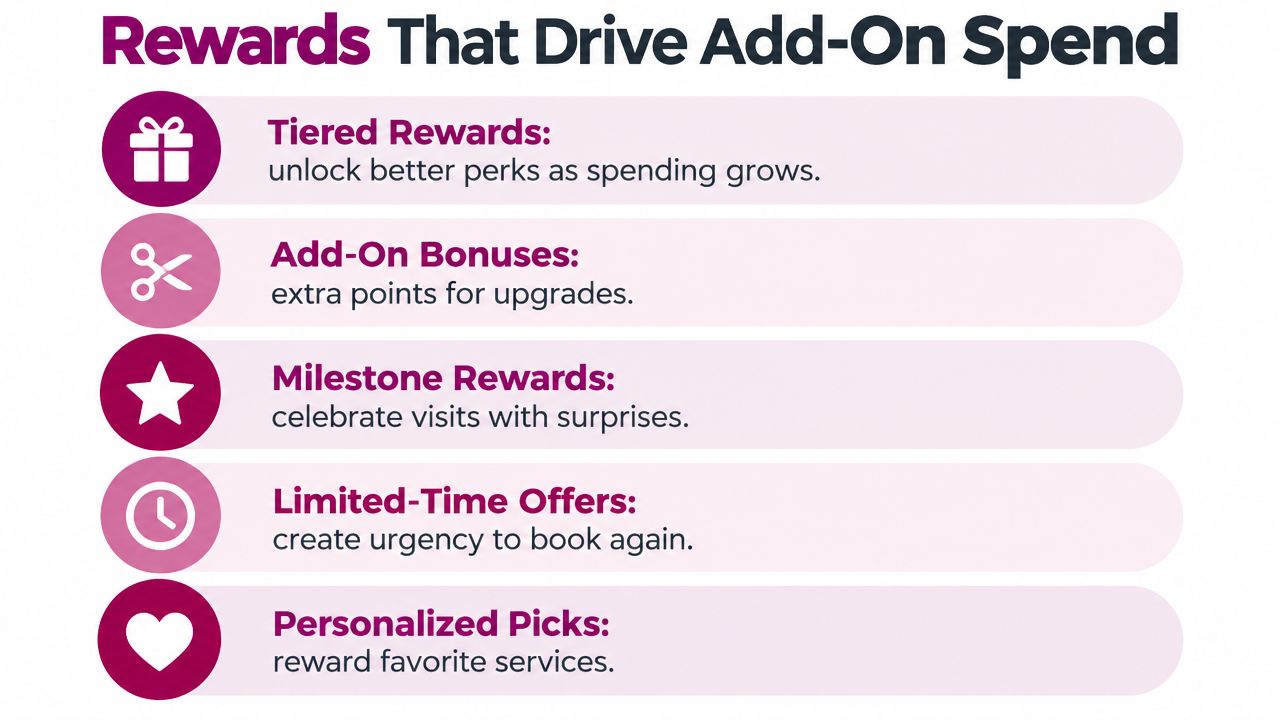
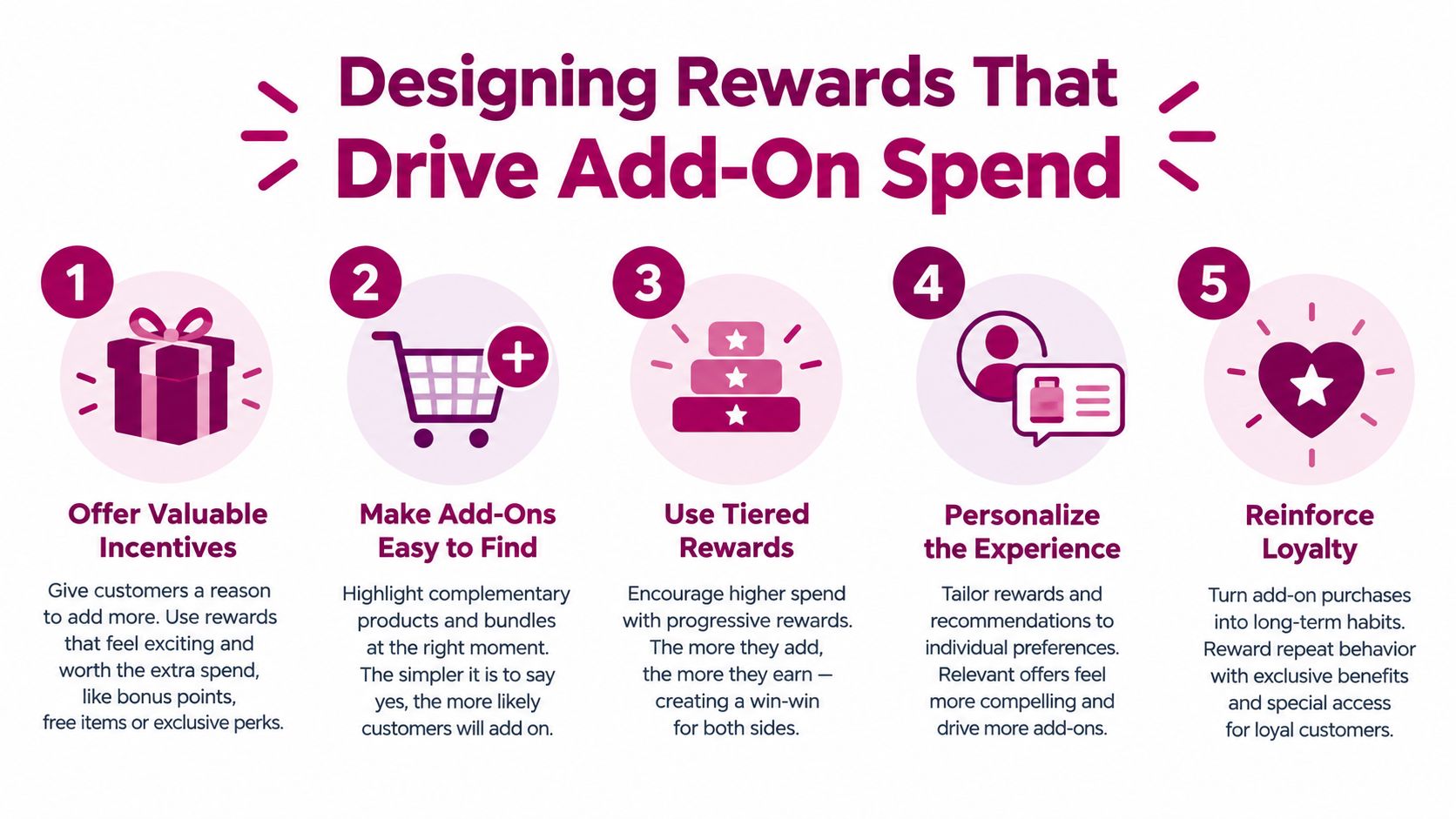
A reward should change a profitable behavior, not merely reduce the price of a service the client already planned to buy. For nail salons, that often means encouraging nail art, a premium finish, treatment upgrades, or appointments during quieter periods.
Start by choosing the KPI before choosing the reward. If the salon needs more frequent visits, use a visit milestone. If the salon needs larger tickets, award extra points for selected add-ons. If the salon needs to fill a particular schedule gap, make the bonus conditional on booking during that period.
Build the reward menu around margin
A practical reward menu usually contains a small number of clear choices. The salon shouldn't force clients to calculate complicated combinations at the counter.
- Reward a visible upgrade: A complimentary accent nail or design option can feel special without discounting the entire appointment.
- Protect the core service price: Apply the benefit to an add-on or upgrade rather than making the main manicure cheaper.
- Use tiers carefully: An early reward creates momentum, while later rewards can recognize higher engagement.
- Create off-peak incentives: Offer bonus progress for appointments that help fill underused capacity.
- Personalize the choice: A gel regular should see relevant benefits, while a pedicure client should receive options connected to that routine.
Thresholds should require a meaningful return, but they shouldn't feel remote. If the first reward takes too long to earn, the client stops noticing progress. If every visit earns a large discount, the program becomes a cost center rather than a retention tool.
Separate value from price
Clients don't always need a cash discount to feel rewarded. Priority access to a new color, a complimentary treatment element, or a custom upgrade can have strong perceived value while costing less than a percentage reduction on the whole service.
The front desk can add context here. A technician who knows that a client consistently chooses nail art can explain the benefit in terms of that preference. A generic “you have points” message is less persuasive than “you're close to the nail-art upgrade you usually choose.”
Use the following logic when reviewing each reward:
Margin test: If the reward increases the chance of a return or an add-on, it earns consideration. If it only discounts a visit that would have happened anyway, revise it.
The reward should also have a clear redemption process. Staff must know what qualifies, whether it can be combined with another offer, and how to record it. Confusion at redemption is where well-designed programs often lose credibility.
Minimizing Front Desk Friction and Staff Burden
A loyalty program fails operationally before it fails commercially. If a receptionist has to search through several menus, a technician has to remember exceptions, or the customer has to repeat information at every visit, staff will eventually skip the process. The program then produces incomplete records and unreliable results.
The useful standard is not how many features the software offers. It's whether a new team member can understand the basic workflow during a short training session and apply it during a busy checkout period.
Design the checkout flow first
Write the ideal flow before selecting the software:
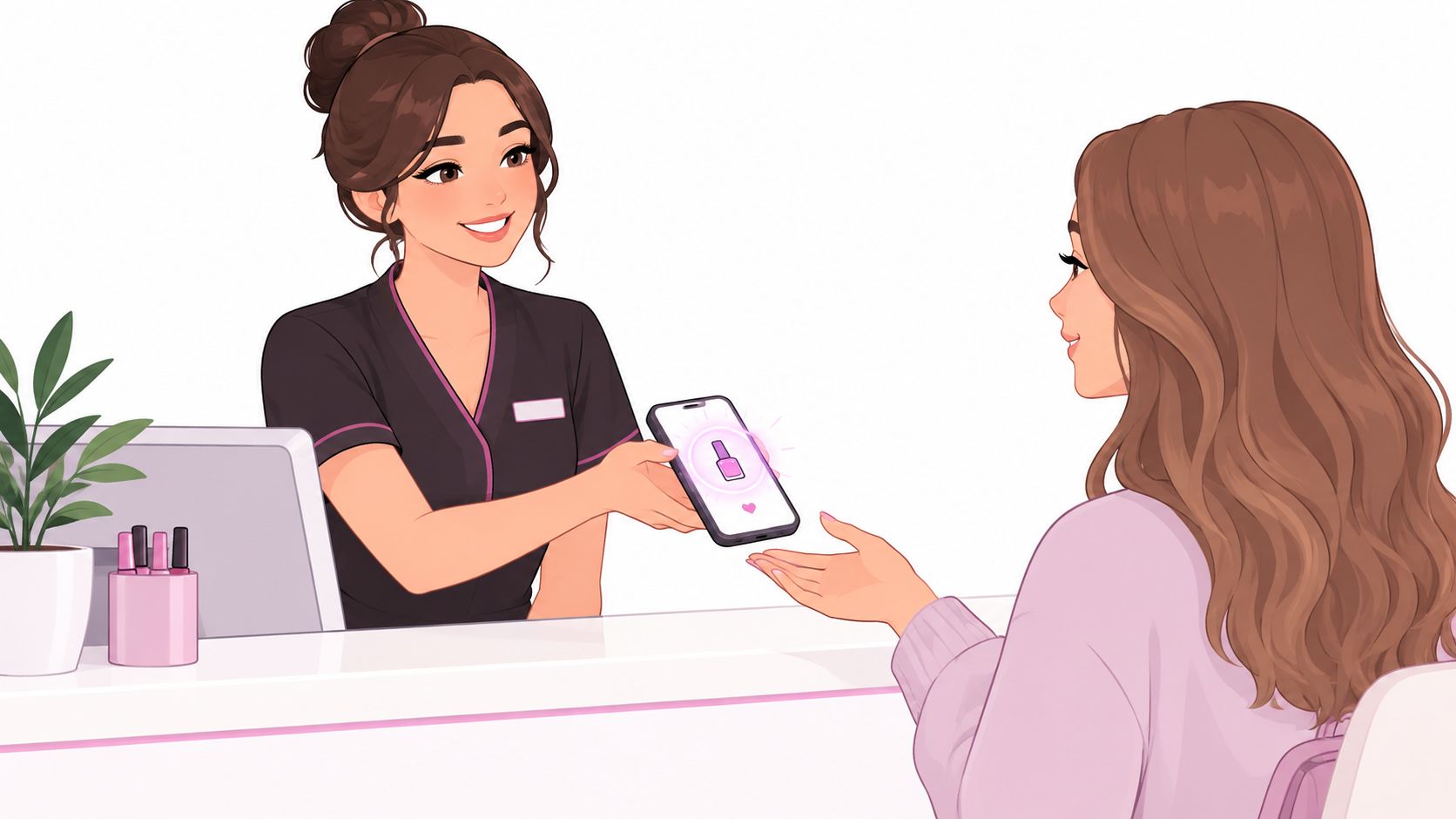
- The customer presents a wallet pass or provides a phone number.
- Staff finds the customer record.
- Staff adds the visit, points, or qualifying action.
- The system displays the updated balance.
- Staff explains any available reward.
- Staff asks whether the client wants to rebook.
This flow should work from a phone, without requiring a dedicated scanner or a complex POS integration for routine loyalty actions. A mobile-first digital punch card can preserve the straightforward behavior of paper while making the record easier to maintain, as explained in this guide to a digital punch card.
Remove decisions from the busiest moment
Staff shouldn't have to decide whether a client earned an add-on bonus while other customers are waiting. Configure the rules in advance, name rewards plainly, and use a short internal reference sheet for exceptions.
A few operating practices help:
- Use one enrollment script: Keep the invitation short enough to say naturally at checkout.
- Show the QR code visibly: Staff shouldn't need to search for it on a separate device.
- Train on one real transaction: Practice enrollment, accrual, and redemption rather than reviewing every feature.
- Assign ownership: Decide who checks balances and resolves disputed rewards.
- Audit the first few days: Look for skipped stamps, duplicate records, and unclear offers.
The customer experience should feel immediate. If the employee says, “I'll update that later,” the reward loses its connection to the visit. If the system takes too long, the employee will prioritize the queue over the database.
Hardware is not the goal
Small salons don't necessarily need terminals, scanners, or deep integrations to run a useful loyalty program. A phone-managed system can be enough for a basic points or stamp workflow, provided the salon has a clear identity method and a consistent rule set.
That doesn't mean every salon should avoid integration. A larger operation may benefit from automated transaction data and more advanced reporting. The point is to match the technology to the workflow. For an independent nail salon, simplicity often creates more accurate data than a feature-rich system that nobody uses consistently.
Tracking the Metrics That Actually Matter
Redemption counts are easy to report and easy to misunderstand. A high number of redemptions might mean clients are engaged, or it might mean the rewards are too generous. A low number might indicate weak participation, confusing rules, or a program that targets the wrong behavior.
Track the movement from visit to visit. The Zenoti 2025 benchmark identifies retention above 70% after the second visit as strong, giving salon owners a practical reference point for reviewing the early client journey. The exact result will depend on the salon's service mix and customer base, but the second visit remains more informative than total enrollments.
Use a small KPI set
A useful monthly dashboard can include:
- Second-visit retention: The share of first-time clients who return for another appointment.
- Rebooking rate: The share of clients who schedule their next visit before leaving.
- Days between appointments: The average gap between visits, segmented by service type.
- Add-on redemption: The share of targeted offers redeemed alongside a core service.
- Member or participant ticket: Average spend from loyalty participants compared with nonparticipants.
- Inactive regulars: Clients whose usual visit pattern has changed or stopped.
These metrics answer different questions. Rebooking measures front-desk execution. Days between appointments reveals whether reminders are timely. Add-on redemption shows whether the reward design is influencing basket composition. Inactive regulars identify people who may need a personal outreach message rather than another broad promotion.
Read the data by client behavior
Don't treat every participant as the same. Separate clients who visit frequently, clients who spend more but visit less often, clients who only respond to off-peak offers, and clients who enrolled but never used the program.
That segmentation helps the salon choose the next action. A frequent visitor may respond to a service upgrade. An inactive regular may need a rebooking reminder tied to their usual service. A new participant may need a simple explanation of how the first reward works.
The program becomes valuable when it diagnoses a problem. If second-visit retention is weak, improve the first checkout conversation and the follow-up timing. If add-on redemption is weak, revise the reward rather than sending more messages. If rebooking is strong but spend is flat, use points or targeted bonuses to support service expansion.
Launching Your Salon Loyalty Program
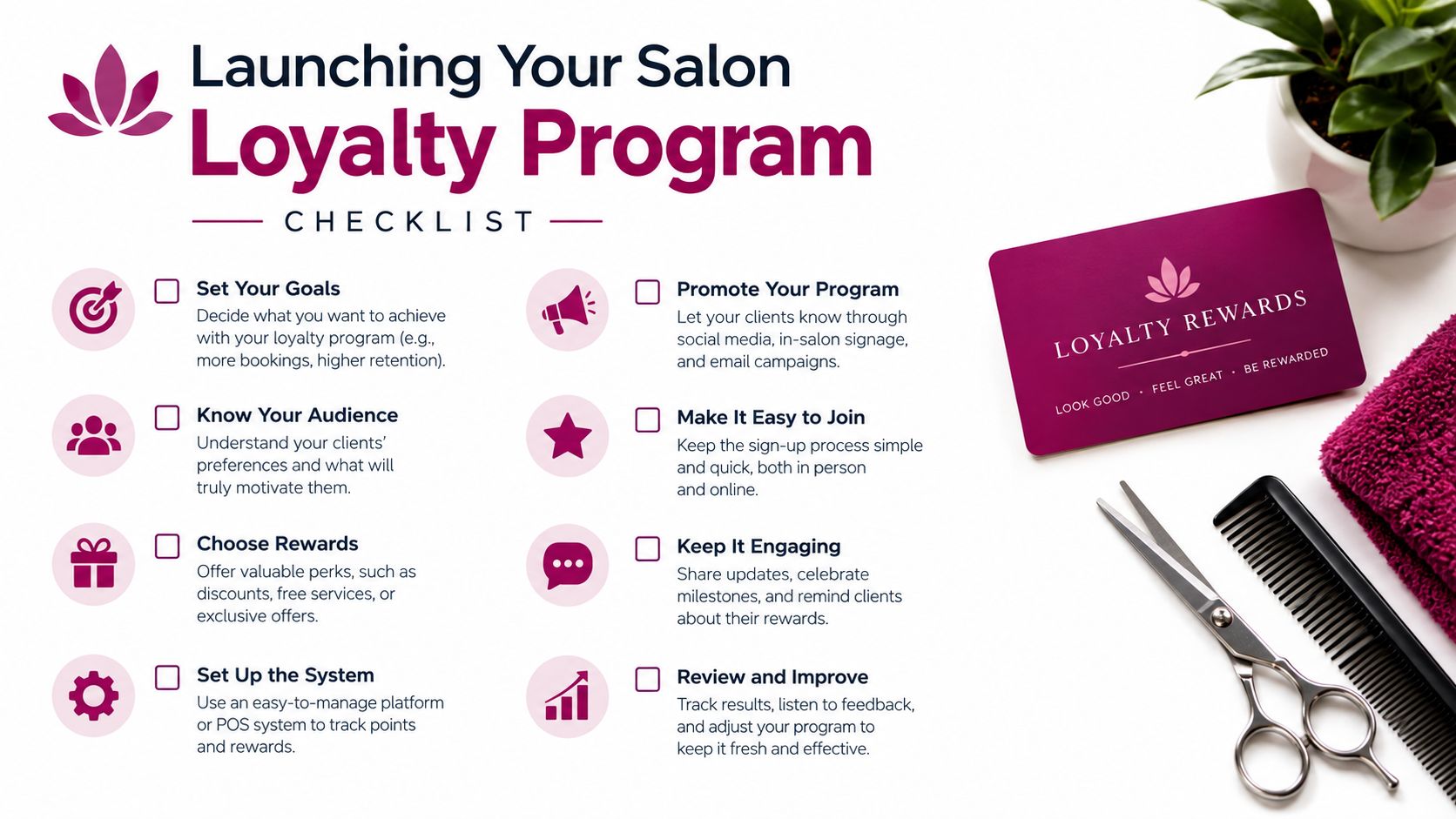
Launch the smallest version that can answer the operational questions. You don't need a complicated rewards architecture on day one. You need a clear offer, a fast enrollment path, staff who can explain it, and a way to see whether clients return.
Prepare the offer before the software
Write the rules in plain language. Decide whether the first version uses stamps or points, what behavior earns progress, which rewards protect margin, and whether any offer supports slower booking periods.
Then test the customer journey yourself. Scan the QR code, add the pass, complete a sample transaction, redeem a reward, and check what the customer sees. If the process feels confusing to you, it will feel worse to someone standing at the front desk with a queue behind them.
Train the team on the moments that matter
Give staff three scripts:
- Enrollment: Explain what the client earns and show the QR code.
- Progress: Mention the updated balance after recording the visit.
- Rebooking: Ask for the next appointment before the client leaves.
Practice with the actual phone or tablet used in the salon. Don't rely on a presentation that describes the workflow but never reproduces it. One team member should also be responsible for reviewing the first week's records and correcting setup issues.
Start with existing clients
Your current regulars are the easiest audience because they already understand the service and have a reason to return. Invite them at checkout, place a QR code at reception, and include a short explanation in appointment confirmations or receipts.
Paper-card holders need a clear migration message. Tell them what happens to existing progress, if anything, and avoid making them feel that joining the digital version means losing value. If historical balances can't be transferred, offer a transparent transition rule rather than asking staff to improvise.
Run a controlled trial
Use a free trial or pilot period to test the workflow before committing to a larger rollout. Watch for the practical signals:
- Are customers completing enrollment?
- Can staff record activity without slowing checkout?
- Do clients understand the reward?
- Are rebooking conversations happening more often?
- Are add-on offers being used by the intended customers?
Make one change at a time. If the program has too many rules, simplify the rules before adding more promotions. If enrollment is weak, remove friction from the QR flow before increasing the reward.
For salons evaluating a phone-managed system, Loyal Customer supports points programs, digital stamp cards, and Apple Wallet and Google Wallet passes, with merchant administration designed for routine mobile use. It can be assessed during its free trial as one option for testing whether a wallet-native workflow fits the salon's front desk.
A loyalty program earns its place when it helps staff complete a better checkout conversation and helps clients make the next booking. Choose the model that matches the current bottleneck, keep the reward understandable, and measure second visits, rebooking, and add-on behavior instead of celebrating signups alone.
Loyal Customer lets salons run points or digital stamp programs from a phone and issue loyalty cards for Apple Wallet and Google Wallet, so you can test a low-friction alternative to paper cards or a standalone app. Visit Loyal Customer to explore the free trial and see whether its QR and wallet-based workflow fits your nail salon's checkout routine.