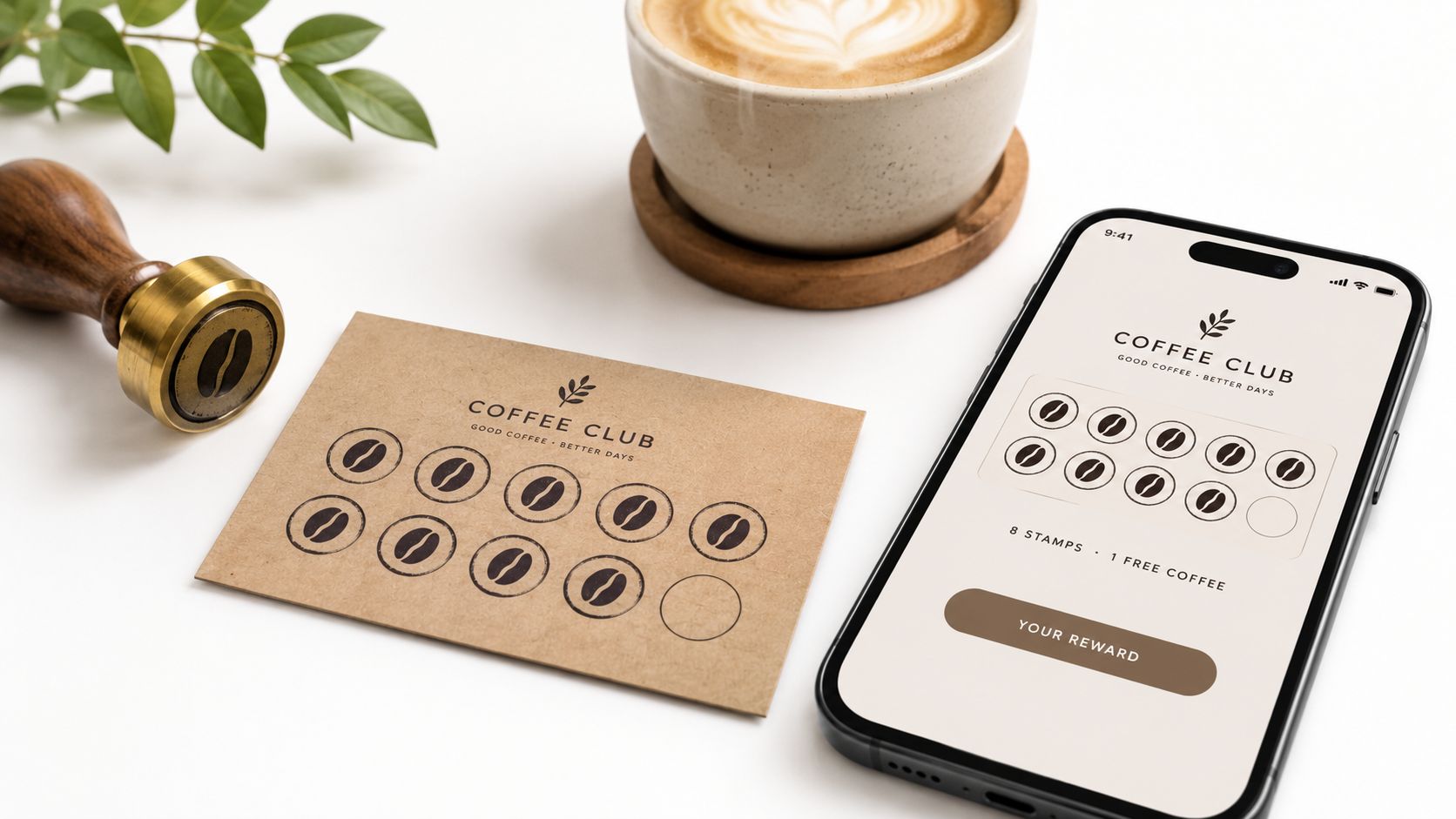
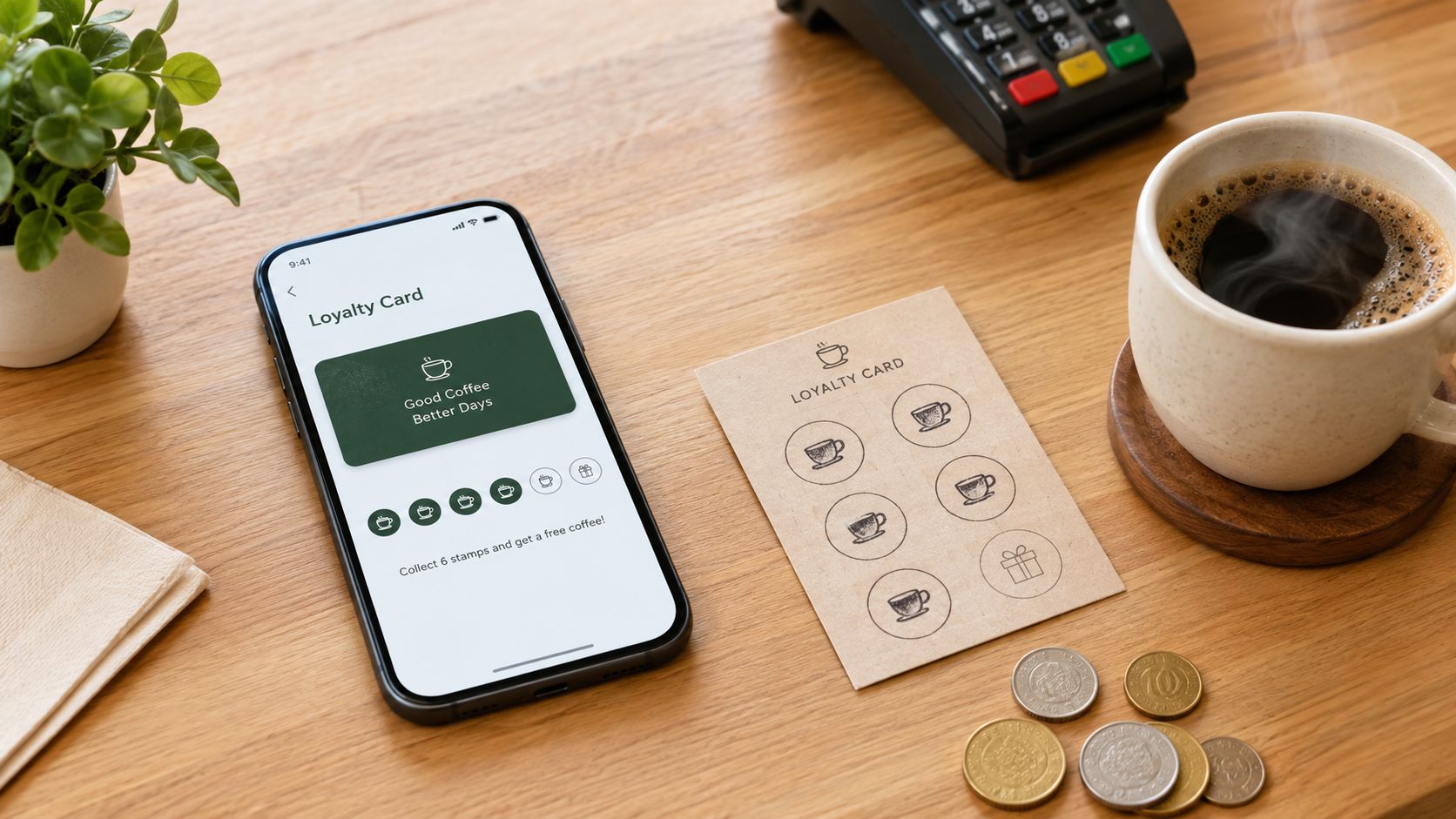
If you run a cafe, salon, grocery shop, or neighborhood store, you've probably seen the same pattern. Customers say they'll keep the paper loyalty card, then it disappears into a wallet, a car console, or the wash. They come back, but the card doesn't. That breaks the habit you were trying to build.
The shift to digital loyalty cards matters because it fixes a very ordinary problem. The reward isn't just the free coffee, discounted treatment, or future saving. The win is staying visible between visits. One of the clearest moments for me was hearing that a customer came back sooner because the business brand was sitting in her Apple Wallet as a digital loyalty card. It was quicker at checkout too.
Loyalty cards still work because they're simple. They give customers a reason to return and give the business a way to track repeat behavior. By 2023, 47% of consumers surveyed worldwide said they participated in a grocery store or supermarket loyalty program, while participation in rental car programs was 8.7%, which shows how loyalty cards fit best in high-frequency categories where repeat visits are easy to measure (global loyalty card participation data).
Table of Contents
- Introduction Why Loyalty Cards Still Drive Repeat Business
- What Loyalty Cards Are and How Digital Wallet Cards Work
- Points vs Stamps Choosing the Right Reward Mechanics
- 2026 Loyalty Cards App Comparison for Small Merchants
- Apple Wallet vs Google Wallet What Merchants Need to Know
- Loyalty Cards in Action Use Cases by Business Type
- Recommendation How to Launch Your Digital Loyalty Cards Program
Introduction Why Loyalty Cards Still Drive Repeat Business
Paper loyalty cards haven't disappeared because they're bad. They disappeared because they depend on memory. The customer has to remember the card, the staff has to stamp it, and the reward has to feel close enough to matter.
That's why loyalty cards still drive repeat business in 2026. They solve a specific retention problem for high-frequency businesses. Coffee shops need the next visit. Salons need the next booking. Convenience retail needs one more stop this week, not a vague promise that the customer likes your brand.
Early on, a lot of merchants treated loyalty as a side project. Print a stack of cards, offer a free item after enough visits, and hope it sticks. Sometimes it does. But digital changed the day-to-day reality. A pass that sits on the phone, updates automatically, and is easier to present at checkout does more than track rewards. It keeps your business in view.
Here's the practical shift I've seen:
| Business issue | Paper card result | Wallet-based result |
|---|---|---|
| Customer forgets card | Missed stamp or staff workaround | Pass stays on phone |
| Reward progress | Hard to check unless card is present | Visible on the pass |
| Design updates | Reprint cards | Update digitally |
| Distribution | Hand over at counter only | Send by QR code or link |
| Checkout speed | Find card, stamp card | Faster scan or tap flow |
A lot of small businesses don't need a complicated loyalty stack. They need something staff can explain in one sentence and customers can use without friction. That's where digital loyalty cards have pulled ahead. They're less about novelty now, and more about making repeat visits easier to trigger, track, and redeem.
What Loyalty Cards Are and How Digital Wallet Cards Work
A loyalty card is a retention tool that tracks repeat purchases and earns rewards like stamps, points, or discounts. In digital form, the card lives on the customer's phone instead of on paper, which makes it less likely to be forgotten or lost and easier for the business to update (digital loyalty card overview).
From paper cards to phone-based passes
The basic idea hasn't changed. A customer buys, the business records progress, and a reward is earned later. What changed is the container.
With paper, the card is the record. With digital, the pass is the customer-facing layer, while the system behind it holds the balance, stamp count, or reward status. That matters because staff no longer have to rely on a physical object to keep the program moving.
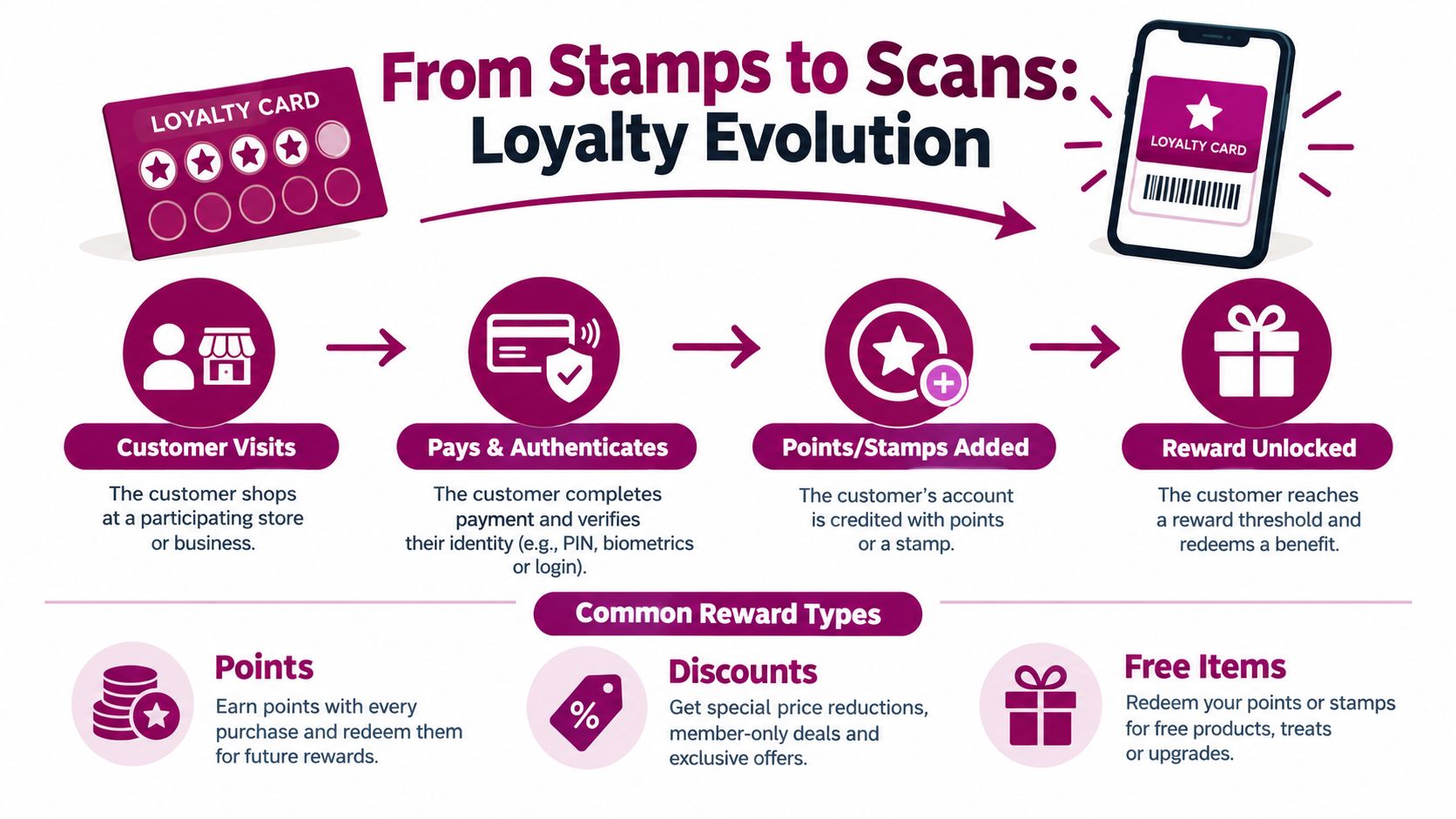
A wallet-based loyalty card usually sits in Apple Wallet or Google Wallet next to payment cards and boarding passes. Customers can often save it with a QR code or link instead of downloading a separate app. If you want a plain-language walkthrough of that setup, this guide on digital loyalty programs covers the customer flow well.
What makes digital loyalty cards work better
The strongest digital loyalty cards remove tiny bits of friction:
- Storage is built-in: Customers don't need to carry a separate paper card.
- Access is familiar: Wallet passes live in apps people already use.
- Progress is visible: The pass can show balance or reward progress in real time.
- Distribution is easier: You can share a QR code, link, email, or SMS instead of waiting for an in-person visit.
A wallet pass also has a visibility advantage. A paper card is invisible until someone opens their wallet. A digital pass can stay closer to the customer's attention.
The best loyalty card is the one the customer actually has with them at the moment of payment.
That sounds obvious, but it's the whole game for small merchants. If the program is hard to join, hard to find, or hard to redeem, it won't shape repeat behavior. If it's easy to save and easy to use, it starts acting like part of the checkout routine.
Points vs Stamps Choosing the Right Reward Mechanics
Most small merchants don't need dozens of reward types. They need to choose between the two mechanics that fit daily operations: stamp cards and points programs.
I've found the simplest split still holds up. 10 stamps works well for coffee shops and salons. 100 points fits grocery stores and retail better. The reason isn't fashion. It's buying behavior.
Points vs Stamps Decision Matrix for Small Merchants
| Criteria | Stamp Cards 10 Stamps | Points Programs 100 Points |
|---|---|---|
| Best fit | Coffee shops, salons, bakeries, simple repeat services | Grocery, retail, mixed baskets, variable spend |
| Customer understanding | Immediate and visual | Flexible but needs clearer explanation |
| Reward trigger | Visit-based | Spend-based or rules-based |
| Staff training | Very easy | Slightly more involved |
| Promotion flexibility | Limited | Better for tiers and varied rewards |
| Abuse risk | Can be simple but needs controls | Better audit trail if managed well |
| Customer motivation | Strong when visits are frequent | Strong when basket sizes vary |
When stamps win
Stamp cards are strongest when each visit feels similar. A coffee shop can say, “Buy 10, get 1 free,” and the customer understands it instantly. Salons often benefit from the same logic when the repeat action is easy to count and the service cadence is familiar.
The appeal is cognitive simplicity. Nobody asks what a stamp is worth. They just look at the card and know how close they are.
Practical rule: If your average transaction feels repetitive and your customer returns on habit, start with stamps.
That's why I'd still choose 10 stamps first for a cafe, tea shop, bakery, or salon. The customer sees progress fast, and staff can explain the program in seconds.
When points do better
Points are better when transaction values change a lot. Grocery and retail customers don't always spend the same amount, so visit-based rewards can feel blunt. A 100-point model gives you room to tie rewards to spend without making every basket count the same.
Points also give you more room later. You can build spend thresholds, category bonuses, or different redemption options without replacing the whole mechanic. If you're weighing that route, this overview of a points-based loyalty program is useful for thinking through setup.
What usually fails
The biggest mistake isn't choosing the wrong mechanic. It's making the reward feel too far away.
Recent survey data shows 49.1% of consumers dislike how long it takes to earn rewards, 41.1% say rewards expire before use, and 40% say they sometimes forget to redeem rewards (consumer loyalty friction data). That's why an elegant points model can still underperform a plain 10-stamp card if the first reward takes too long.
Keep the first win close. That matters more than clever reward math.
2026 Loyalty Cards App Comparison for Small Merchants
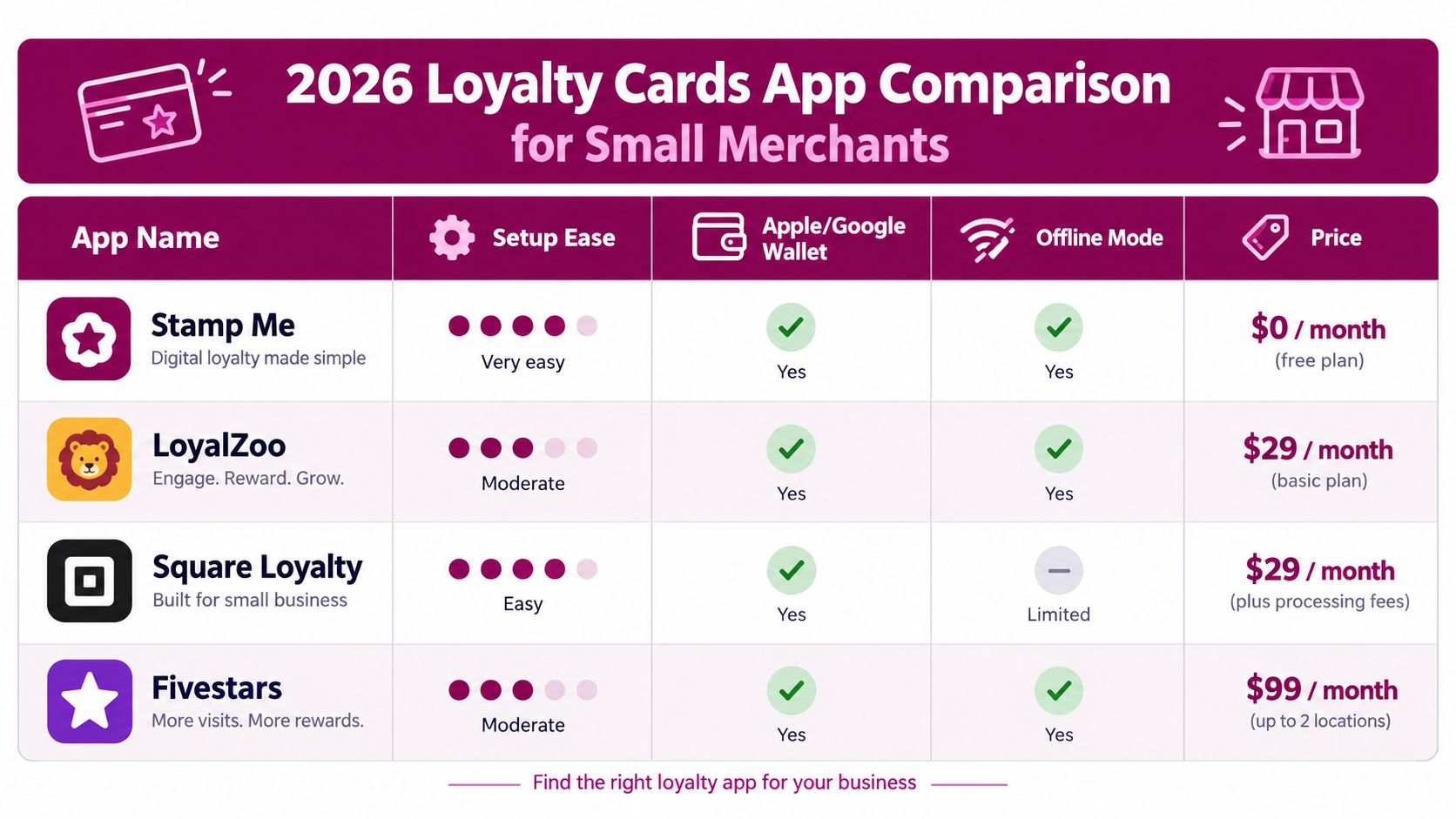
App comparison gets messy because many tools were built for larger chains, for app-led engagement, or for POS-heavy environments. Small merchants usually care about simpler things. Can staff run it from a phone? Can customers join fast? Does it support both stamps and points? Can it issue Apple Wallet and Google Wallet passes? Is onboarding easy without a custom app?
A lot of businesses also underestimate how large the loyalty category has become. One 2026 market summary reported the global loyalty program market at about $12.4 billion in 2022, with an expected 12.1% compound annual growth rate from 2023 to 2030. The same summary reported 28.7 trillion global loyalty points issued in 2022, up 15% year over year (loyalty program market statistics). The takeaway for a merchant isn't just market size. It's that loyalty systems now operate as infrastructure, not side promotions.
What to compare first
Before looking at logos and pricing pages, compare these factors:
- Phone-first setup: Can you launch and manage the program without living on a desktop?
- Wallet support: Does it work with Apple Wallet, Google Wallet, or both?
- Reward flexibility: Can you choose stamps, points, or both?
- Distribution: Can you onboard from a QR code, SMS, email, or a simple landing page?
- Operational fit: Does the program work without complex terminal changes?
Practical app differences in 2026
Some loyalty apps are still strongest when tied tightly to a broader POS or CRM stack. That can work well if you already operate that way. It's less appealing if you run a lean shop and want something staff can use from the counter with minimal setup.
Others focus on digital stamping, but don't handle points well. That's fine for a coffee concept, less fine for grocery or retail. The more varied your checkout patterns, the more flexibility matters.
One option built around that mobile-first approach is Loyal Customer, which supports Apple Wallet and Google Wallet loyalty cards, lets merchants run points or digital stamp cards from a phone, and gives each business its own website for customer onboarding and distribution through links or QR codes. That structure suits businesses that want wallet-native loyalty without asking customers to install a separate brand app.
If your team is small, the best app often isn't the one with the deepest feature list. It's the one staff can operate correctly during a busy shift.
How I'd shortlist apps
I'd split the market into three practical buckets:
| Merchant need | Best app profile |
|---|---|
| Simple repeat-visit rewards | Stamp-focused, fast setup, light training |
| Variable basket rewards | Points-capable, clearer balance tracking |
| Wallet-native retention | Apple Wallet and Google Wallet pass support, easy pass distribution |
This is also where “offline mode” or advanced integrations should be judged carefully. They matter for some merchants, but not for every salon, bakery, or takeaway. In a lot of small businesses, redemption friction matters more than feature depth.
The right comparison question isn't “Which loyalty app has the most features?” It's “Which app makes it easiest for customers to earn, remember, and redeem?”
Apple Wallet vs Google Wallet What Merchants Need to Know
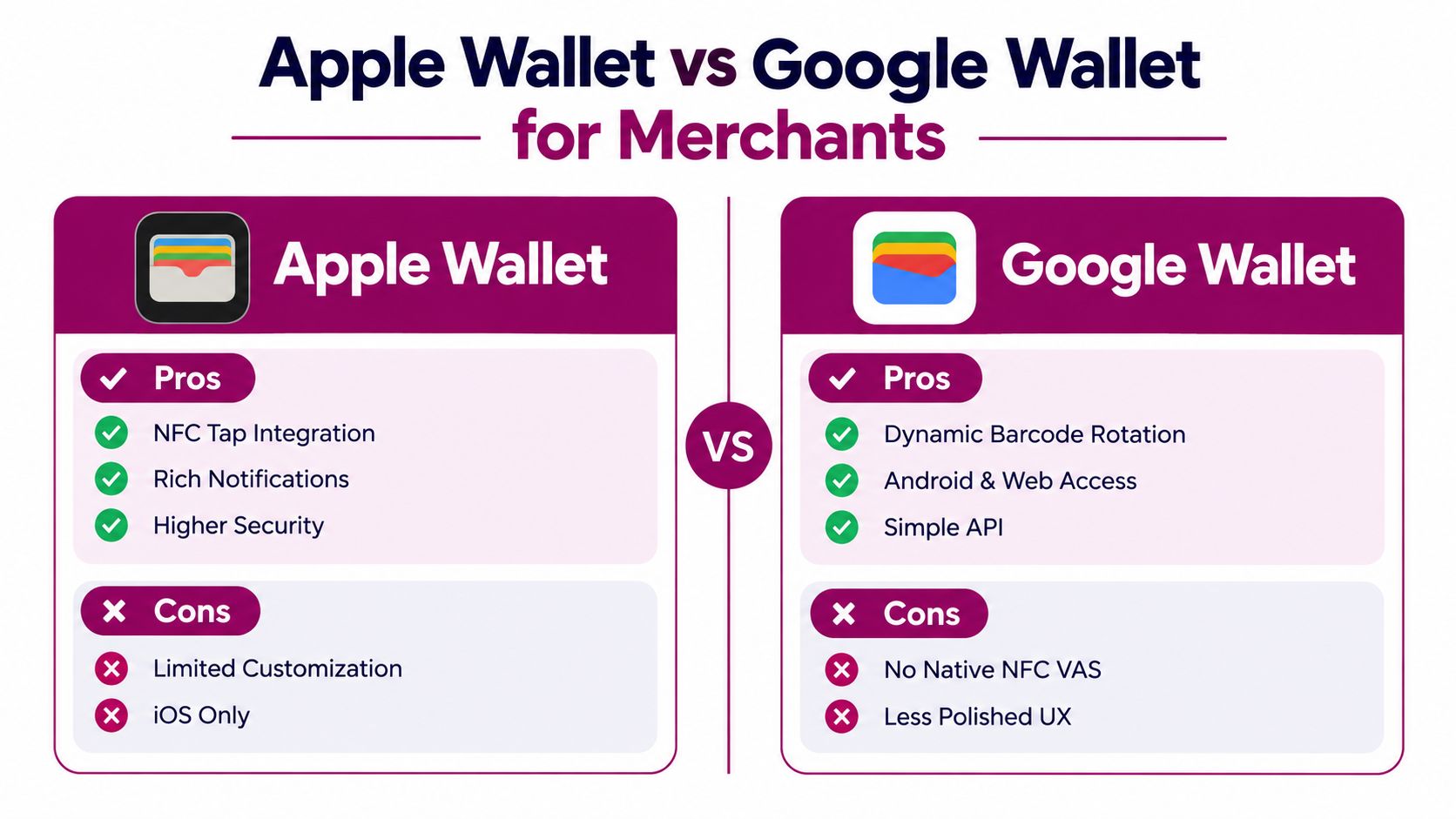
Merchants often talk about “wallet support” as if it's one thing. It isn't. Apple Wallet and Google Wallet can both handle loyalty cards, but the redemption options and setup path differ in ways that affect day-to-day use.
Apple Wallet redemption
Apple Wallet loyalty passes can support NFC-based redemption on contactless terminals through Apple Pay Value Added Services. On supported devices, the customer holds an iPhone near the reader and the relevant pass appears instantly, which can support check-in, point accrual, and redemption without barcode scanning (Apple Wallet loyalty pass documentation).
That's elegant when the hardware supports it. It feels fast and natural at the counter.
Google Wallet redemption
Google Wallet loyalty cards can be configured for SmartTap redemption, but the merchant terminal must be SmartTap-capable. Google also supports static or rotating barcodes, and the platform includes rotating barcodes plus a security animation designed to reduce screenshot-based fraud and improve verification (Google Wallet loyalty card FAQ).
For many small merchants, barcode support is the practical path because it avoids depending on specialized terminal capability.
Apple Wallet feels strongest when tap-based redemption is supported. Google Wallet gives merchants more flexibility when barcode workflows are the safer operational choice.
Setup and ecosystem coverage
Setup friction differs too. A 2026 industry comparison says Apple Wallet requires the merchant or SaaS provider to have an Apple Developer Program account, which can involve 1 to 4 weeks of KYC approval, while Google Wallet is faster to launch for many SaaS-led programs because it doesn't require the same merchant-side developer step. The same comparison notes that Apple Wallet is iOS-only and Google Wallet is the Android equivalent, so businesses that want coverage across both major mobile ecosystems usually need both pass types (2026 Apple Wallet vs Google Wallet comparison).
If you want a merchant-focused explanation of Apple pass setup, this guide to passes for Apple Wallet is a useful starting point.
Loyalty Cards in Action Use Cases by Business Type
The best loyalty cards match the rhythm of the business. A bakery with morning regulars needs something different from a small grocery or a beauty salon.
Cafes and salons
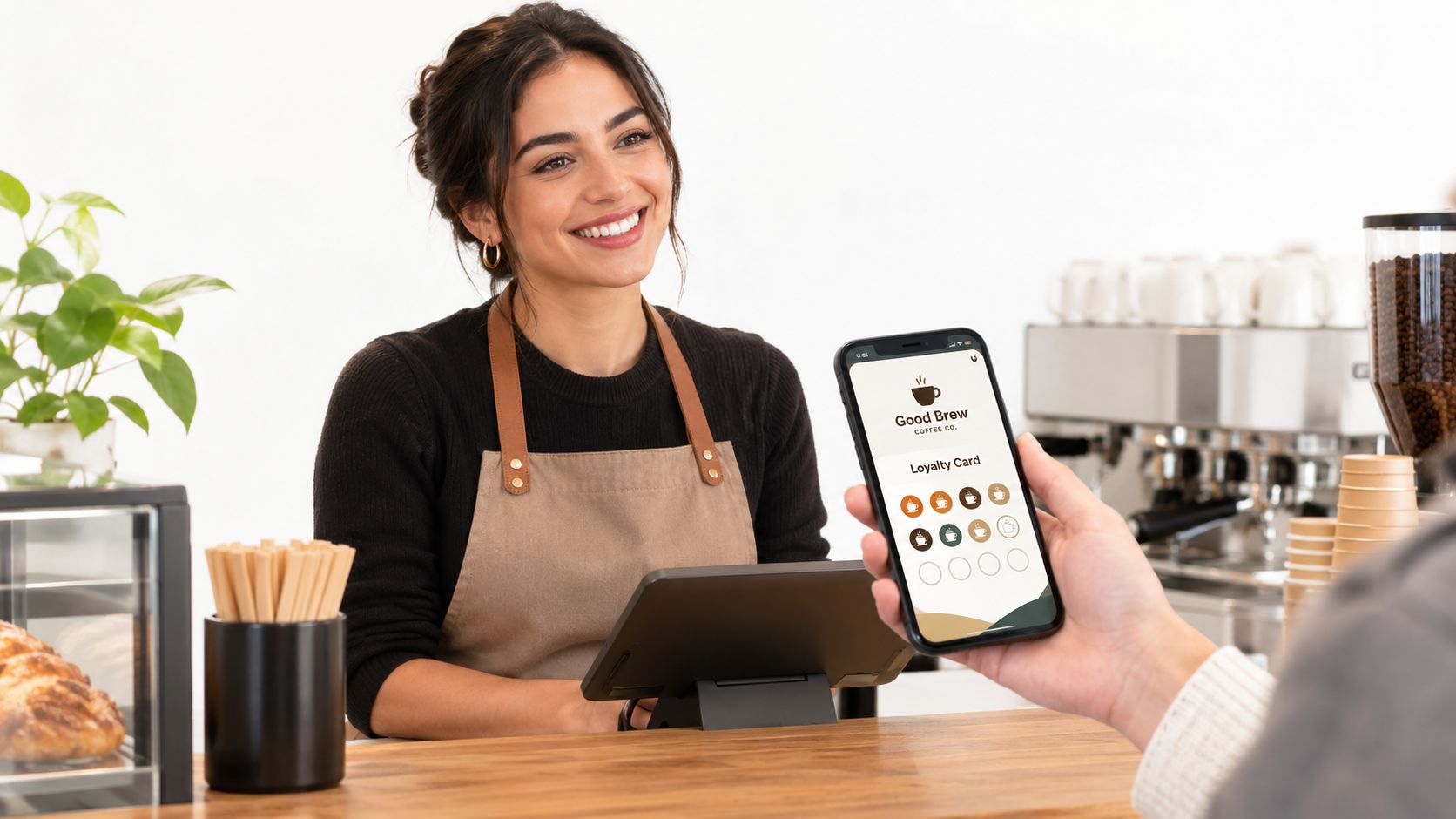
Coffee shops, tea shops, bakeries, and salons usually do best with simple stamp logic. A 10-stamp reward works because the customer understands the path immediately and the repeat behavior is frequent enough to build momentum. This is also where wallet persistence helps most. The pass sits on the phone instead of disappearing into a drawer.
Branded presentation matters more than many merchants expect. I've seen better response when the digital card used a clear branded logo and attractive colors. If the pass looks generic, customers treat it like a utility. If it looks like part of the business, they notice it.
Grocery, retail, and mixed baskets
Independent grocery and retail stores often need more flexibility because basket sizes vary. That's where a 100-point structure is easier to justify. The reward can track spend more fairly, and customers don't feel like a tiny purchase and a large purchase count the same way.
This category also benefits from wallet-native behavior. A 2026 source reports that wallet passes can be persistent, can surface automatically near relevant locations, and can be installed in one tap from email, SMS, QR code, or a website button. The same guide notes that wallet loyalty cards can show real-time balance or reward progress, which is why they work so well for stamp-card and points-card models (mobile wallet loyalty guide).
A quick visual example helps here:
What to fix before blaming the program
When loyalty cards underperform, the issue usually isn't that customers hate loyalty. It's that the experience asks too much.
Three common fixes work across business types:
- Speed up first reward: If customers wait too long, interest drops.
- Reduce expiration pain: Expiring rewards can train customers to ignore the program.
- Prompt redemption: People often forget to use rewards even when they want them.
There's also a trust angle. A 2026 consumer survey found that 64% want personalized experiences but only 41% think the benefits justify the privacy cost (wallet loyalty privacy and personalization data). So if you're collecting customer details for digital loyalty cards, ask for what you need, explain why, and don't assume digital convenience automatically creates trust.
Recommendation How to Launch Your Digital Loyalty Cards Program
If I were launching a loyalty cards program for a small business today, I'd keep it narrow at first.
Start with the transaction pattern. Use 10 stamps if the customer returns often for a similar purchase, like coffee, bakery items, or salon visits. Use 100 points if basket sizes vary, like grocery or retail. Don't mix both on day one unless there's a strong reason.
A practical launch checklist
- Choose one mechanic: Stamps for repeat visits, points for variable spend.
- Design the pass properly: Use your logo, brand colors, and a short value statement.
- Pick simple distribution: QR code at checkout, plus email, SMS, or your business website.
- Train staff on one script: Keep the explanation short and consistent.
- Track behavior, not vanity: Watch repeat visits, first redemption, and how often customers present the card.
- Keep data collection light: Ask only for information that supports the reward experience.
One more point matters in 2026. Wallet-first loyalty reduces app friction, but it also increases the moments where a customer can be identified. Be clear about the value exchange. If the customer understands what they get, they're much more likely to use the program consistently.
A good launch isn't complicated. It's visible, fast to join, easy to redeem, and simple enough that your staff will still use it correctly during the busiest hour of the day.
Loyal Customer gives small businesses a mobile-first way to run digital stamp cards or points programs and issue loyalty cards for both Apple Wallet and Google Wallet. It also provides a business website for onboarding customers and sharing passes through links or QR codes. If you want a practical wallet-based setup without relying on paper cards, visit Loyal Customer.